An important announcement from our November meeting: Our President, Martin Mueller, has accepted the position of Vice President of IGAMS and is stepping down as President of Show-Me Rockhounds. Thus, we had an election and unanimously voted in David Reed as our new President and FC Watts as our new Vice President. Best of luck to all three in their new positions.
News
Gem Show Photos Fall 2015
We had fun selling and buying specimens at the gem show. If you missed it, here are some of the things you can expect to find at a show.
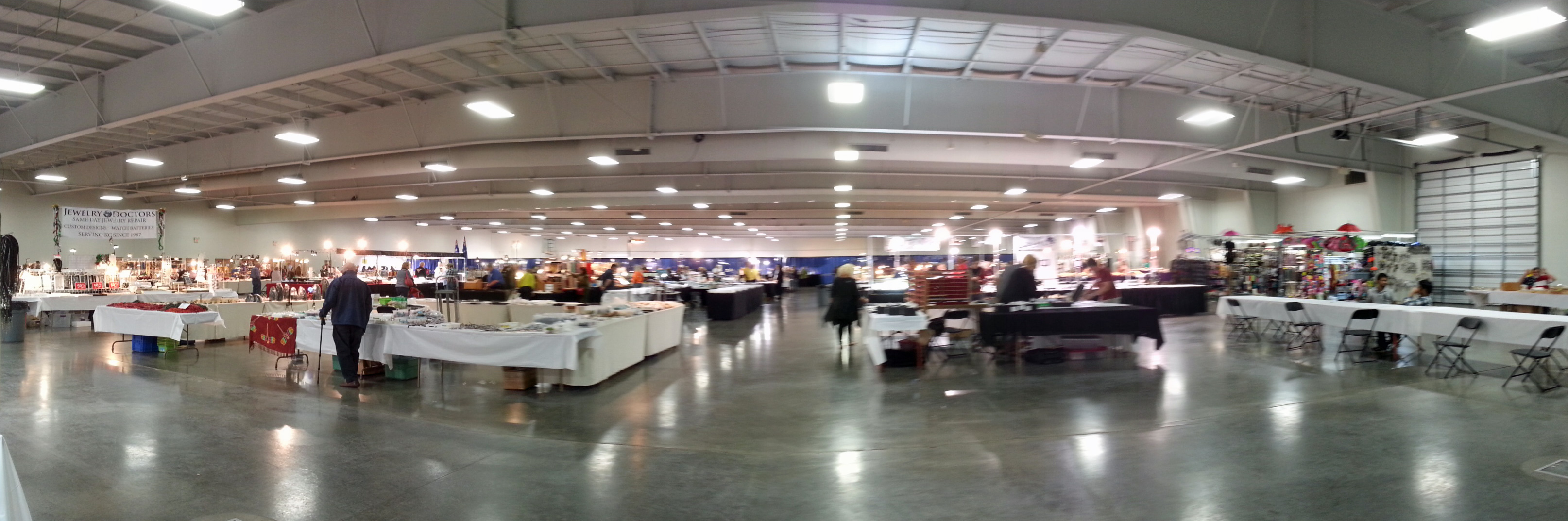
An overview of the whole show. Photo by Stephanie Reed

This year we sold books about rocks and where to find them, including the highly desired Gemstones of North America by John Sinkankas.
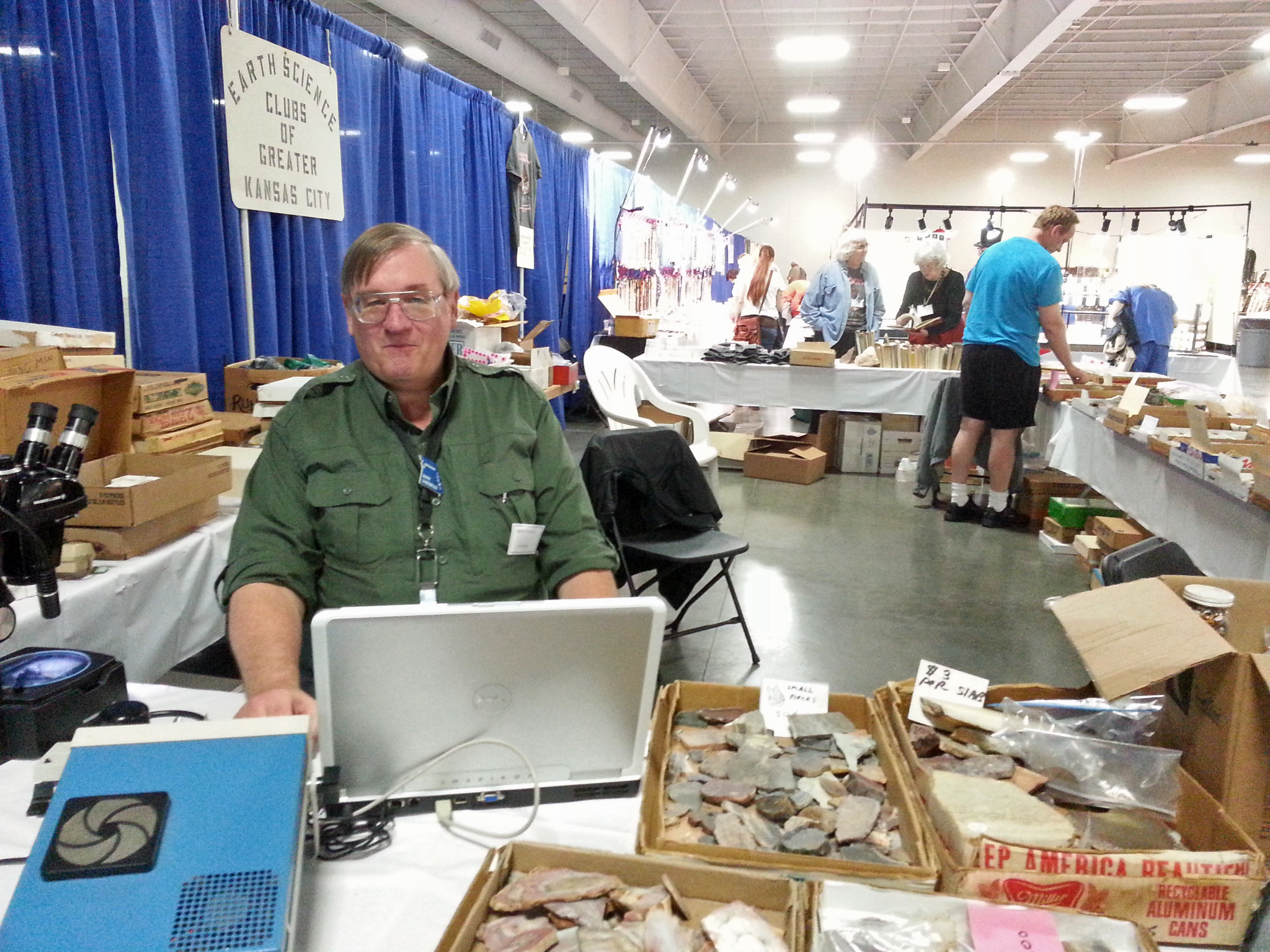
Mark selling minerals.
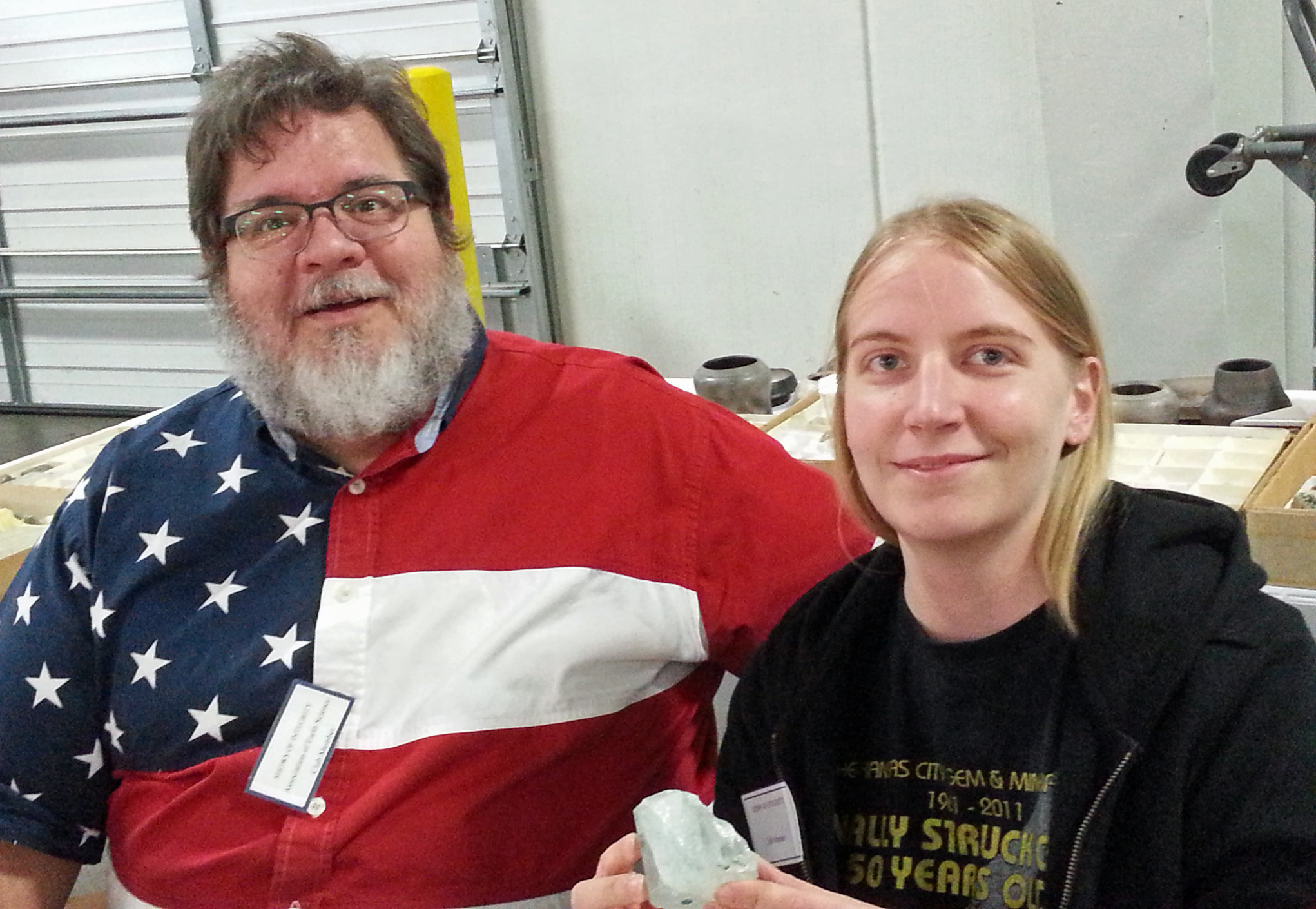
President Martin and Webmistress Stephanie looking at an aquamarine. Photo by David Reed

This jar of tumbled chips of Lake Superior agates was part of a kit for making a gem tree, sold by the Show-Me Rockhounds. Photo by Stephanie Reed
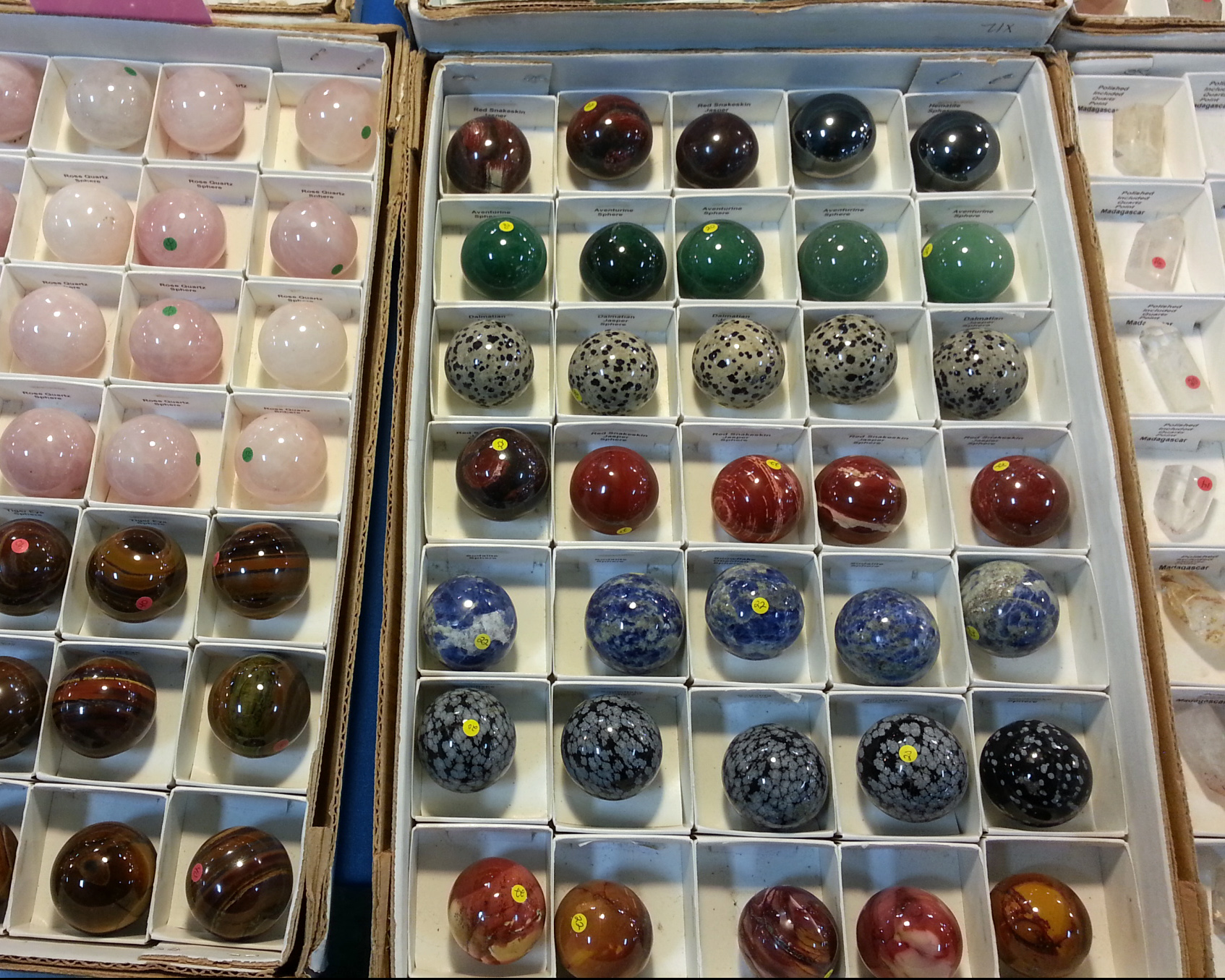
Polished spheres made of minerals from Dave’s Rocks and Carvings (Hamburg, MI). I see rose quartz, tiger’s eye, sodalite, and snowflake obsidian. Can you name all the minerals?

Mineral specimens for sale from Dave’s Rocks and Carvings (Hamburg, MI) Photo by David Reed
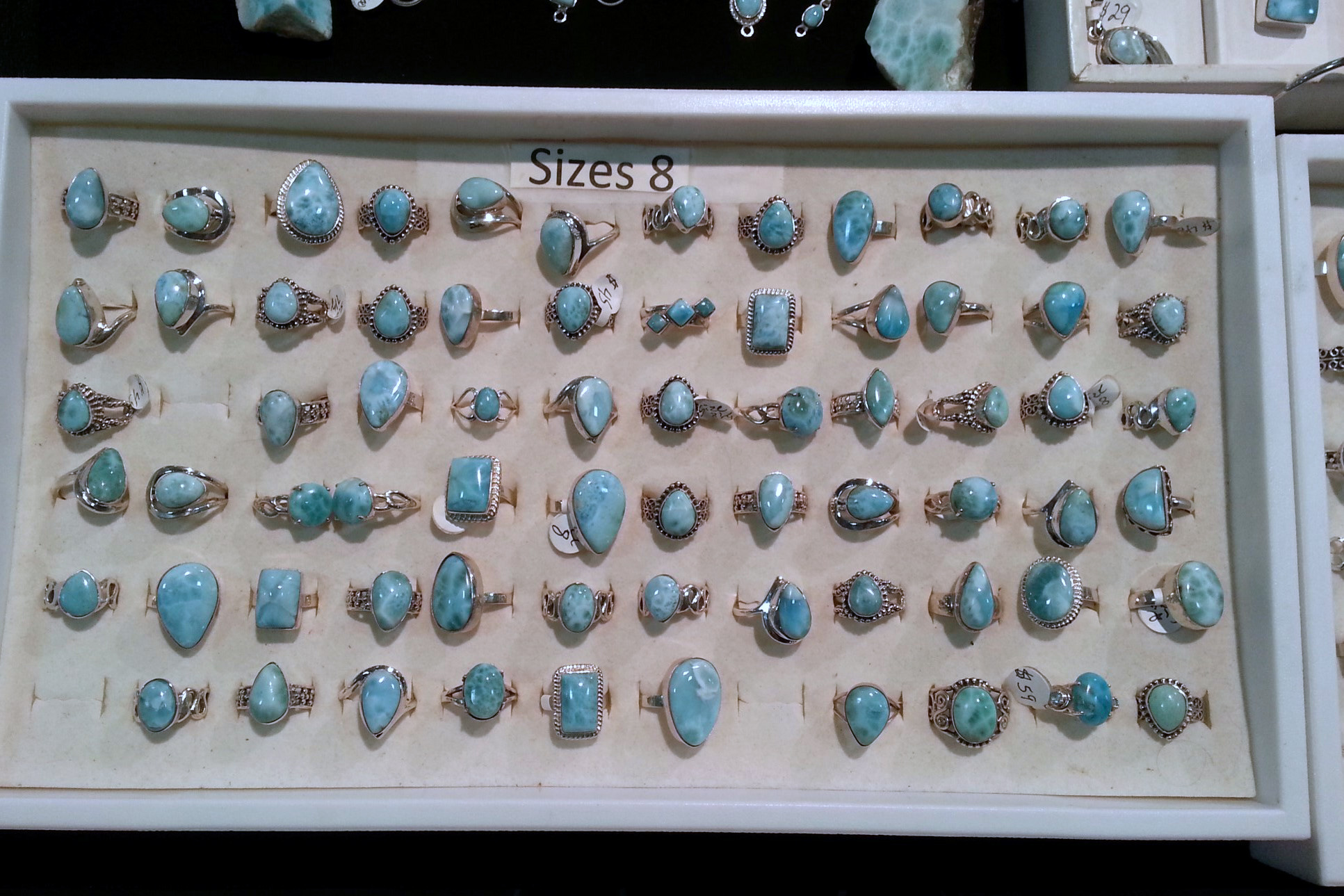
Gem shows always have lots of jewelry for sale, usually organized by mineral. This is an entire box full of rings made with blue larimar sold by Manichia LLC (Kansas City, MO). Blue larimar is a type of volcanic pectolite found in the Dominican Republic.

Glass beads for sale at Park Design (St. Joseph, MO). You can even watch the beads being made. They can also be found at the Three Trails Trading Post in Independence, MO.
Fall Kansas City Gem Show Coming Soon
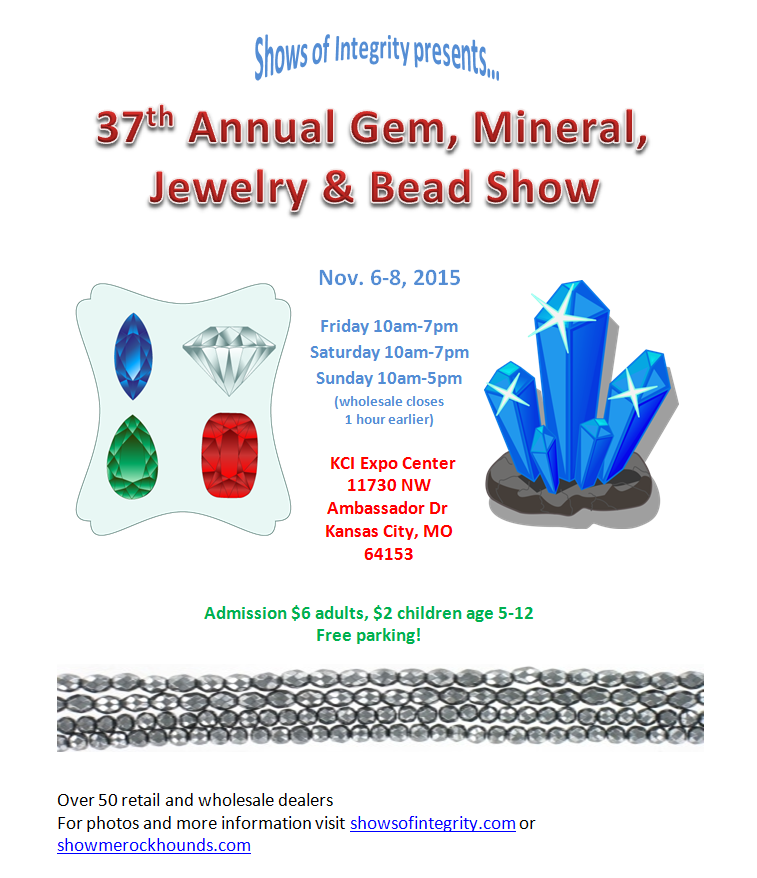
It’s almost that time again. The weather is getting cooler, the leaves are falling off the trees, and the fall gem show is next week. It will be at the Kansas City Expo Center November 6-8. The fall show is not as big as the spring show (in March) but is still well worth attending, as it’s only $6. IGAMS will be there and if you signed up to help, hopefully you know who you are because I don’t. Also, feel free to print out this flyer and share it with your friends, co-workers, and anyone else who might be interested.
Earth Science Week 2015
Earth Science Week is October 11-17, 2015
 Every year, the Missouri Department of Natural Resources (MO DNR) has an Earth Science Week full of fun activities for kids and adults. From their website: Earth Science Week aims to help the public gain a better understanding and appreciation for the Earth Sciences and to encourage stewardship of the Earth. This year’s activities will be held Oct. 11-17 and will celebrate the theme “Visualizing Earth’s Systems.” This year’s theme will engage young people and others in discovering the Earth sciences, remind people that Earth science is all around us, encourage Earth stewardship through understanding, and to motivate geoscientists to share their knowledge and enthusiasm about the Earth.
Go ahead – be a citizen scientist!
Enter the photography, visual arts and essay contests! All eligible submissions must be submitted to the American Geosciences Institute and received electronically by 4 p.m. CST, Friday, Oct. 16, 2015.
Participate in events during Earth Science Week. Plan a visit to the Missouri Geological Survey during Earth Science Week. The Missouri Geological Survey will be open during Earth Science Week from 8 a.m. to 5 p.m., Tuesday-Friday, Oct. 12-16.
Read our Governor’s Proclamation!
- Sunday, Oct. 11 is International EarthCache Day – Explore the world using your GPS.
- Monday, Oct. 12 Earth Science Literacy Day – Learn the fundamentals of geosciences with Earth Science: Big Idea, a video series developed to explain why Earth science literacy is important.
- Tuesday, October 13 is No Child Left Inside Day – NCLI Day encourages students to go outside and research Earth science in the field like a professional geoscientist.
- Wednesday, Oct. 14 is National Fossil Day – Visitors to the Ed Clark Museum of Missouri Geology, in Rolla, will receive a Crinoid fossil. Also, be sure to check out the fossils in the limestone of the Missouri State Capitol.
- Thursday, Oct. 15 is The Great Central U.S. ShakeOut – Register and join millions in the “Drop, Cover, and Hold On” earthquake drill Oct. 15 at 10:15 a.m.
- Thursday, Oct. 15 is Geoscience for Everyone Day – Do your part to help young people from underrepresented communities explore exciting careers in the geosciences.
- Friday, Oct. 16 is Geologic Map Day – Special mapping exhibits were on display at the Ed Clark Museum of Missouri Geology during Geologic Map Day to promote awareness of the study, uses and importance of geologic mapping for education, science, business, and public policy concerns.
- Saturday and Sunday, Oct. 17 and 18 the Ozark Mountain Gem and Mineral Society’s Gem and Jewelry Show will be held in the at the Expo Center in Springfield, Mo. – Geologists with the Missouri Geological Survey will host an educational booth Saturday, Oct. 17.
- Saturday, Oct. 17 is International Archaeology Day – Hosted by the Archaeological Institute of America, this special event is a celebration of archaeology and the thrill of discovery.
What color were the dinosaurs?
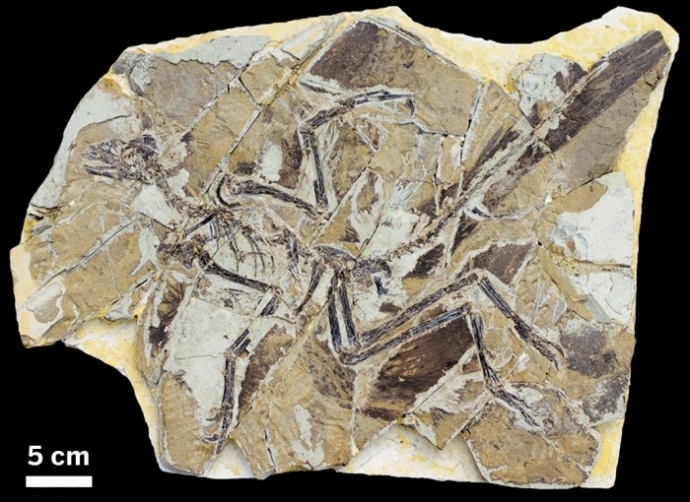
Johan Lindgren/Sci. Rep.
In this article from Chemical & Engineering News, researchers use chemistry to find out what colors the dinosaurs were.
Researchers led by Johan Lindgren of Lund University, in Sweden, used a battery of analytical techniques to scrutinize the molecular makeup of a fossilized Anchiornis huxleyi specimen. This dinosaur is a distant relative of today’s birds, and its remnants were preserved for about 150 million years in what is now northeastern China.
The researchers’ thorough analyses have allowed them to conclude that some of the dinosaur’s melanin, or pigment molecules, and melanin-producing organelles have also survived the intervening epochs (Sci. Rep. 2015, DOI: 10.1038/srep13520).
Scientists have previously observed signs of similar biomaterials in fossils, but studies have lacked sufficient evidence to rule out the idea that these materials come from bacteria or other microbial intruders.
Using methods including infrared spectroscopy and time-of-flight secondary ion mass spectrometry, Lindgren and his colleagues have shown that the sample’s fossilized feathers contain substances that closely resemble modern animal—not bacterial—eumelanin, the pigments responsible for brown and black coloration.
Click here to read the whole article.
Association Picnic
The Association’s Summer Picnic will be Sunday, August 23 at Antioch Park, shelter #3. The rock swap begins at 8 am, lunch is at noon, and the scholarship auction is after lunch. This is a good chance to see people from every “facet” of mineralogy, including rocks, minerals, fossils, crystals, paleontology, gem cutting, flint knapping, and more. The Association will provide the hamburgers, hot dogs, and soda, and they ask that everybody bring a side dish, salad, or a dessert to share. Also, bring something for the rock swap and cash so you can buy things at the auction. The auction raises money for scholarships for college students majoring in geology, paleontology, or other rock-related areas.
Here are photos from last year’s picnic. https://plus.google.com/b/109214060991924897753/events/gallery/ct46l01qks94sg53lmqg78st21o
If you use Google+ you can RSVP to the picnic here: https://plus.google.com/b/109214060991924897753/events/c2lhou5h8lkt725kn0hlafeu92k
Big Al’s Big Rock Sale
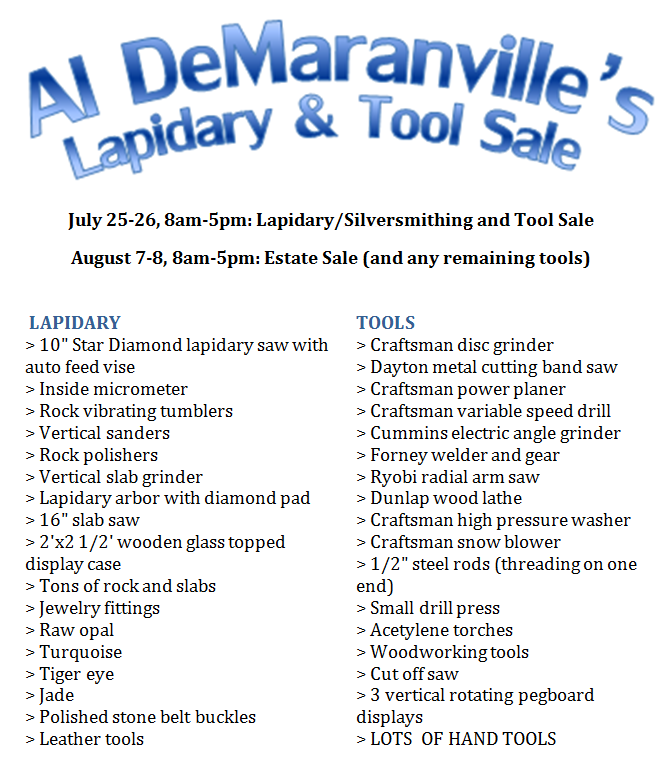
“Big Al” DeMaranville is having a rock and tool sale in Kansas City, Kansas so that he can move into a new home. On the first weekend, July 25-26 (8am-5pm), there will be rocks and lapidary/silversmithing equipment for sale. The second weekend, August 7-8 (8am-5pm), will have a house sale (and any tools that haven’t been sold yet).
The sale is now over. Thank you for your interest.
Sale of Collection

Myron King is selling his collection of mineral and lapidary specimens, and possibly some of his tools. The sale was on July 11, 2015 from 1- 5 pm. Thank you for your interest.
What Does a Research Geologist Do?
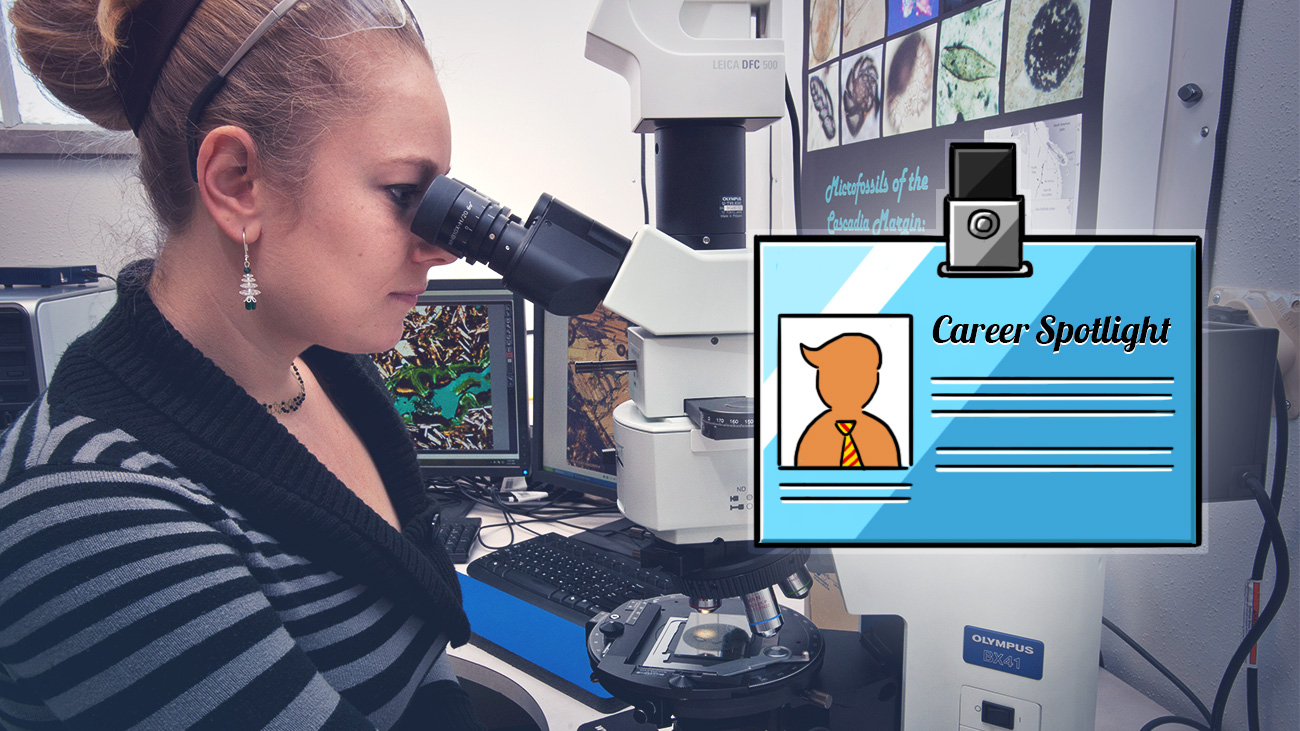
An article originally by Andy Orin found on Lifehacker here: http://lifehacker.com/career-spotlight-what-i-do-as-a-research-geologist-1690402642
It’s appealing to think that a geologist spends most of their time scouring remote landscapes with a rock hammer and a magnifying glass, but in reality they spend more time in a laboratory than a Land Rover. The work of a research geologist is eclectic, analytical, and scientific.
To learn a little about the field, we spoke with Circe Verba, Ph.D., a young researcher at the National Energy Technology Laboratory, and who has previously worked with NASA and SETI. Circe is also involved with science outreach and education with high school students, and has even designed a LEGO set depicting what it’s like to be a geologist. Now let’s take a look through the microscope:
Tell us a little about yourself and your experience.
I am a research geologist at the National Energy Technology Laboratory’s (NETL) Office of Research & Development (ORD). I specialize in bridging geochemistry and civil engineering—specifically projects that involve carbon sequestration and wellbore integrity (relevant to mitigating climate change) and understanding the interaction of oil-gas shale in unconventional systems. My expertise is electron microscopy and image analysis.
What drove you to choose your career path?
I had many inspirations as a child; it started with my earth science class with discovering the planets. I had a thirst for knowledge to understand processes at a macroscopic scale down to a micro-scale. Geology is a multidisciplinary science that spans several fields, such as engineering and research, which enabled me to pursue several interests.
How did you go about getting your job? What kind of education and experience did you need?
I wanted to pursue a career that would expand my perception of the universe by conducting research. I participated in high school science clubs which provided a scholarship opportunity to attend college at Oregon State University. Research (nowadays) requires a Ph.D., which took me long nine years. During my undergraduate, I explored astronomy, oceanography, and geology. I studied microbial boreholes in freshwater pillow basalt for planetary applications. Then I started a geology master’s program at Northern Arizona University, studying Martian aeolian [wind erosion] and volcanic features as part of a NASA HiRISE fellowship. Once that program ended, I switched gears and participated in an Oak Ridge Institute for Science and Education (ORISE) post-graduate fellowship in 2009. At NETL I was encouraged to further my education which led to the completion of my Ph.D in 2013, and a permanent job studying engineered systems on Earth.
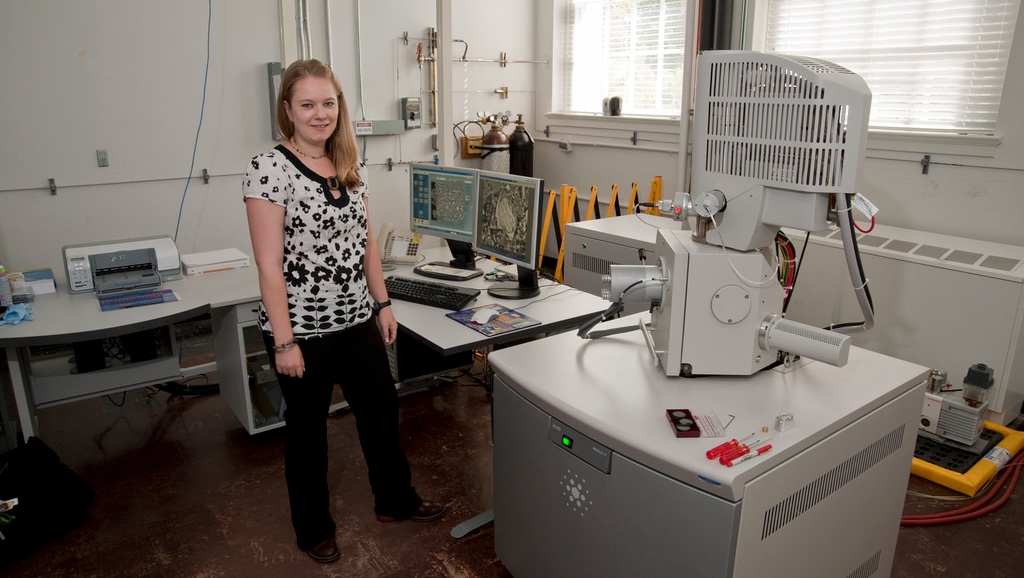
Verba in the lab with a SEM (Scanning Electron Microscope).
What kinds of things do you do beyond what most people see? What do you actually spend the majority of your time doing?
My time depends on what stage the project is at—at the moment I have four projects in different stages. I can spend time in the laboratory conducting experiments, analyzing and characterizing samples under an electron or light microscope, or working on the computer drafting manuscripts for publications. I also spend a lot of time interfacing with other team members and key partners from universities. It is also vital for scientists to communicate with one another on their work at scientific conferences.
What misconceptions do people often have about your job?
One misconception is not about my job, but more about the field. A common joke is that geology is rock for jocks, however, geology can be quite complex. In addition, as a geologist you get a lot of random rocks brought to you hoping for special identification when it’s usually a common rock like an agate (quartz-polymorph).
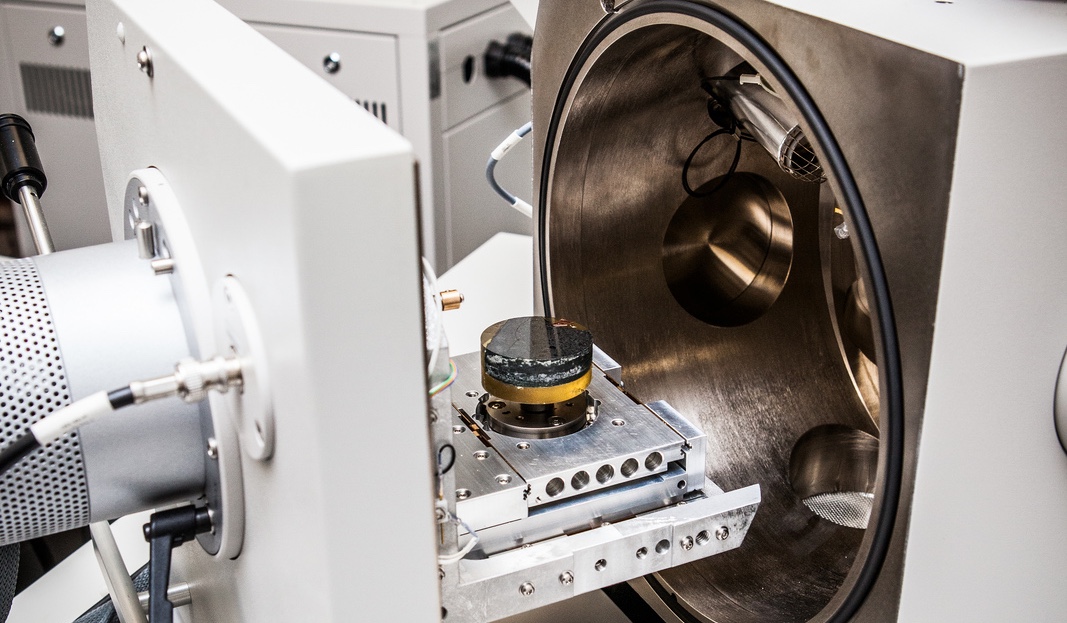
A close up view of a sample inside a SEM (Scanning Electron Microscope).
What are your average work hours?
A normal, professional work week—40 hours/week. More if there are deadlines or traveling.
What personal tips and shortcuts have made your job easier?
Spreadsheets are essential for project management to keep track of project tasks or budgets, as well as from a technical stand point to understand chemical analyses and to calculate, graph, and import data.
Another tip is sharing data; part of being a scientist is to not replicate work that has been done or is being conducted. It is then helpful to publish the research or put data onto a database for distribution. We use the Energy Data eXchange (EDX) at NETL.
What do you do differently from your coworkers or peers in the same profession? What do they do instead?
As I said above, I spend more time in the experimental and petrographic laboratory and interpreting the results. I spend less time in the field than my peers, for example, collecting samples, mapping regions, or being on an oil rig. In addition, several of my peers primary focus use applied geophysical modeling or geographic information system (GIS) to capture, store, manage, analyze spatial data. Furthermore, many geologists are in academia, which includes research and teaching.
What’s the worst part of the job and how do you deal with it?
Personally, the worst part of the job is the amount of technical writing required. You undergo a lot of revisions for technical reports and peer reviewed journal articles. I’m a descriptive writer, so I’ve had to learn to reign it in and learn from mistakes.
What’s the most enjoyable part of the job?
The most enjoyable part of the job is when I’m using the microscopes. You get to see details down to a micrometer scale, something the naked eye can’t see. It’s an unseen world that I get to be a part of. It can also be like a micro-treasure hunt to find changes in mineral phases or microorganisms.

Lab photos from NETL: https://www.flickr.com/photos/netlmultimedia/sets/72157633989397700/
What kind of money can one expect to make at your job?
Salary can range depending on your education level and where you are employed. The bottom 10% make $46k whereas the median salary for geologist in all sectors is $84k.
How do you move up in your field?
A geologist can advance their career by getting additional certifications (e.g. registered geologist) or pursue higher education. Specifically where I work, advancement of job positions [would be] into project management, such as technical team coordinator, team lead, or division director.
What advice would you give to those aspiring to join your profession?
The best advice I can give to an aspiring geologist is to never stop learning. Take as many science courses so can to figure out what field interests you, such as geology, engineering, physics, or mathematics. In addition, geography, computer science, environmental science, GIS, and drawing/art courses are also very helpful. Geology is a wide field with many hot topics to explore, including environmental or climate change, energy, geological hazards or mitigation, and mining. Examples of [jobs] in the field are engineering geologist, geochemist, geophysicist, hydrologist, mudlogger, wellsite geologist, environmental consultant, exploration geologist in academia, the oil, gas, petroleum sector, engineering or construction firms, government, museums, and private industry.
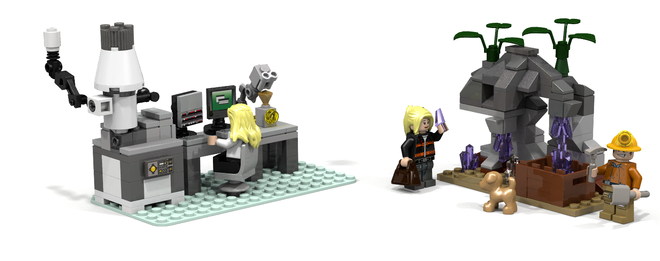
Vote for her LEGO set here: https://ideas.lego.com/projects/93813
I created the Research Geology LEGO set [because] I am also an active participant in Science, Technology, Engineering, and Mathematic (STEM) education by being involved in high school career fairs and science activities. I feel that it is important to find fun ways to encourage children, of both genders, to use critical thinking skills. As an adult, I still play with LEGO, a cobblestone of my childhood. So I created a LEGO set called Research Geology, which highlights my career as a research geologist both in the field and in the laboratory. While I included both genders in my set, I wanted to highlight that women can be scientists too. I strongly believe that we can impact young minds and pave the way for future scientists. We can change the world, one geek at a time.
Phonemageddon Neutralized
No need to worry about Phonemageddon because showmerockhounds.com is already compatible with mobile devices. Phonemageddon, as some people are calling it, is a change in Google’s search algorithm that will reward sites with “mobile-friendly” designs and push down those which aren’t optimized for mobile viewing.
More information here: http://gizmodo.com/are-you-ready-for-googles-mobilegeddon-phonepocalypse-t-1698947927
Test it for yourself here: https://www.google.com/webmasters/tools/mobile-friendly/?url=http%3A%2F%2Fwww.showmerockhounds.com
 Show-Me Rockhounds Kansas City