News

November Field Trips

Our November meeting will be Saturday, November 19. On that day, you can choose from two great field trip opportunities!

Choice #1: Meet at the Firefighter’s Memorial (87th & Blue River) at 10:00 am to collect fossils, then come to the regular meeting at noon at the Kansas City Public Library.

Choice #2: Meet at the Praying Hands Memorial (Hwy 171 and Dawson Dr) in Webb City, MO at 12:30 pm. It’s about 2 hours from downtown Kansas City, so don’t be late! From there, we will drive together to see Marve’s collection of vintage mining equipment. This is a large collection that cannot be seen anywhere else. RSVP to Bruce Stinemetz.

National Fossil Day

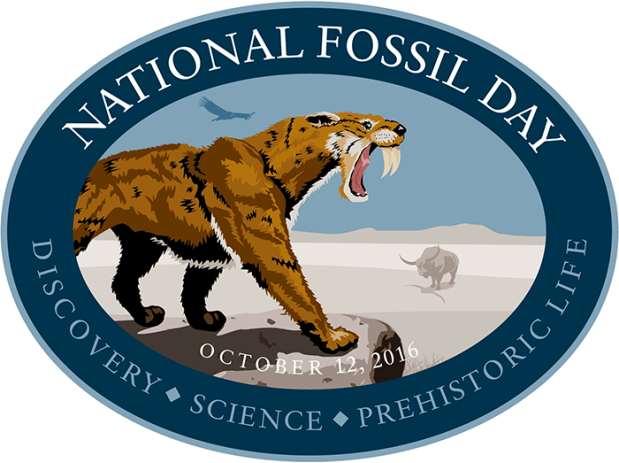
National Fossil Day saber-toothed cat long-horned bison condor

The 2016 National Fossil Day logo

October 12 was National Fossil Day. This has been going on since 2010 as part of Earth Science Week, but I forgot to post anything about it. According to their website, “National Fossil Day is a celebration organized by the National Park Service to promote public awareness and stewardship of fossils, as well as to foster a greater appreciation of their scientific and educational values. Fossils discovered on the nation’s public lands preserve ancient life from all major eras of Earth’s history, and from every major group of animal or plant. In the national parks, for example, fossils range from primitive algae found high in the mountains of Glacier National Park, Montana, to the remains of ice-age animals found in caves at Grand Canyon National Park, Arizona. Public lands provide visitors with opportunities to interpret a fossil’s ecological context by observing fossils in the same place those animals and plants lived millions of years ago.”

This year, the theme of National Fossil Day is the Pleistocene era, so the logo has a saber-toothed cat, a long-horned bison, and a condor. In the background is Tule Springs Fossil Beds National Monument. To read more about these extinct animals, their website has an explanation here: http://nature.nps.gov/geology/nationalfossilday/nfd_2016_artwork_fossils.cfm

There was also a kids’ art contest, and here are the winners: http://nature.nps.gov/geology/nationalfossilday/art_contest_2016_results.cfm

Joplin Field Trip 2016

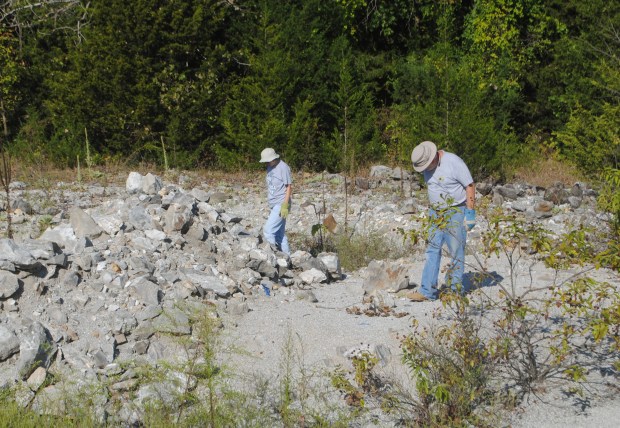
people looking at rocks collecting rocks joplin

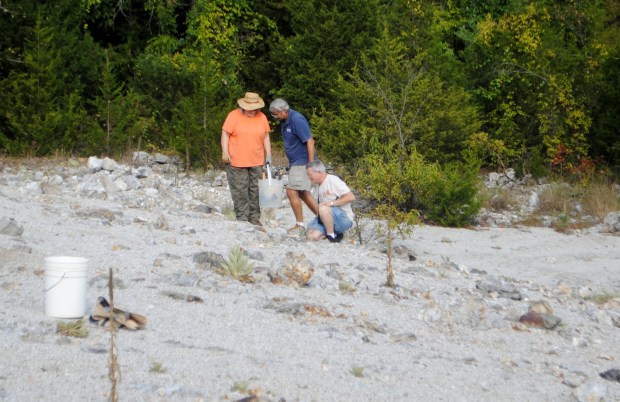
Mardell, Kerry, and Roy. Photo by Molly Stinemetz.

people looking at rocks collecting rocks joplin

Janice and Mike looking for rocks. Photo by Molly Stinemetz.

people giving charitable donation shaking hands

Bruce Stinemetz presenting a donation from the Friends of Mineralogy to Brad Belk, Director of the Joplin Museum Complex. Photo by Molly Stinemetz.

Some rockhounds went on a field trip to Joplin, MO in September 2016. They looked for rocks and went to the Joplin Museum Complex, where they gave the museum a donation from the Friends of Mineralogy, which is a national non-profit group of people who love studying minerals. Many of our rockhounds are members of multiple clubs, including this one. The Friends of Mineralogy make donations such as this one because they are a 501(c)(3) organization and because the Joplin museum is really cool and deserves it.

Congratulations Scholarship Winners

Every year, the Midwest Federation offers scholarships to students studying geology or earth science related fields at the college or post-graduate level. If you purchased anything at the Scholarship Auction at the March Gem & Mineral Show in Kansas City, or at the auction at the Association Picnic in August, then you contributed to these scholarships. Thank you!

Dr. William S. Cordua is a retired professor from the University of Wisconsin. Dr. Cordua is the chair of the Geology committee of the Midwest Federation of Mineralogical and Geological Societies. Dr. Cordua has chosen the two students:

Ms. Kari Wolfe is pursuing her Masters degree in Nitrate Pollution in Tile Water in Dead Zones in the Gulf of Mexico, through the University of Wisconsin in Minneapolis.

Ms. Colleen Hoffman is pursuing her Ph.D. degree in Mineralogy and Biogeochemistry of Deep Sea Hydrothermal Vents, through the University of Wisconsin in Minneapolis.

For more information about the scholarships, including how to apply: http://www.amfed.org/mwf/federation/scholarships.html

Association Picnic 2016

picnic
The Association Picnic will be held Sunday, August 28th at Antioch Park, Shelter 3. Swap begins at 9am, picnic around 12:30-1:00pm, auction after lunch. Meats, drinks, plates, etc. will be provided by the Association. Please bring a potluck side dish (e.g. beans, chips, veggies, potato salad, etc.), and dessert. Also bring cash to spend at the auction, which benefits the scholarship fund. Everyone is welcome.

Curb Showing Hayward Fault is Replaced

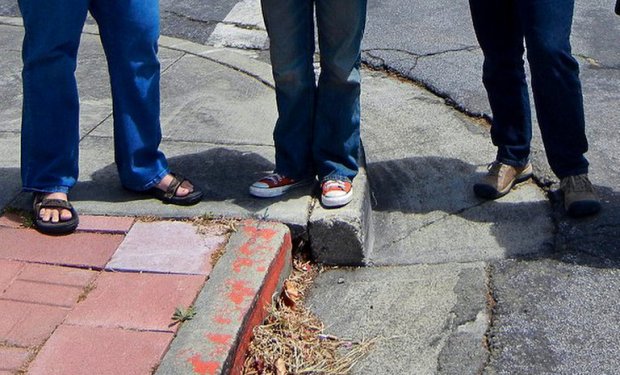
Hayward, California is the home of the Hayward Fault, which is a break in the Earth’s crust. Geologically speaking the Hayward Fault moves very fast. You can see that the tectonic plates are always moving when you look at the roads. Since it only moves a few millimeters a year, the roads and/or curbs don’t crack but instead gently wiggle apart at the seams.[*] See how this curb at Rose and Prospect has moved over time?

curb a few inches offset hayward fault

This is how the curb looked in 1974. It has already drifted several inches from where it was originally. Photo from http://www.geologyfieldtrips.com/haywardresidential.htm

hayward fault curb 2012 with people standing on top

This is how the curb looked in May 2012. See how far this piece has moved away? Photo by Andrew Alden at oaklandgeology.wordpress.com

If you want to go to California and see it for yourself, you are out of luck. The city has just replaced the curb. This is probably the first time that road work has made it into the New York Times. Read the article here: A Curb is Repaired and a Seismic Marker is Lost

[*]Note: Cracks in the road are not caused by plate tectonics. They are caused by thermal expansion/contraction, road salt, heavy trucks, and degredation of the road bed.

World’s Largest Uncut Diamond Up for Auction

hand holding largest uncut diamond from Lucara

Photo by Donald Bowers/Getty Images for Sotheby’s

From the New York Times, June 27, 2016:

In the fall of 2015, a 1,109 carat white diamond was found in the Lucara mine in South Africa. The diamond is called the Lesedi La Rona, which means “Our Light” in Setswana. On Wednesday, June 29, 2016 it will go up for public auction at Sotheby’s in London. Usually, precious stones like these are sold secretly by sealed bids and kept anonymous, so this Sotheby’s auction is unusual. This is the first time that such a large diamond has been on sale publicly.

The Lesedi La Rona is a type IIA diamond, which is very rare and is the most chemically pure type of diamond. Other famous IIA diamonds include the Koh-i-Noor and the Cullinan, which is 3,106 carats and is the biggest diamond ever found. The Cullinan was cut into 9 different stones and the pieces are now owned by various monarchs. Sotheby’s says that “whoever buys the Lucara stone will pay Sotheby’s a 12 percent fee, known as the buyer’s premium, on the hammer price for anything over the first $3 million, and a higher percentage of the first $3 million.” Whoever buys the stone will then have to decide if they want to have it cut. What a hard decision! What would you do?

The whole article is here: http://www.nytimes.com/2016/06/28/business/worlds-largest-uncut-diamond-heads-to-auction-a-break-with-tradition.html

UPDATE: It turns out nobody bought the diamond because the bids failed to meet the minimum reserve price. The reserve price was secret (just like at eBay) but it must have been more than £45 million ($61 million) because that was the highest bid. Maybe it will go on sale again later. Source: http://www.bbc.com/news/uk-england-london-36660076