Minerals

Anthracite

Q: What makes rockhounds different from non-rockhounds?

A: They are happy to receive coal for Christmas.

Rockhounds love coal, and they love anthracite even more. Anthracite is a type of coal. It is very hard and burns slowly and cleanly due to its high carbon content and few impurities. It is rarer than bituminous coal (the soft, most common form of coal); in fact, less than 2% of the coal in the United States is anthracite. Also unlike bituminous coal, anthracite won’t leave soot on your fingers when you touch it.

There are four types of coal in all. The last two we haven’t covered yet are lignite coal and subbituminous coal, which have the lowest carbon content and are even softer then bituminous coal. Anthracite is the hardest and has the highest carbon content. Most of the coal in the United States is found in Colorado and Illinois, and is used primarily for making electricity and coke (coke is used by foundries to make iron and steel).

Missouri’s State Mineral

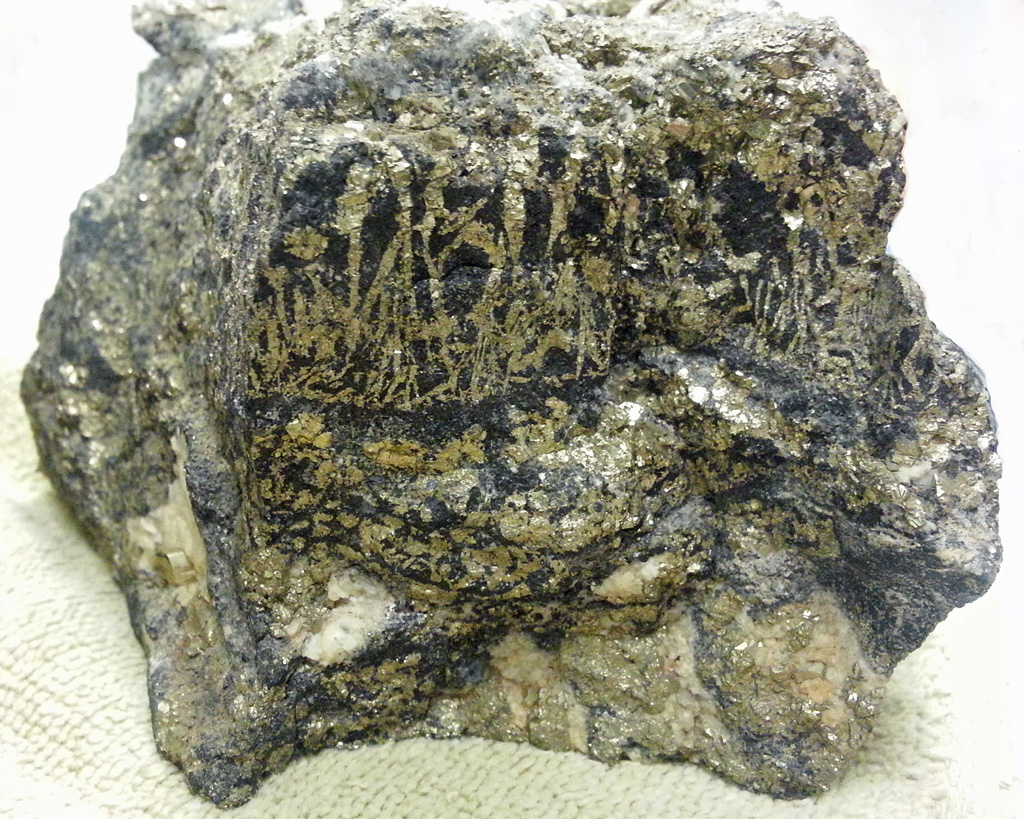
On July 21, 1967, the mineral galena was adopted as the official mineral of Missouri. Galena is the major source of lead ore, and the recognition of this mineral by the state legislature was to emphasize Missouri’s status as the nation’s top producer of lead. Galena is dark gray in color and breaks into small cubes. Mining of galena has flourished in the Joplin-Granby area of southwest Missouri, and rich deposits have been located in such places as Crawford, Washington, Iron and Reynolds counties. (RSMo 10.047)

Source: http://sos.mo.gov/symbols/symbols.asp?symbol=mineral

The specimen pictured is from the Southeast Missouri Mining District in Reynolds County, MO.

Hematite

A rock that looks like a cluster of small gray bits of shiny steel with spots of red rust.

Photo by Stephanie Reed

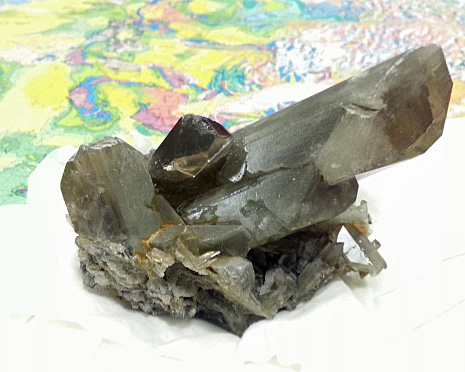
Hematite (Fe2O3) is a type of iron ore, which means that it contains iron which can be smelted out and used. It has a distinctive red color which means it can be used as red pigment, and is why hematite is sometimes called bloodstone. This is the main way you can identify hematite: it looks silver, but it produces a red streak. It was used in cave paintings when they wanted a red color. Hematite also can be polished and made into cabochons, but mostly, it is mined for its iron content and used for industrial purposes, such as for making steel or for X-ray shielding. Hematite is found all over the world, but primarily in Minas Gerais (Brazil), Cumbria (England), Morocco, Lake Superior, Utah (Thomas Range), and Arizona. This hematite specimen is from the UMKC Sutton Museum.

By the way, magnetic hematite jewelry is NOT made of hematite. The jewelry is a manmade ceramic barium-strontium ferrite magnet. See here: http://www.mindat.org/min-35948.html Hematite by itself is not magnetic, but some people think it is because it is frequently found with magnetite, which is magnetic.

Chemical Composition of Gemstones

Here’s a neat infographic from Compound Interest (one of my favorite websites) that describes 16 different gemstones and why they have different colors. It also includes their chemical formulas and hardness on the Mohs scale.

Many gemstones would be colorless or a different color if not for the presence of small amounts of transition metals such as chromium or titanium. For example, you can see that aquamarine and emerald both have the same chemical formula Be3Al2(SiO3)6, but emeralds are green because of chromium ions replacing some of the aluminum ions and aquamarines are blue because of iron 2+ or 3+ ions replacing some of the aluminum ions. Click through to read the whole article, because there are many other ways that gems and minerals get their colors!

Angelwing Chalcedony

Article by special guest author David Reed

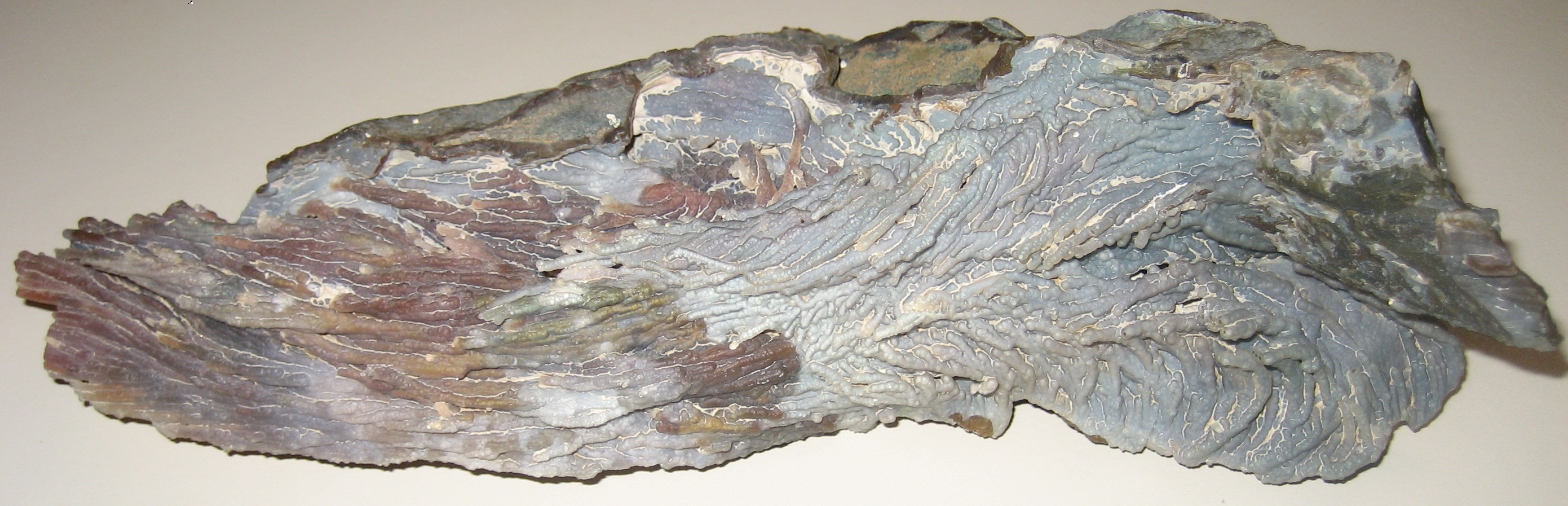
a long flowing wing-shaped rock appearing to be made of several small tubes, with red and blue colors.

From the collection of David Reed, photo by Stephanie Reed

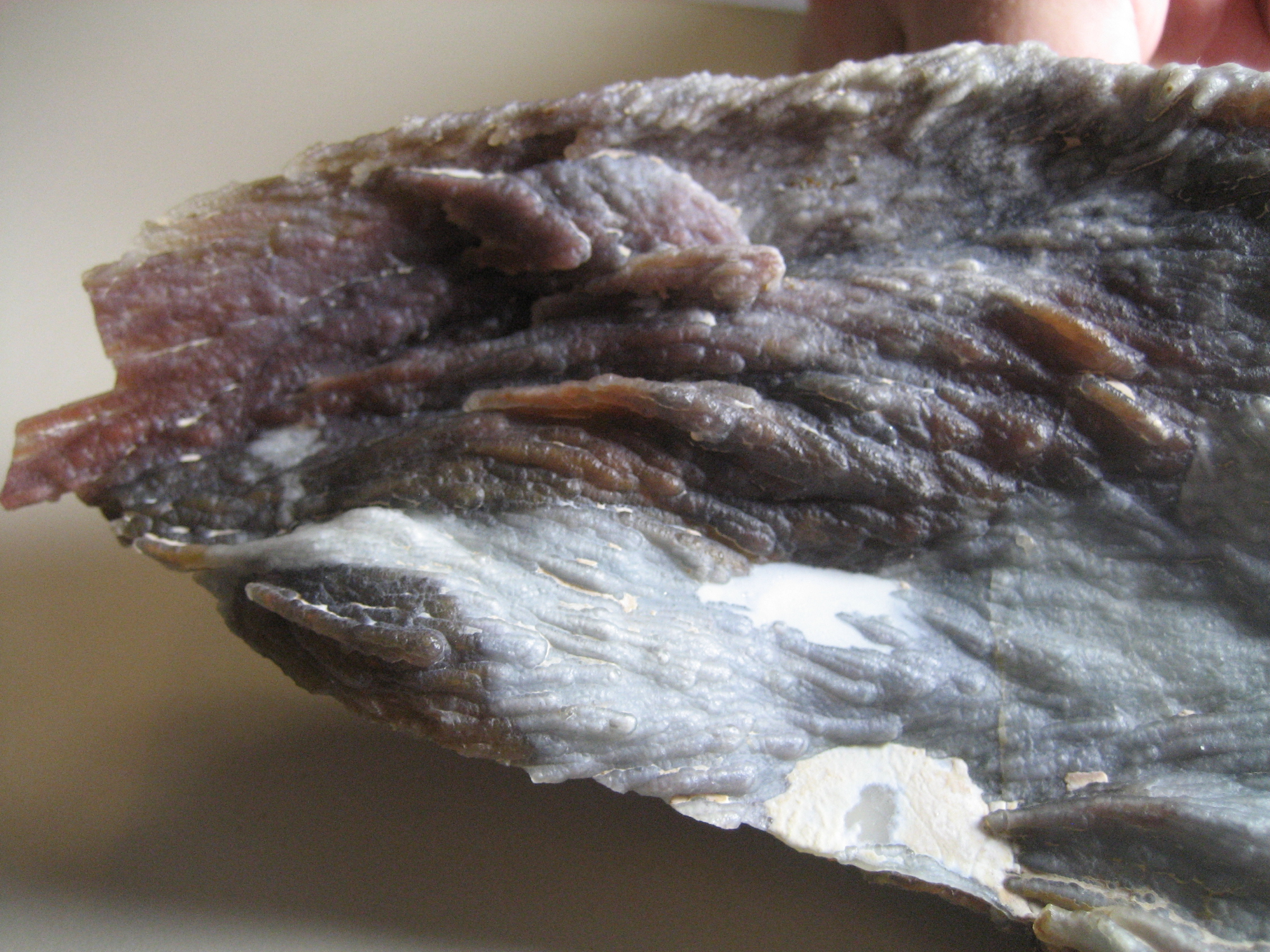
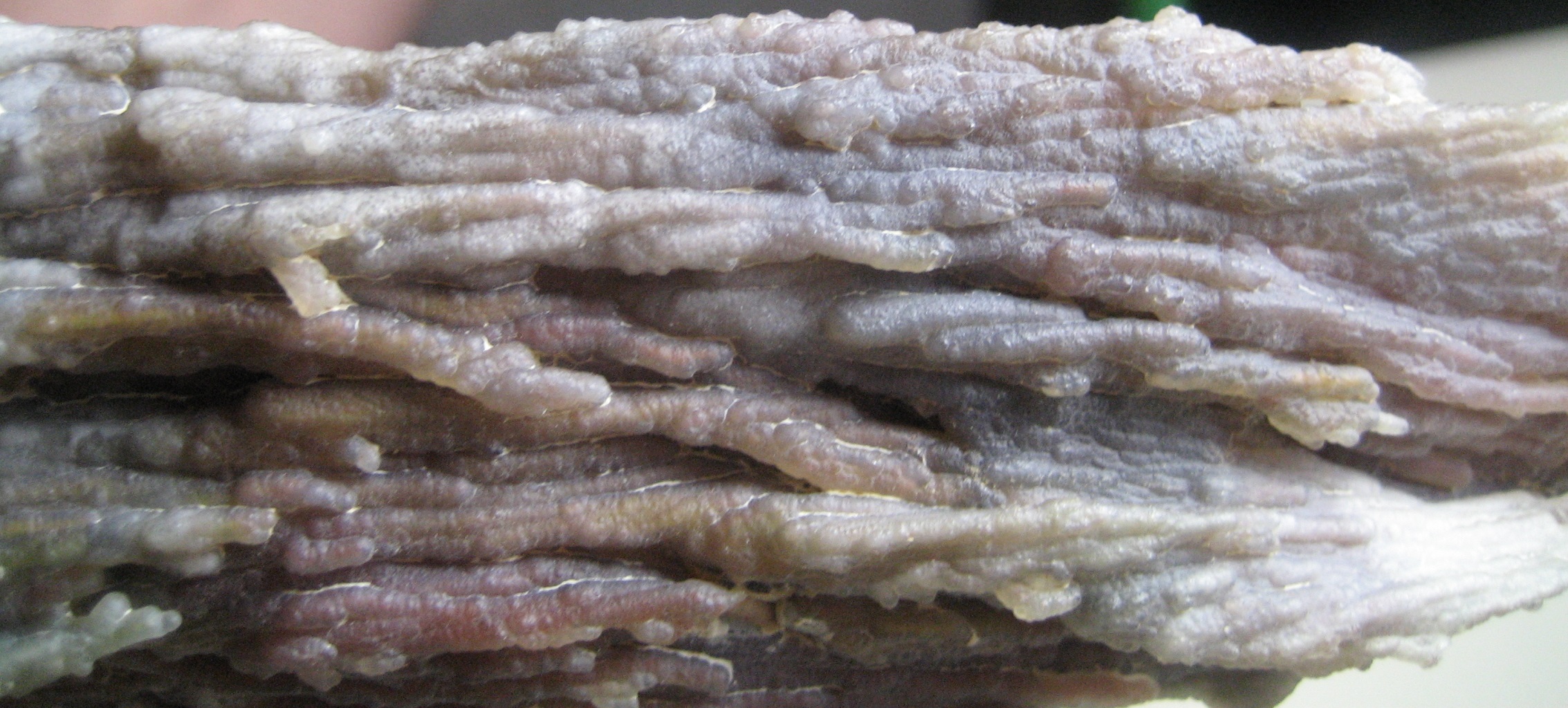
This refers to a surface chalcedony formation characterized by groups of chalcedony filaments often intricately woven or connected together, so they resemble the feathers of a wing or flowing hair. They occur most often in the center of a vug or vein of agate, but can also occur in the center of a hollow thunderegg. These formations are usually found in Idaho or Oregon. It describes this type of surface chalcedony formation, regardless of whether the underlying formation is plume agate, tube agate, or moss agate. See below for several close-ups, all from the same specimen.

Close-up of red tube formations

Photo by Stephanie Reed

Close-up of blue and orange tubes

Photo by Stephanie Reed

Lots of chalcedony filaments all pointing the same way

Photo by Stephanie Reed

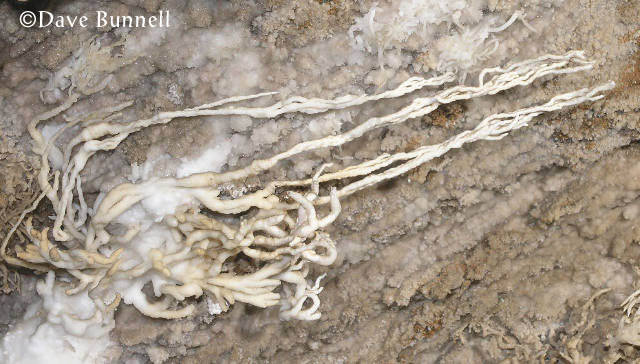
The tubes in Angelwing Chalcedony seem to follow the direction of flow of the silica-bearing fluid in air within the vug. They may form in similar fashion to the directional helictites (gypsum formations) in Lechugilla Cave (and elsewhere), or they may be directional helictites which were silicified.

Lechuguilla_Chandelier_Ballroom

Lechuguilla Chandelier Ballroom photo by Dave Bunnell

long squiggly white directional helictites

Directional Helictites Photo by Dave Bunnell

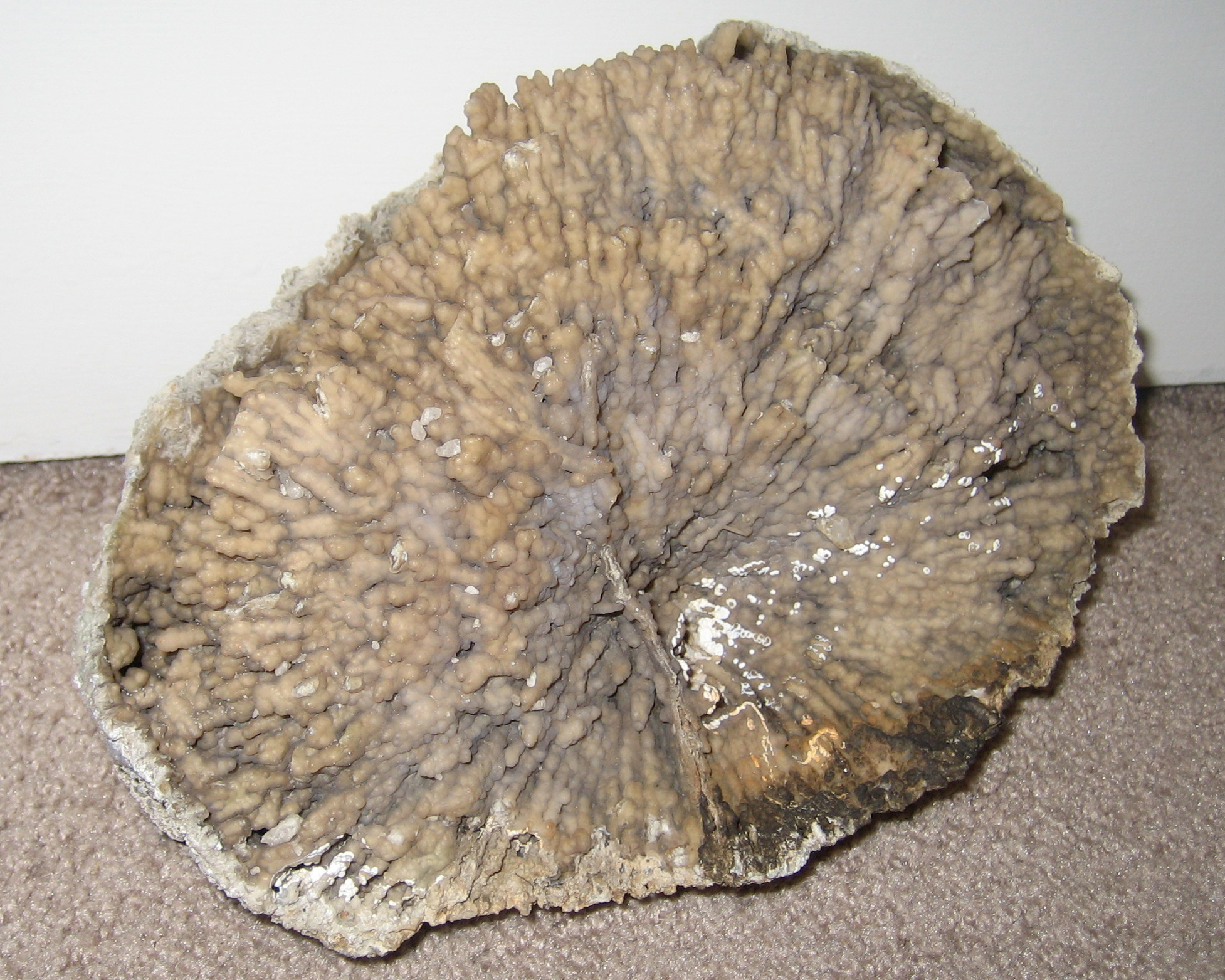
Although it looks similar, Angelwing Chalcedony is not the radiating tubes found in fossils of certain coral heads.  Angelwing Chalcedony was never alive, but the coral was. During mineralization, the form of the living coral was maintained, but the structure was changed from mostly calcite to mostly silica, and some of the voids were filled. The structure of the fossil is more regular; there was no irregular flow of fluid through a void, as there was with the Angelwing Chalcedony. The fossil specimen below was found eroding out of a Florida riverbed. It was purchased, to avoid diving with the alligators.

A round brown chunk of tiny tubes of coral with a white crust on the outside

From the collection of David Reed, photo by Stephanie Reed

Canadian Rocks on Display

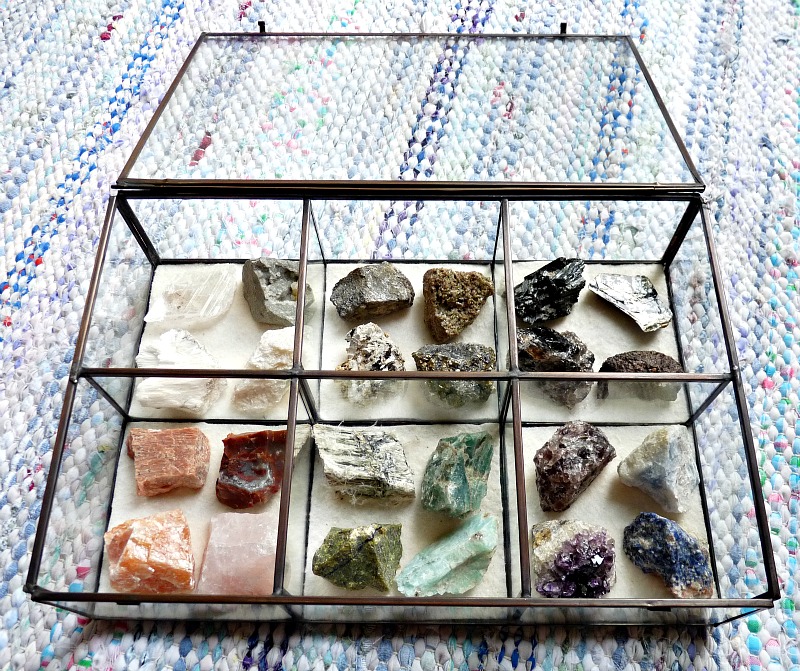
Tanya at Dans Le Lakehouse has a neat collection of minerals from Canada that she’s had since childhood. She wanted to enjoy her shiny pretty rocks, but they were stored in an opaque cardboard box. One day, she found this glass box that was the same size as the original box and lined it with felt. Then she arranged the specimens by color and hid the name and locality tags underneath the felt. I don’t know why she thinks this is nerdy. Now the rock collection sits on her husband’s desk, adding color to the room. Read her blog post for more details.

What a neat way to display a colorful set of minerals! I think the sodalite and the red jasper are the most eye-catching. Which mineral is your favorite?