Special Events at the Gem Show

A schedule of special events happening during the show. If you can only come on one or two days, use this to help plan.

Friday, March 13, 2015
All day- Minerals and jewelry for sale, flint knapping demonstration, walk-through story book, free rock/mineral identification.
3:00 p.m. “Missouri’s One and Only Dinosaur and the End of the Dinosaurus”, Carl Campbell, St. Louis Community College-Meramec, St. Louis, Missouri

Saturday, March 14, 2015
All day- Minerals and jewelry for sale, flint knapping demonstration, walk-through story book, free rock/mineral identification.
1:00 p.m. “Crinoids, Lillies of the Sea”, Rick Poropat, Eastern Missouri Society for Paleontology, St. Louis, Missouri
2:00 p.m. “CSI -Cretaceous Skeletal Investigations and the Life and Hard Times of T. rex ”, Dr. David Burnham, Research Associate, University of Kansas, Lawrence, Kansas
3:00 p.m. “Chasing Jumbo’s cousin: Reconstruction of the history of one of KU’s oldest and largest fossils”, Josh Schmerge, University of Kansas, Lawrence, Kansas
4:00 p.m. “Flat-skulled beavers of the Miocene: The most unusual mammals of all time?”, Josh Schmerge, University of Kansas, Lawrence, Kansas
7:00 p.m. Lecture Room- Public auction in the Lecture Room with complimentary snacks and soft drinks. Proceeds will benefit the Scholarship Fund.

Sunday, March 15, 2015
All day- Minerals and jewelry for sale, silent auctions, flint knapping demonstration, walk-through story book, free rock/mineral identification.
2:00 p.m. “Nannotyrannus – teenage tyrant or tiny theropod?”, Josh Schmerge, University of Kansas, Lawrence, Kansas

54th Annual Spring Gem & Mineral Show

Flyer giving information about the gem show

Less than 2 weeks until the big gem show you don’t want to miss! Sponsored by the Greater Kansas City Association of Earth Science Clubs, this is the Spring Gem, Mineral, Jewelry, and Bead Show at the KCI Expo Center. We have over 70 retail and wholesale dealers, educational exhibits from KU and other local universities, lectures, demonstrations, a dinosaur puppet show, door prizes, and scholarships. We (the Show-Me Rockhounds) are working hard on our displays and things to sell, but you’ll have to come to the show to see what we have! For more information on the event and a coupon, go to www.kcgemshow.org

Chinese New Year

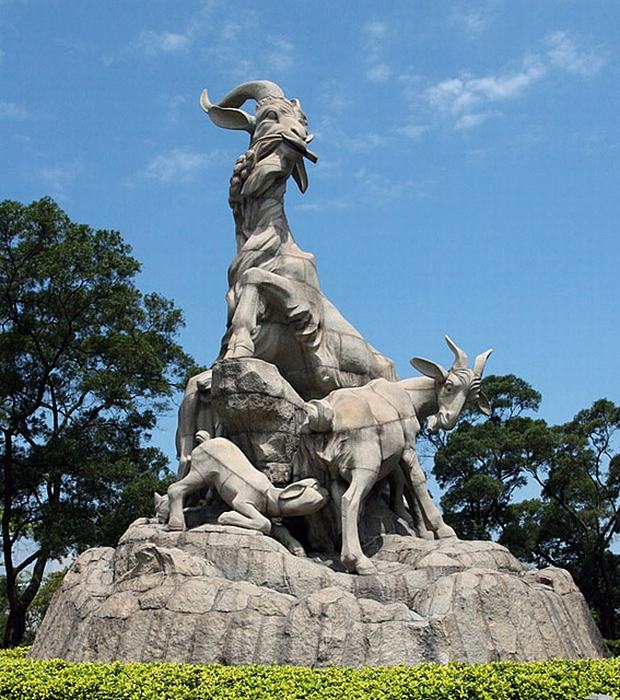
Happy Chinese New Year! This year is the Year of the Ram/Goat/Sheep (the language is ambiguous). This statue is in Guangzhou, a city in China that is also known as the City of Rams. The Five-Ram Sculpture is one of the most famous structures in Guangzhou. It was made of marble and installed in 1959, and has become the emblem of the city. Legend has it that more than 2,000 years ago, the city was a barren land with people who despite hard work were suffering from famine. One day five immortals in five-color garments came riding on five rams, playing their legendary music. The rams held sheaves of rice in their mouths. The immortals left the sheaves of rice for the local people, gave blessings to the city and left. The rams turned into stone and the city became a rich and populous place.
Read about famous Rams here: http://www.shenyun.com/whatsnew/article/e/tFQkYjOR8PI/year-of-the-sheep-goat-chinese-new-year-history.html

Valentine’s Hearts

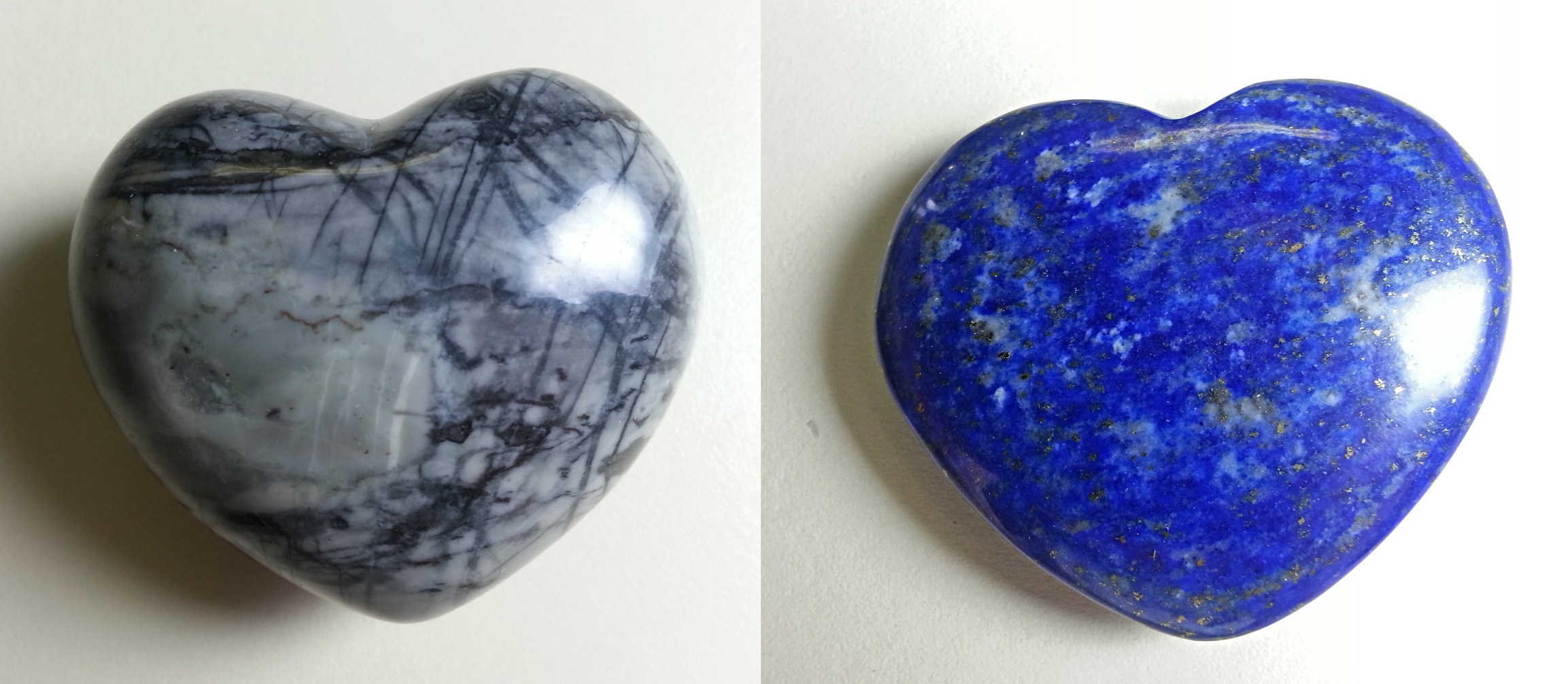
Two shiny stones carved into heart shapes. One is gray with black cross-hatched lines and the other is blue with small white swirls and gold sparkles.

Photos by Stephanie Reed

Two Show-Me Rockhounds members who are very much in love took a trip to Hot Springs, AR. While they were there they stopped at a rock shop, of course, and these carved hearts caught their attention. Stephanie was drawn to the gray and black petrified wood heart because she thought it looked like a charcoal drawing. David was drawn to the blue sodalite heart because the blue color reminded him of lapis.

What kind of rocks catch your attention, and why?

Vanadinite

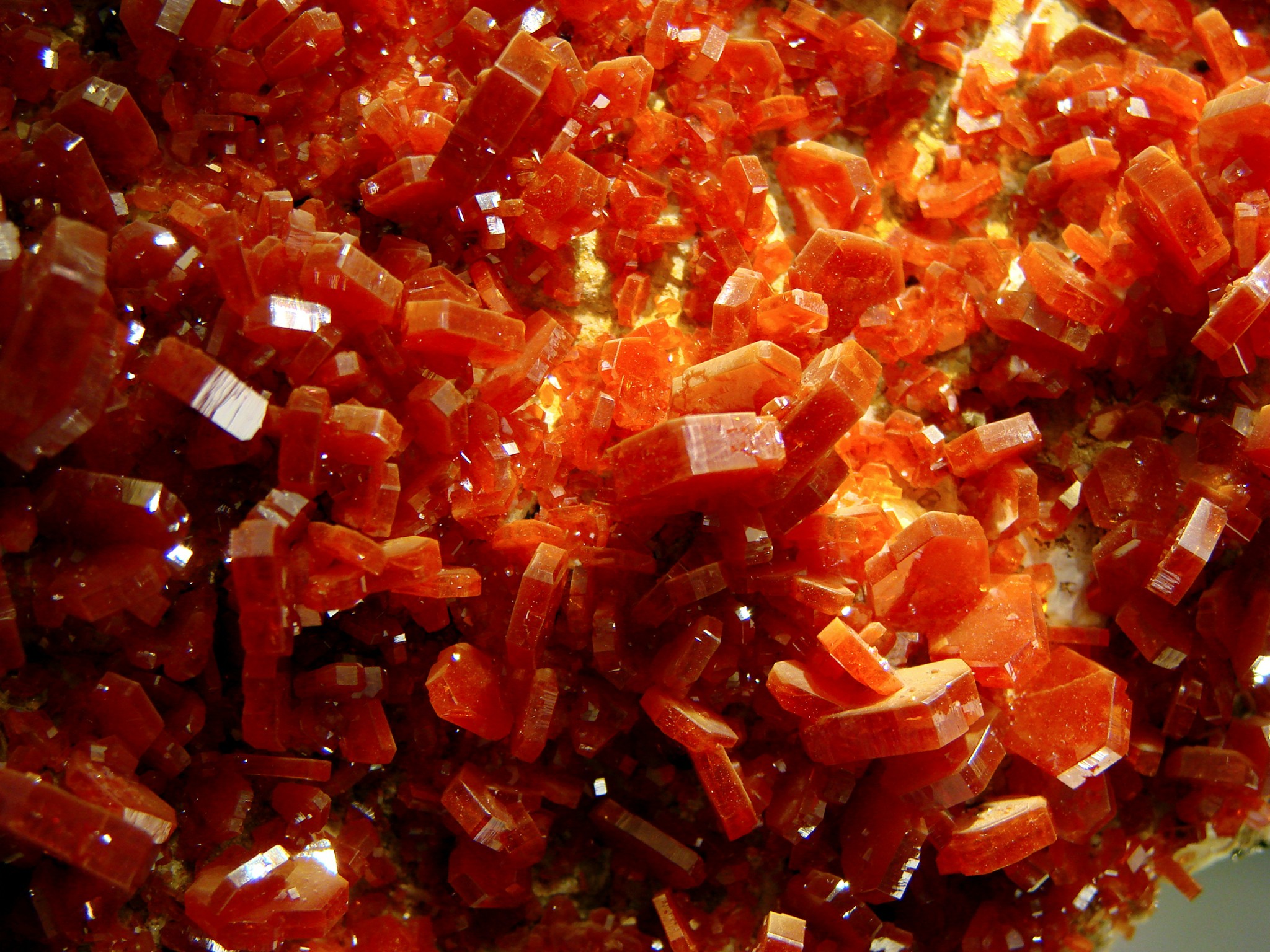
Lots of flat orange crystals with some small grains of yellow crystals in between.

Photo by Egen Wark

Reposted from our friend Mineralogy on Google+: Vanadinite is a lead chlorovanadate characterized by red to red-orange hexagonal crystals. It is a secondary mineral found in the oxidized zone of lead deposits resulting from the alteration of vanadiferous sulfides and silicates. A member of the apatite group, vanadinite forms a solid-solution series with its phosphate (pyromorphite) and arsenate (mimetite) analogues. It was first discovered in Mexico in the 19th century and is prized by collectors due to its distinctive color.

If you like the photo and writeup, check out Mineralogy’s Google+ page and follow them.

Happy January Birthdays!

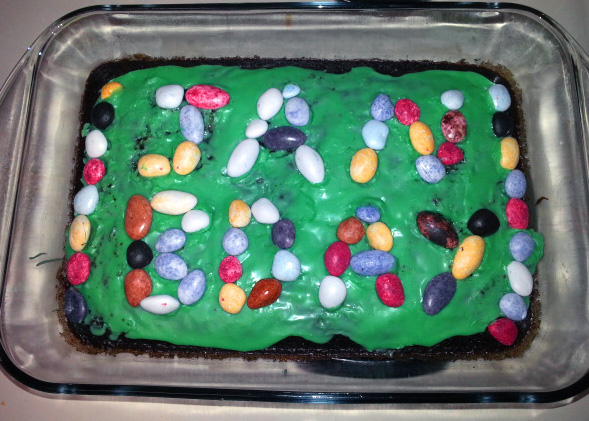
A chocolate cake with green icing and multicolored rocks spelling

Cake and photo by Stephanie Reed

We had several Show-Me Rockhound members with birthdays in January, and I got thinking about what kind of cake a rockhound would like. I’ve seen some amazing geology-themed cakes but I’m not skilled enough at cake decorating to come close to those. Then I saw these chocolate rocks at Price Chopper and I knew exactly what to do. This is the result. Happy birthday, David, Charley, and Sharon!

Mastodon Bones Found in Michigan Backyard

10,000-14,000 year old mastodon bones found in Michigan

Photo: Rod Sanford/Lansing State Journal

Reblogged from ESCONI (Earth Science Club of Northern Illinois): When we say we enjoy finding fossils in our own backyard, we are usually speaking metaphorically. Eric Witcke means it literally. He and neighbor Daniel LaPoint were excavating a backyard pond at his home in Bellevue Township, Michigan, when they unearthed a paleontological treasure. They called in the some experts from the University of Michigan’s Museum of Paleontology and were told the 42 odd bones belonged to a 37 year old male Mastodon. The Mastodon lived between 10,000 and 14,000 years ago.

Daniel Fisher, the director of the U of M museum, has made two trips to confirm and examine the Bellevue Township find.

He said there have been a total of about 330 confirmed mastodon bone discoveries in Michigan — but just two in the last year. Most of the bones have been found in the southern half of the lower peninsula. Sometimes people find just a tooth or tusk.

LaPoint and Witzke’s collection includes several rib bones, leg, shoulder and hip bones, the base of a tusk and pieces of the animal’s vertebrae.

Fisher has spent several hours looking through what they found and believes the mastodon was a 37-year-old male.

“Preliminary examination indicates that the animal may have been butchered by humans,” said Fisher. Bones show what look like tool marks, in places.

The bones are between 10,000 and 14,000 years old. Fisher said once they’ve been donated to the museum the exact age will likely be narrowed to within 200 or 300 years.

The full story is here.