Joplin Mining Equipment

In November 2016, we went to see Marv Dahmen’s collection of vintage Joplin/Tri-State mining equipment and minerals. He talked about it for 5 hours but there was never a dull moment. We managed to record some of it, although it was so long Stephanie and David ran out of space on their phones. Here are some photos.
learning

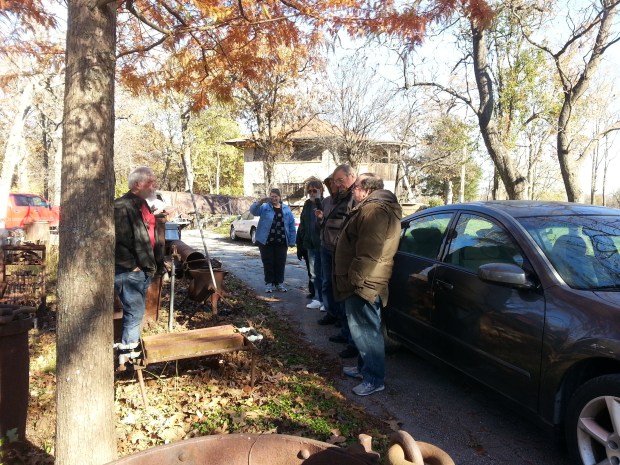
Everyone listening to Marv. Photo by Stephanie Reed

driveway

Ore buckets as far as the eye can see! Photo by David Reed
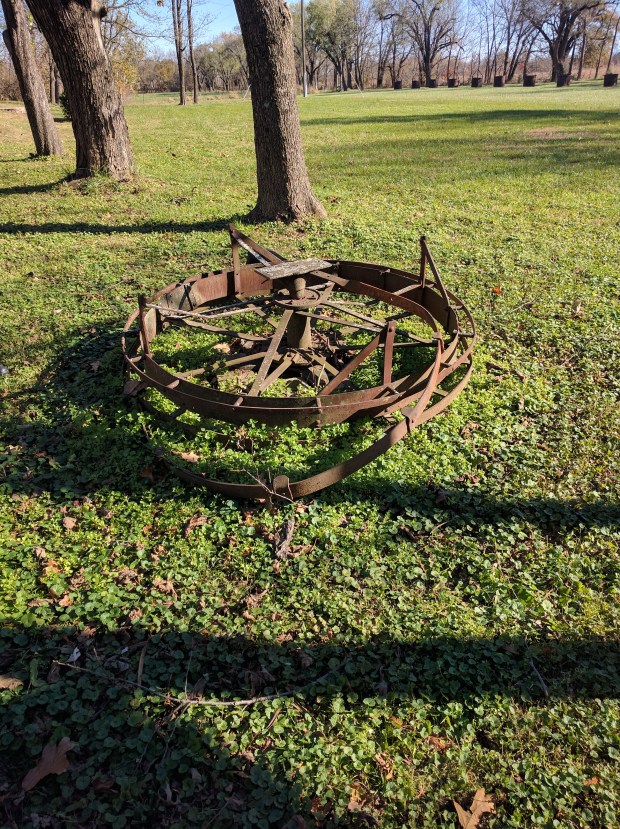
crank

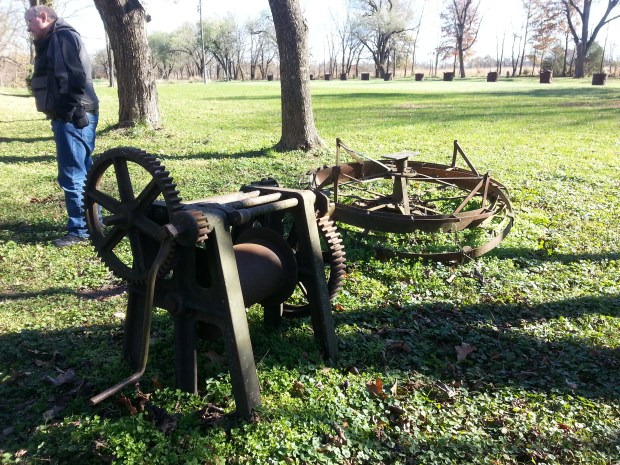
Ore crusher. Photo by Stephanie Reed

picher-museum

Most of the things outside are from the Picher Museum. Photo by Stephanie Reed
almost-scrap-metal

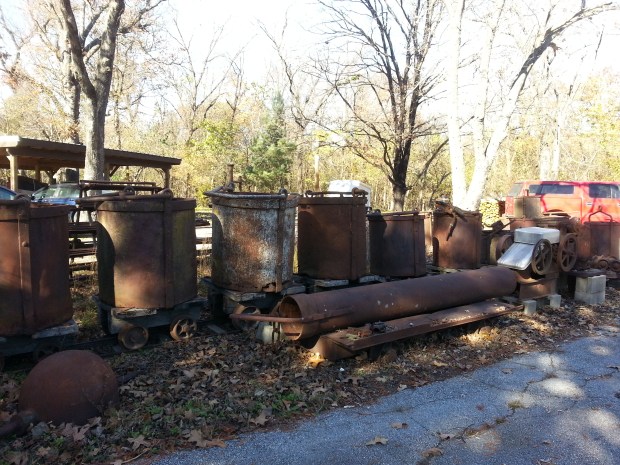
Ore buckets, a crucible, and one of the only 2 remaining drill bit buckets. They were sold for scrap metal when the Picher Museum was having hard times. Marv got them from the scrap metal place. Photo by Stephanie Reed
dewatering-2

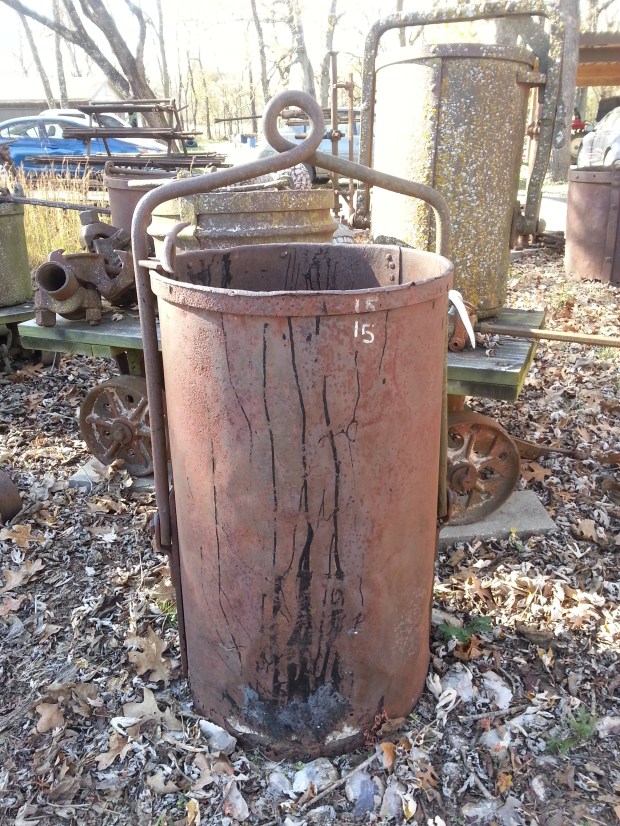
This is not an ore bucket. This is a dewatering bucket. Photo by Stephanie Reed
dewatering-bucket

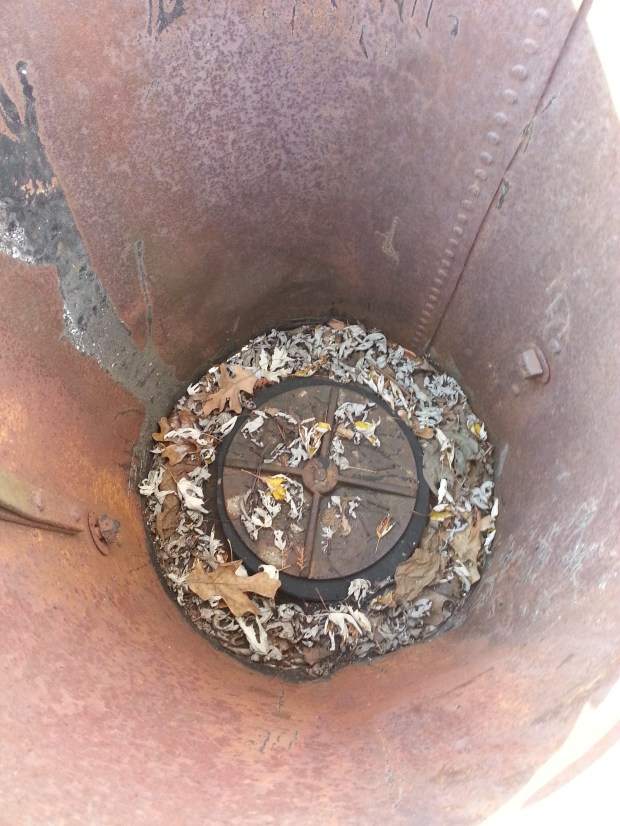
The inside of a dewatering bucket has a plunger inside. Photo by Stephanie Reed

drill

A drill. Photo by David Reed

round

Photo by David Reed

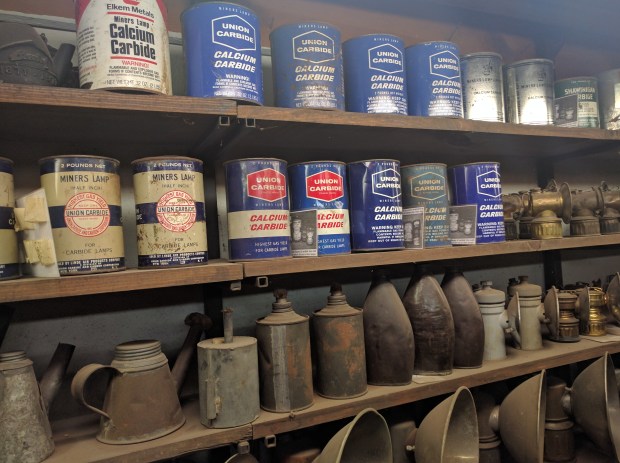
calcium-carbide

Calcium carbide and some lamps. Photo by David Reed
pushers

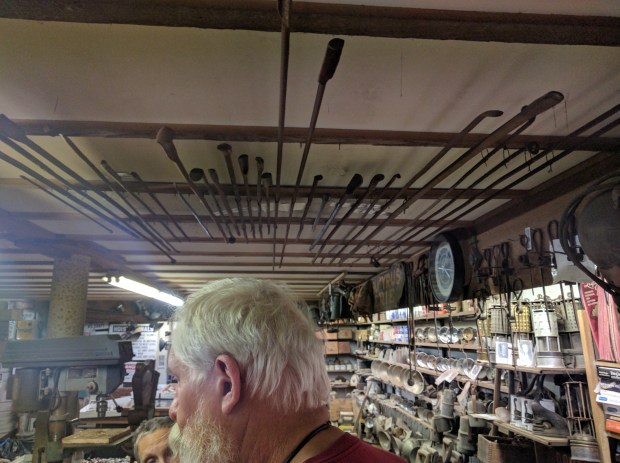
These long scoops are used to clean out the holes before putting in the dynamite. If you hit some debris while loading the dynamite it might explode. Photo by David Reed
wooden-openers

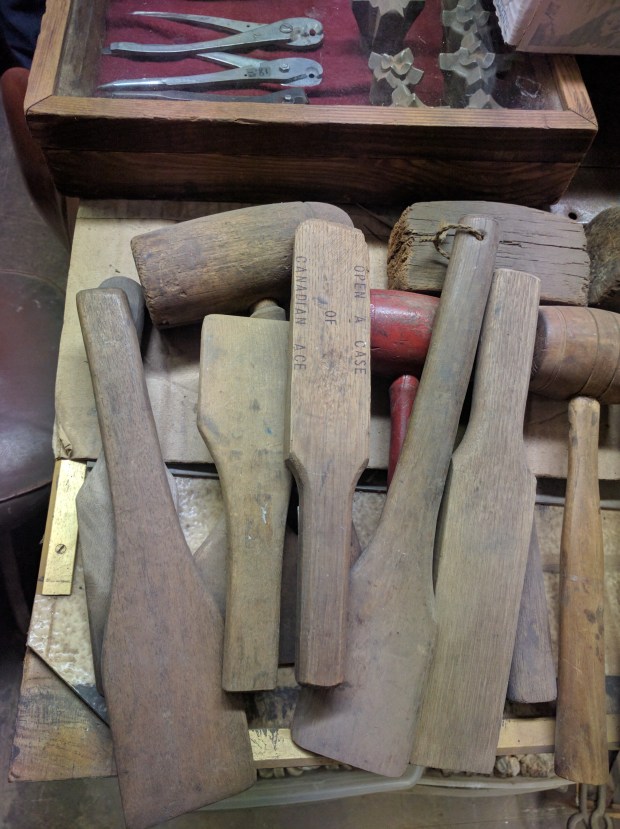
Wooden paddles for opening boxes of dynamite. It is too dangerous to use a metal implement. Photo by David Reed
mortar-pestle

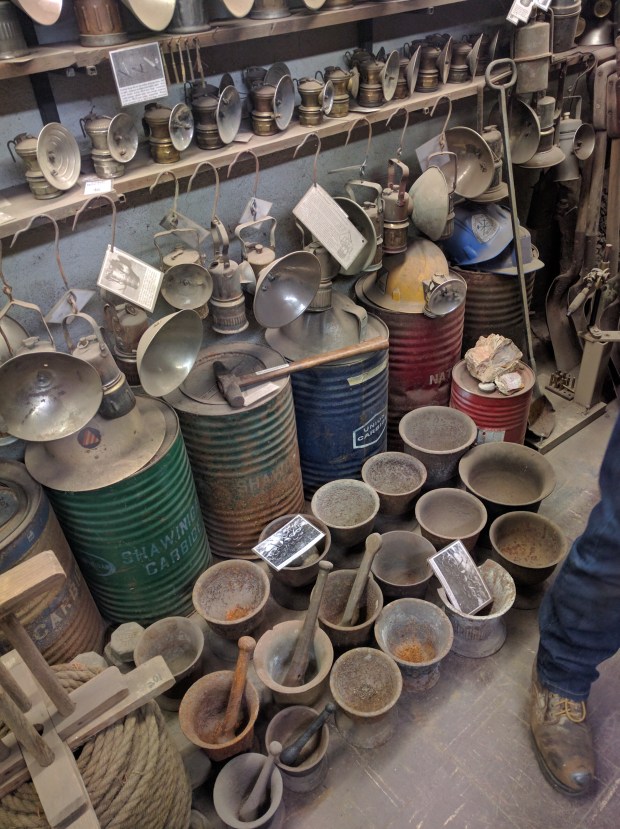
Lamps, containers of carbide, and mortars and pestles. Photo by David Reed
blasting-caps

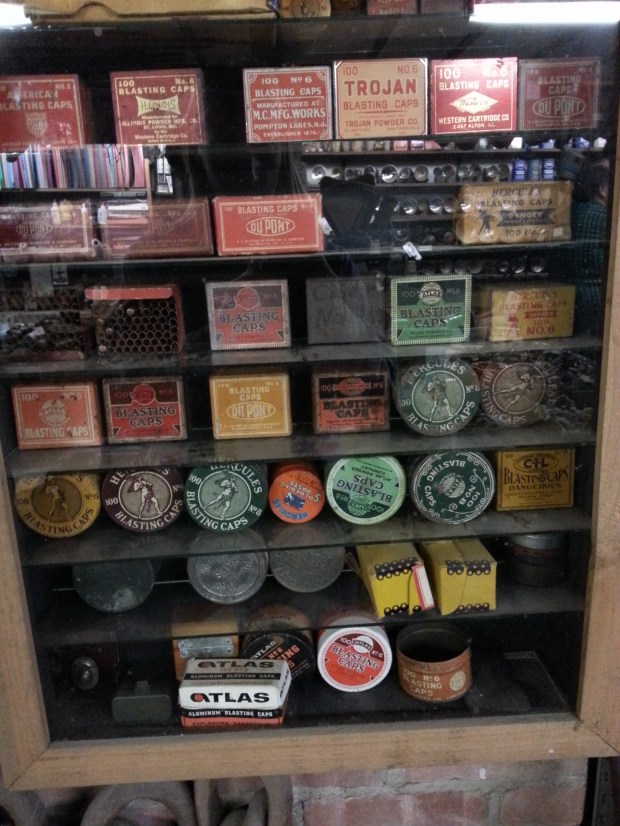
An impressive display of blasting caps. Photo by Stephanie Reed
indoor-display

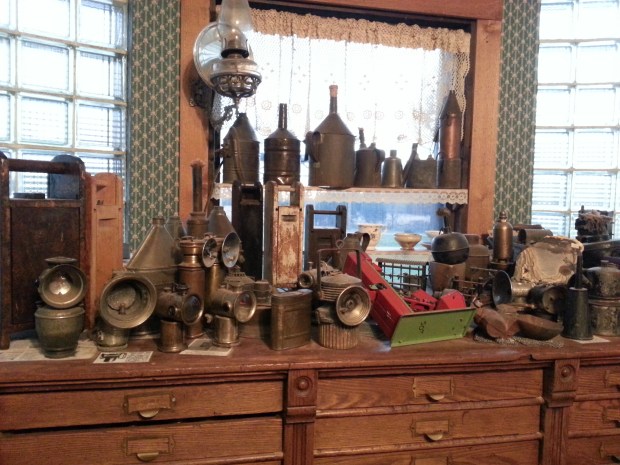
Guy’s dropper lamps. These were used before carbide lamps were invented. Photo by Stephanie Reed
workshop

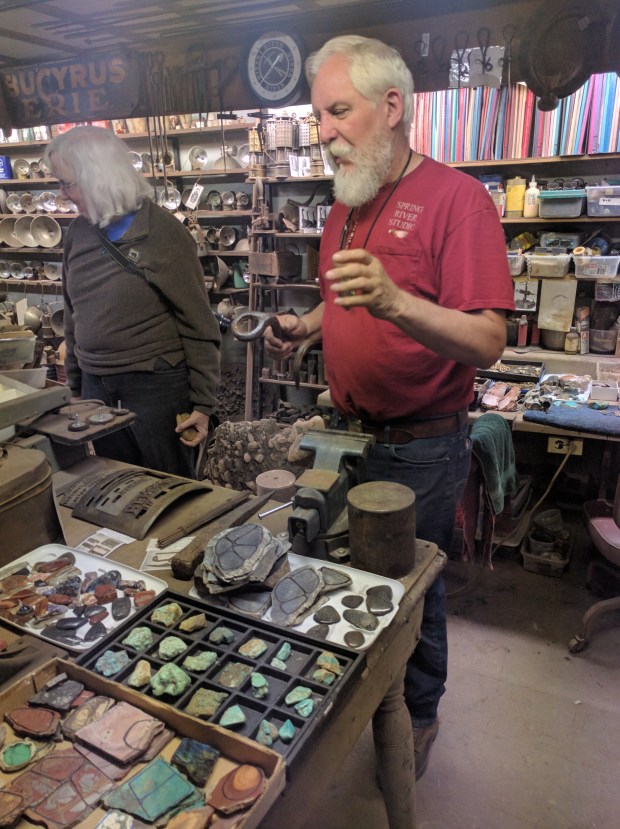
Marv in his workshop. On the table are some slabs that will soon be cut into cabs, and there is a curved plate that can be coated with ink and used to label boxes of Hercules dynamite (with removable plates for dates, lot numbers, etc.). Bucyrus Erie is a mining equipment company. Photo by David Reed
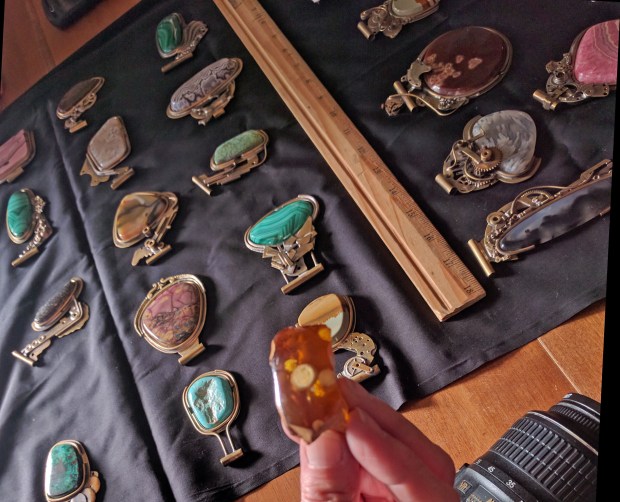
pendantsed

Marv also makes jewelry. Photo by David Reed
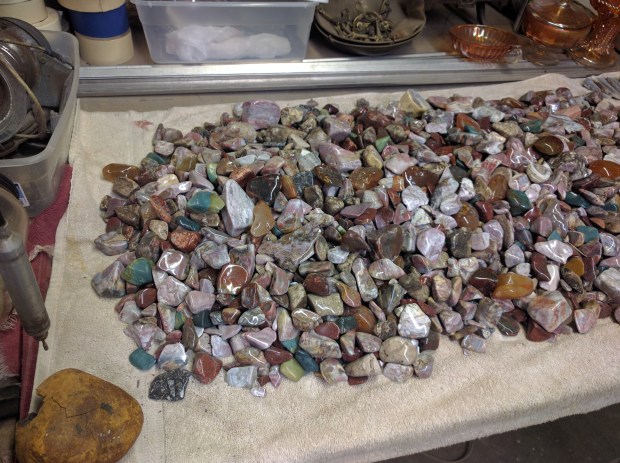
tumbled

Some of his freshly tumbled rocks. Photo by David Reed
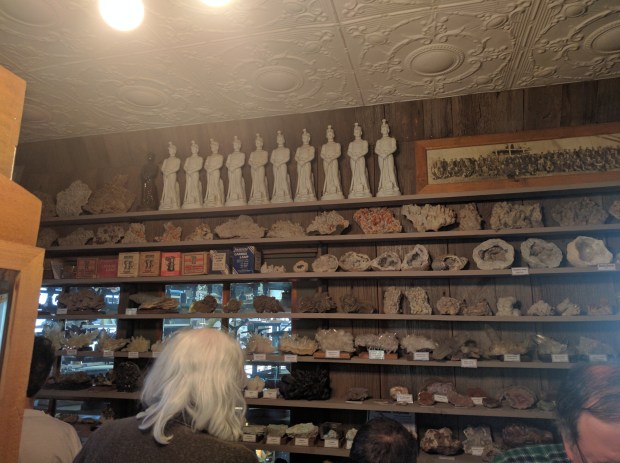
shelves

Part of Marv’s rock collection. Photo by David Reed

jasper

Lots of Owyhee Jasper from Oregon and Idaho. Photo by David Reed
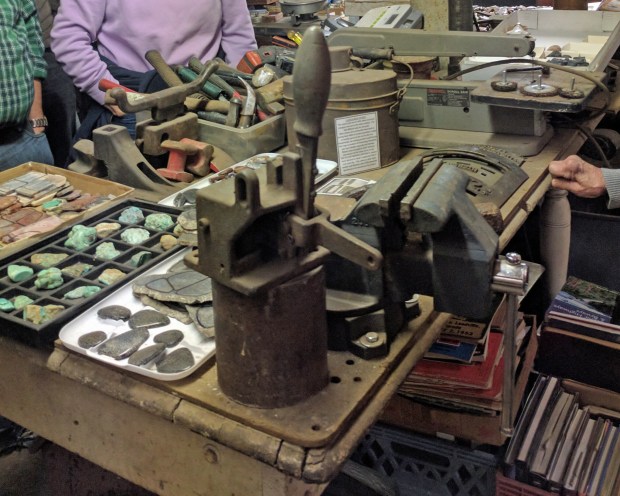
crimper

A device for crimping blasting caps. It is extremely rare. Photo by David Reed
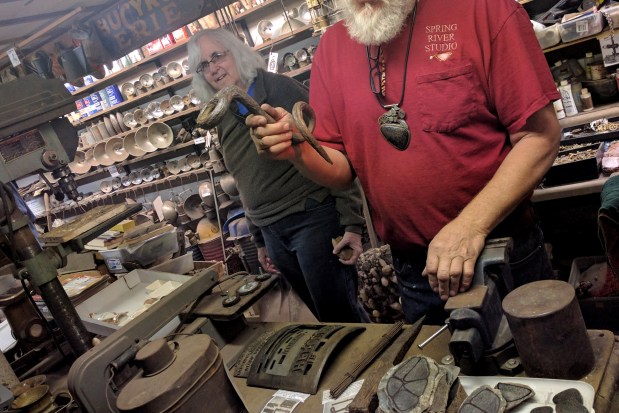
pigtail

This is a pigtail, which is a blacksmith-made hook for ore buckets. It is specially curved so that the bucket won’t fall off while it is being raised up. Photo by David Reed

Thank you Marv for inviting us on your property and into your home to see your amazing collection!
Gem Show Pictures Fall 2016

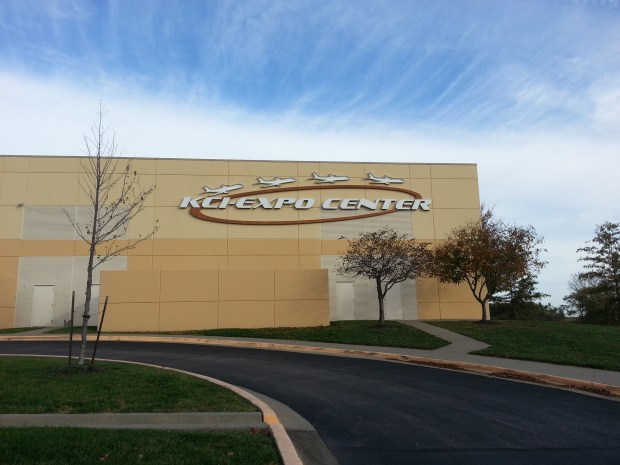
KCI Expo Center outside building

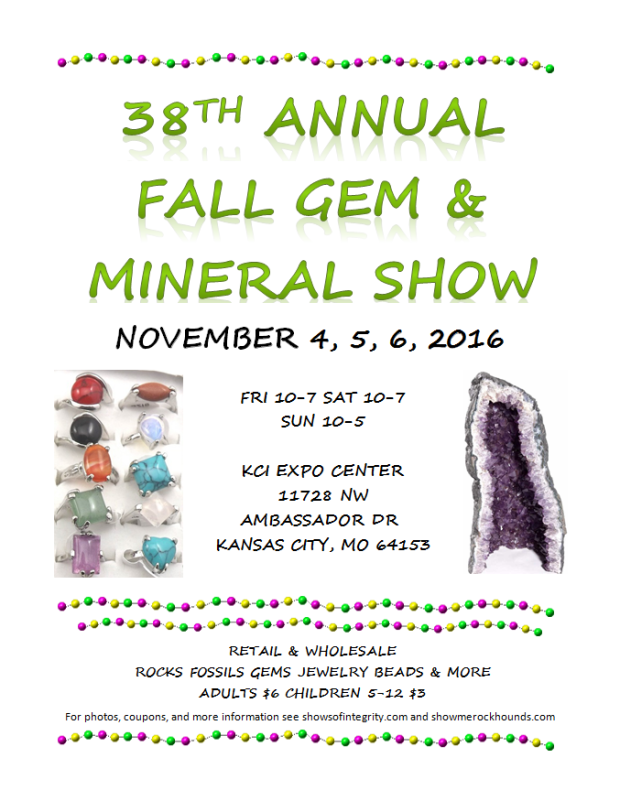
The Gem and Mineral Show was once again at the KCI Expo Center

selling rocks and books convention customers

The view from behind the Association booth.

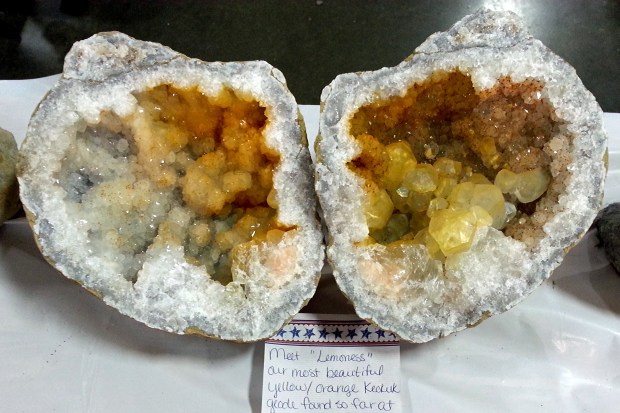
yellow keokuk geode

This yellow geode is from Keokuk in St. Francisville. They call it “Lemoness”.

crinoid Scyphocrinites elegans fossil from Morocco

This huge crinoid (Scyphocrinites elegans) fossil is from Morocco.

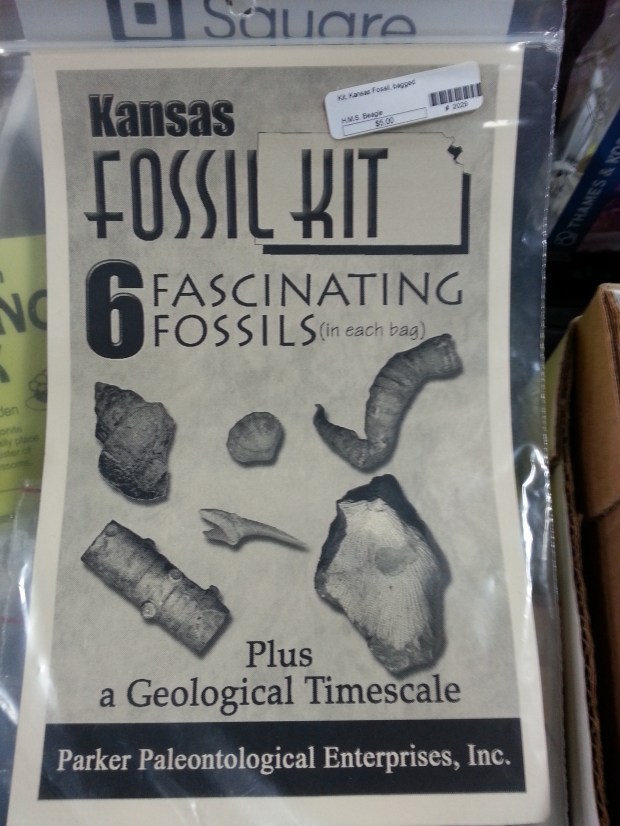
kansas fossils

There were also fossils from Kansas available.

tiny beads in tubes

Plenty of beads for sale at the show.

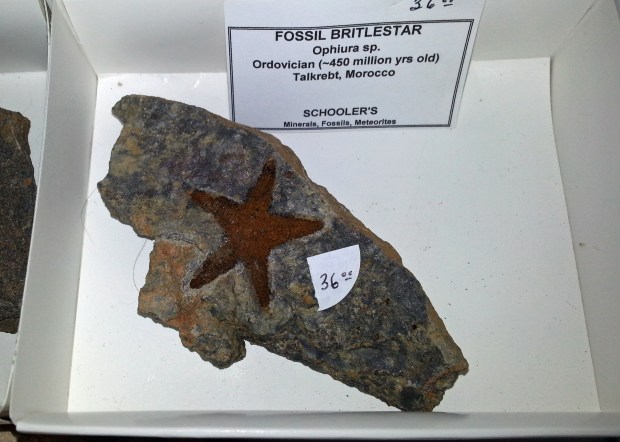
fossilized starfish britlestar ophiura morocco

Fossil Brittle Star from Morocco, sold by Schooler’s Minerals. Fun fact: a brittle star is from the class Ophiurida and starfish are from the class Asteroidea, so they are not really related to starfish at all.

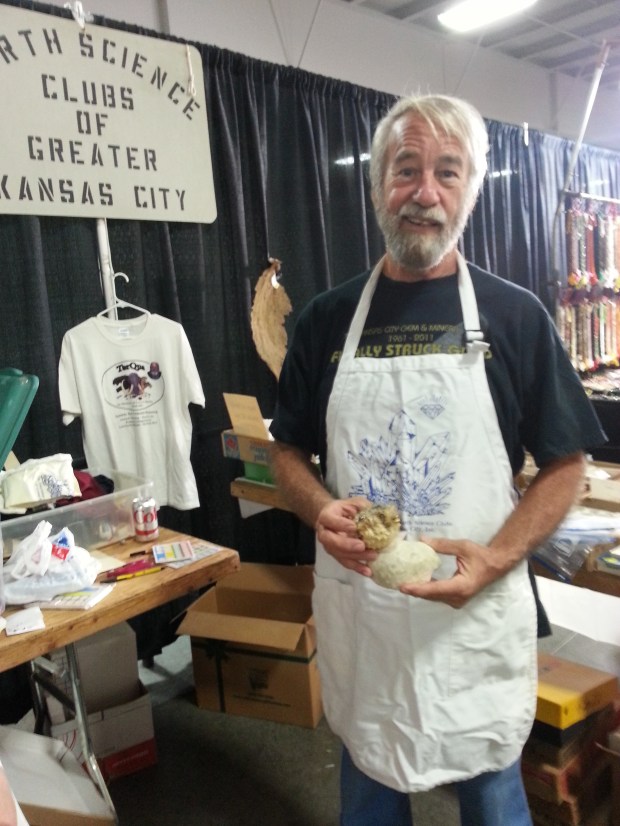
official-apron

Bob models an official Association apron and holds a pufferfish.

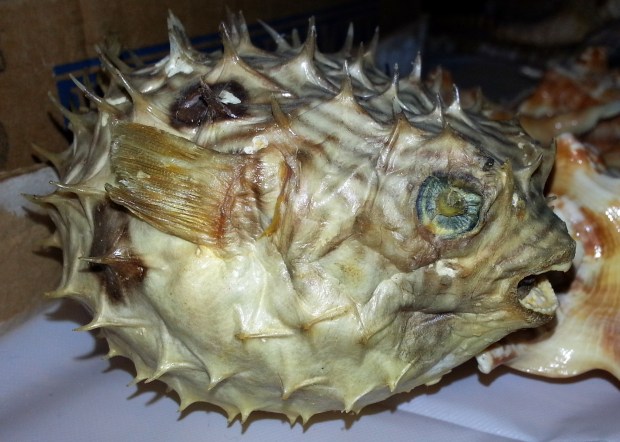
pufferfish

The preserved pufferfish close up. It is hollow and light as a feather. I don’t think anyone bought it so it will be for sale again in March.

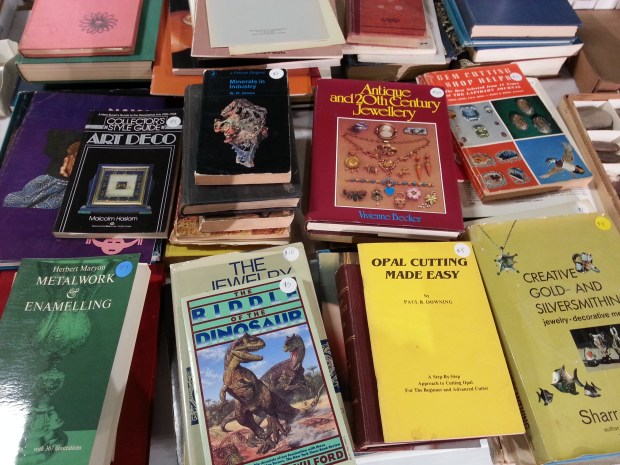
books about minerals and gem cutting for sale

Some of the mineral, fossil, and jewelry-related books we had for sale this year.

carved mineral skulls

Carved skulls made of semi-precious minerals.

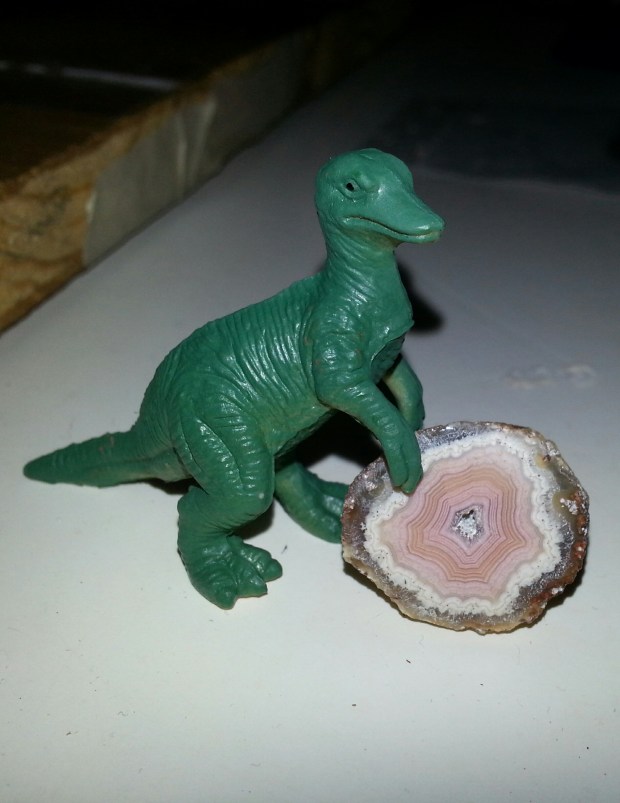
dino agate.JPG

Is this a giant dinosaur showing off a giant agate, or a very small dinosaur with a tiny agate?

potter with pots and bowls oklahoma dirt shirt

Martin selling pottery that he made

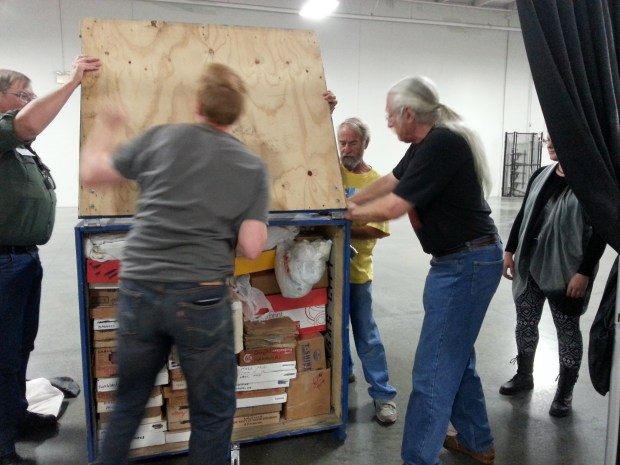
men packing items for storage

Everything is packed up into our big blue cube until the next show.

November Field Trips

Our November meeting will be Saturday, November 19. On that day, you can choose from two great field trip opportunities!

Choice #1: Meet at the Firefighter’s Memorial (87th & Blue River) at 10:00 am to collect fossils, then come to the regular meeting at noon at the Kansas City Public Library.

Choice #2: Meet at the Praying Hands Memorial (Hwy 171 and Dawson Dr) in Webb City, MO at 12:30 pm. It’s about 2 hours from downtown Kansas City, so don’t be late! From there, we will drive together to see Marve’s collection of vintage mining equipment. This is a large collection that cannot be seen anywhere else. RSVP to Bruce Stinemetz.

National Fossil Day

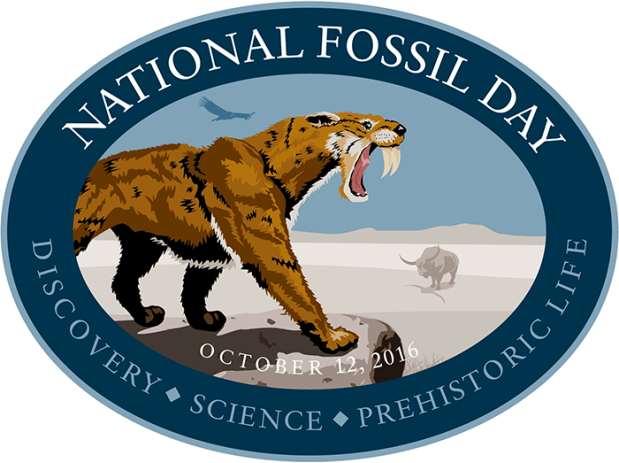
National Fossil Day saber-toothed cat long-horned bison condor

The 2016 National Fossil Day logo

October 12 was National Fossil Day. This has been going on since 2010 as part of Earth Science Week, but I forgot to post anything about it. According to their website, “National Fossil Day is a celebration organized by the National Park Service to promote public awareness and stewardship of fossils, as well as to foster a greater appreciation of their scientific and educational values. Fossils discovered on the nation’s public lands preserve ancient life from all major eras of Earth’s history, and from every major group of animal or plant. In the national parks, for example, fossils range from primitive algae found high in the mountains of Glacier National Park, Montana, to the remains of ice-age animals found in caves at Grand Canyon National Park, Arizona. Public lands provide visitors with opportunities to interpret a fossil’s ecological context by observing fossils in the same place those animals and plants lived millions of years ago.”

This year, the theme of National Fossil Day is the Pleistocene era, so the logo has a saber-toothed cat, a long-horned bison, and a condor. In the background is Tule Springs Fossil Beds National Monument. To read more about these extinct animals, their website has an explanation here: http://nature.nps.gov/geology/nationalfossilday/nfd_2016_artwork_fossils.cfm

There was also a kids’ art contest, and here are the winners: http://nature.nps.gov/geology/nationalfossilday/art_contest_2016_results.cfm

Joplin Field Trip 2016

people looking at rocks collecting rocks joplin

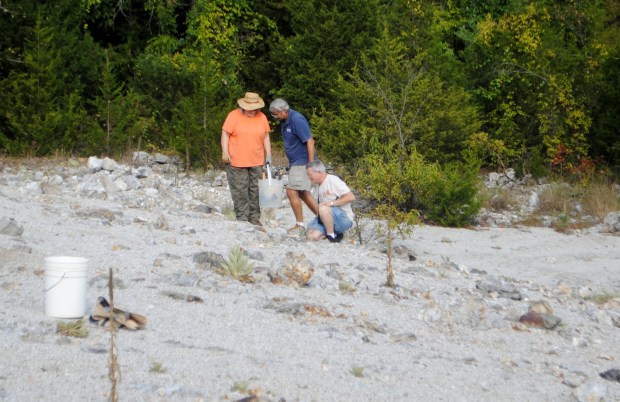
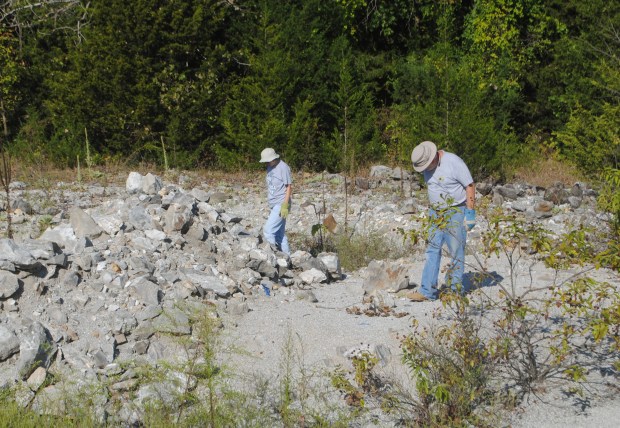
Mardell, Kerry, and Roy. Photo by Molly Stinemetz.

people looking at rocks collecting rocks joplin

Janice and Mike looking for rocks. Photo by Molly Stinemetz.

people giving charitable donation shaking hands

Bruce Stinemetz presenting a donation from the Friends of Mineralogy to Brad Belk, Director of the Joplin Museum Complex. Photo by Molly Stinemetz.

Some rockhounds went on a field trip to Joplin, MO in September 2016. They looked for rocks and went to the Joplin Museum Complex, where they gave the museum a donation from the Friends of Mineralogy, which is a national non-profit group of people who love studying minerals. Many of our rockhounds are members of multiple clubs, including this one. The Friends of Mineralogy make donations such as this one because they are a 501(c)(3) organization and because the Joplin museum is really cool and deserves it.

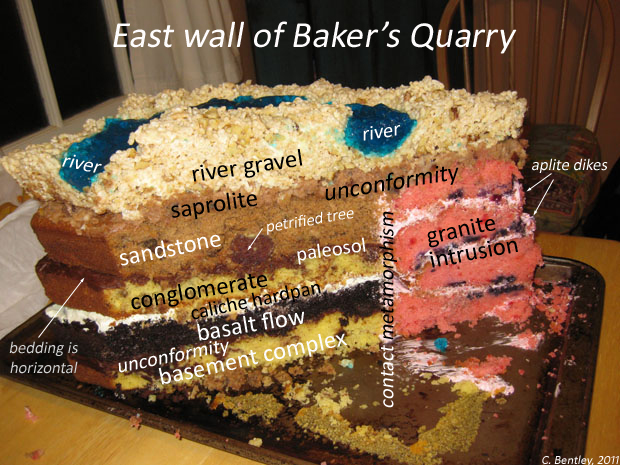
Baker’s Quarry Cake

This is what happens when you ask a geologist to bake a cake. http://blogs.agu.org/mountainbeltway/2011/01/24/east-wall-of-bakers-quarry/ has a very funny description of the quarry and how it was formed. Make sure you read the whole thing!

Historical records indicate that quarrying operations began in earnest around 9:30pm, although there is anecdotal evidence of small scale nibbling, particularly in the Strawberry Granite, prior to that time. Though only crumbs were removed, a few locals reported their findings to others. Resulting hype and rumor-mongering built up public anticipation to a frenzied hum. When the echoes of dinner had faded, industrial-scale excavations began at Baker’s Quarry.

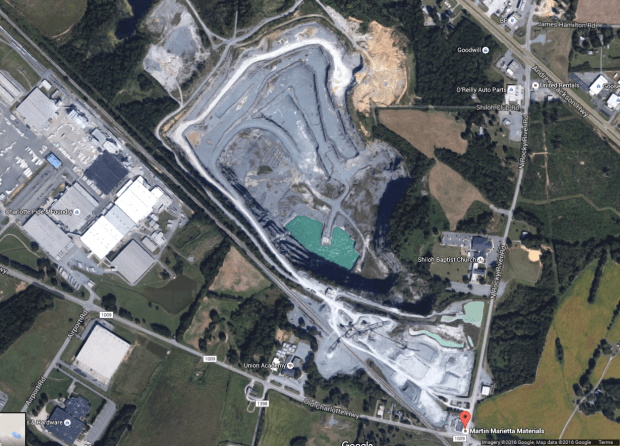
The real Baker’s Quarry is a mine in Monroe, North Carolina, also known as Martin Marietta Materials. This is what it looks like.

Bakers quarry mine north carolina aerial view map

From Google Maps

Congratulations Scholarship Winners

Every year, the Midwest Federation offers scholarships to students studying geology or earth science related fields at the college or post-graduate level. If you purchased anything at the Scholarship Auction at the March Gem & Mineral Show in Kansas City, or at the auction at the Association Picnic in August, then you contributed to these scholarships. Thank you!

Dr. William S. Cordua is a retired professor from the University of Wisconsin. Dr. Cordua is the chair of the Geology committee of the Midwest Federation of Mineralogical and Geological Societies. Dr. Cordua has chosen the two students:

Ms. Kari Wolfe is pursuing her Masters degree in Nitrate Pollution in Tile Water in Dead Zones in the Gulf of Mexico, through the University of Wisconsin in Minneapolis.

Ms. Colleen Hoffman is pursuing her Ph.D. degree in Mineralogy and Biogeochemistry of Deep Sea Hydrothermal Vents, through the University of Wisconsin in Minneapolis.

For more information about the scholarships, including how to apply: http://www.amfed.org/mwf/federation/scholarships.html