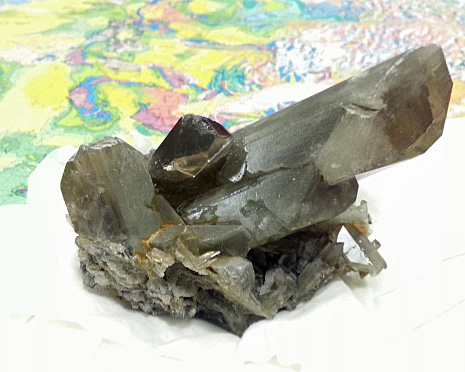
Our President Martin Mueller was showing off this huge barite crystal at our previous meeting. He got it from the auction at the Park Hills show, and it was originally from the Linwood Mine in Buffalo, Iowa. The word barite means heavy, and it is a very dense mineral.
member-owned
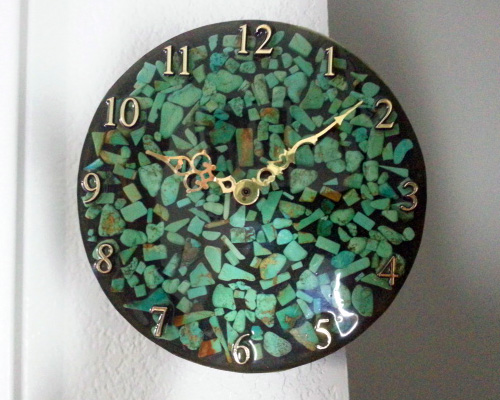
What time is it? Time to get a rock clock!
Valentine’s Hearts
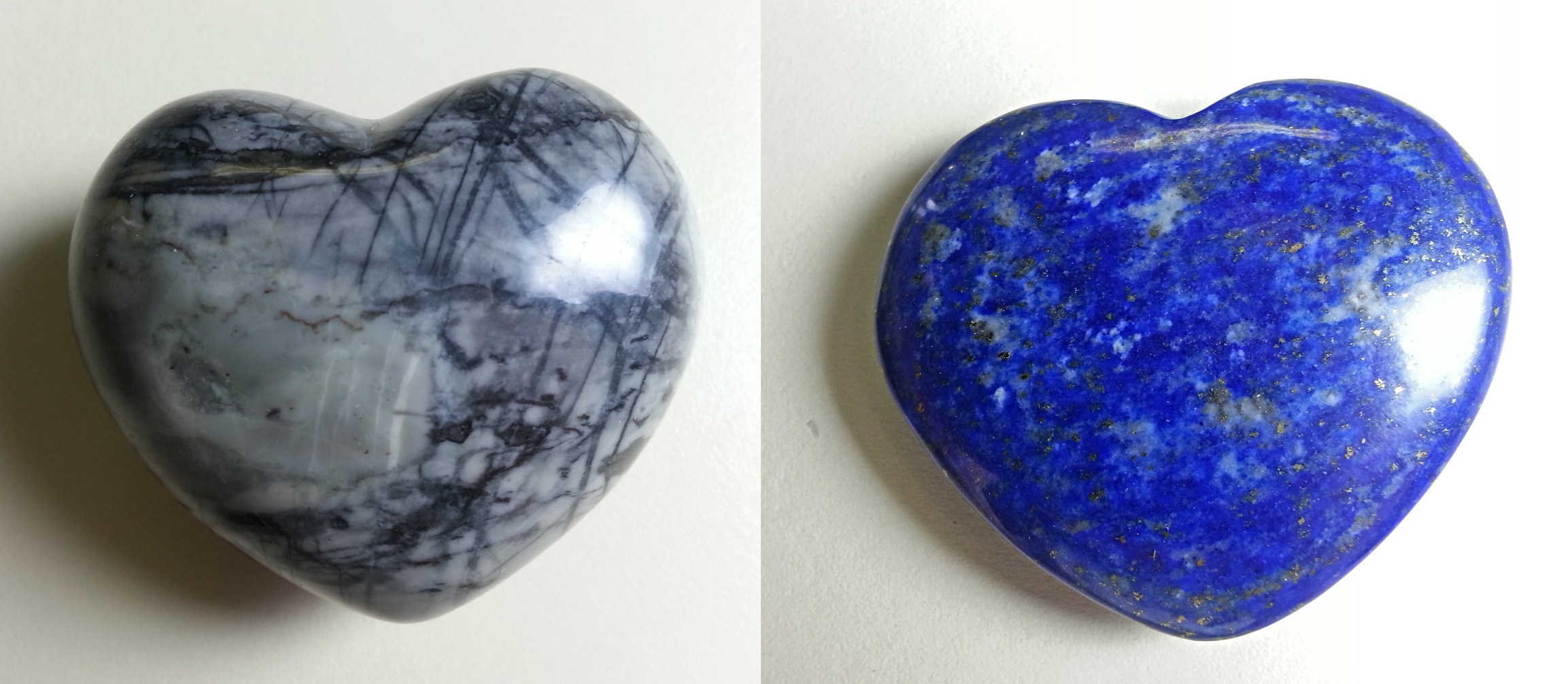
Two Show-Me Rockhounds members who are very much in love took a trip to Hot Springs, AR. While they were there they stopped at a rock shop, of course, and these carved hearts caught their attention. Stephanie was drawn to the gray and black petrified wood heart because she thought it looked like a charcoal drawing. David was drawn to the blue sodalite heart because the blue color reminded him of lapis.
What kind of rocks catch your attention, and why?
Trolling For Geodes
Thunder Eggs
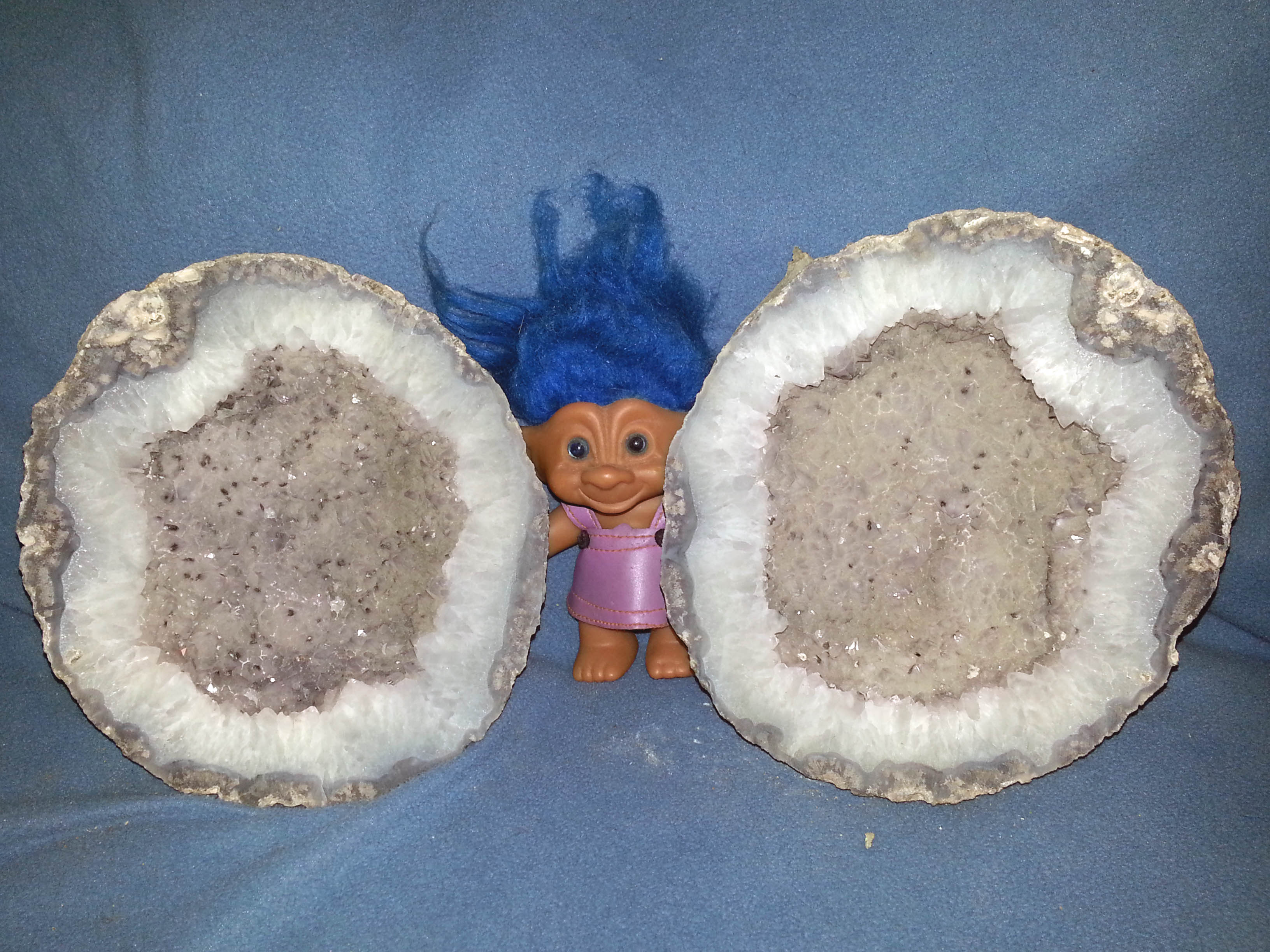
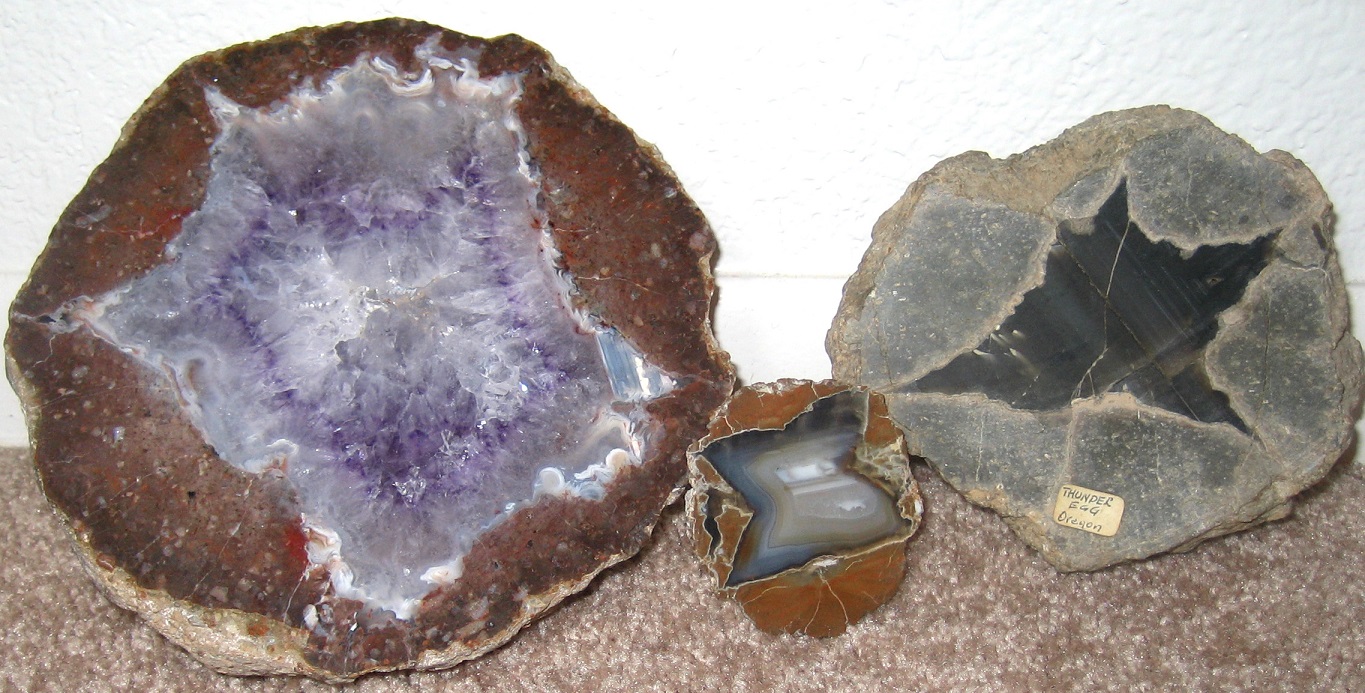
Some thunder eggs from the personal collection of David Reed. The largest one has purple amethyst crystals on the inside. It was originally from the collection of the late David White, who lovingly polished it by hand to a reflective shine. The medium one is from Oregon. The smallest one is a slab cut from a thunder egg and was from the Show-Me Rockhounds gift exchange.
Gold Sheen Obsidian
This is a gold sheen obsidian from the personal collection of our members M. Mueller and C. Maazouz. Obsidian is an igneous rock, which means it is formed from lava as it cools and solidifies. Obsidian is usually black. However, some types of obsidian have gas bubbles that create a gold or silver sheen like this.
Turritella Agate
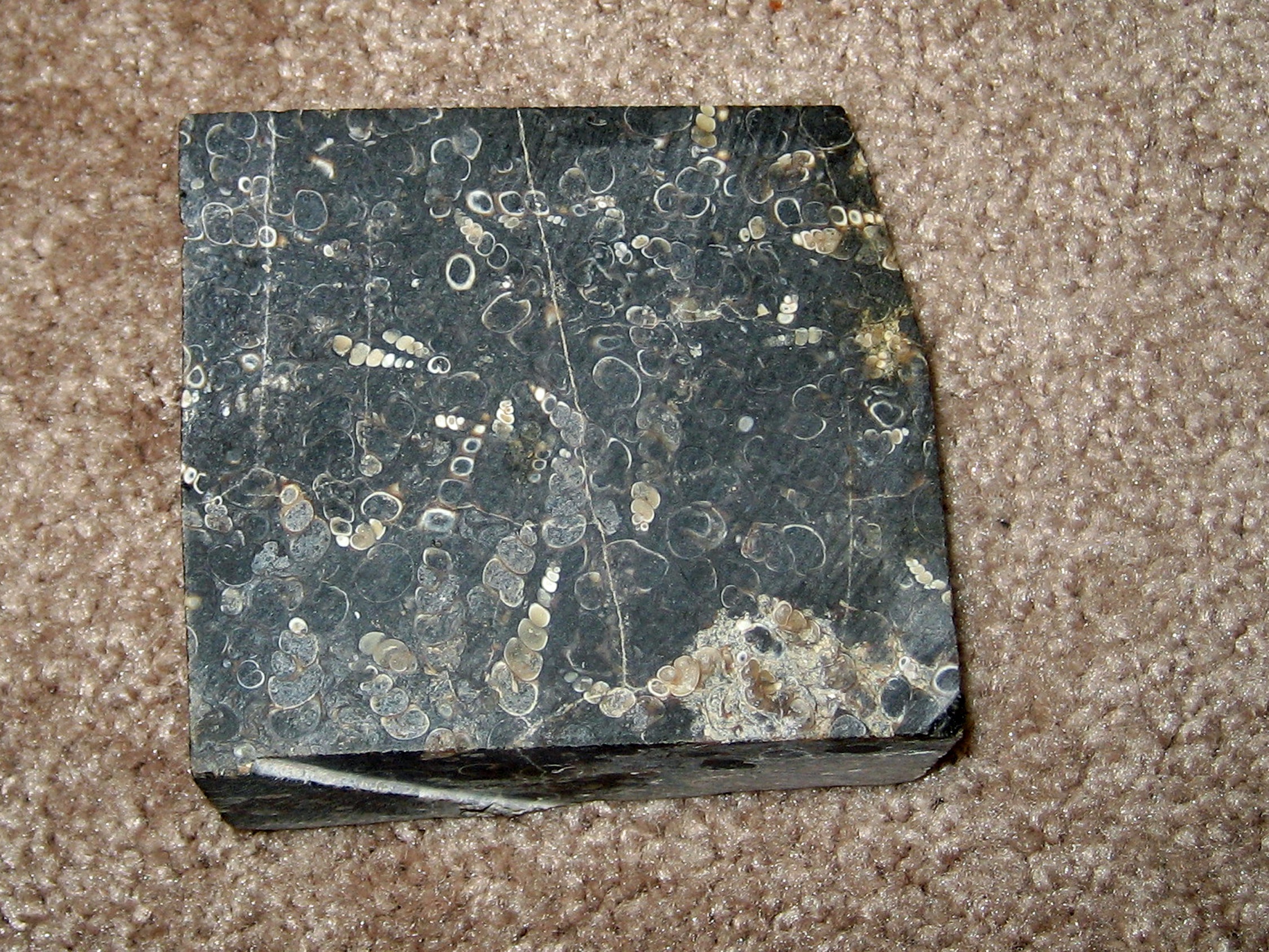
Turritella agate is a fossiliferous agate that contains lots of snails who died, sank to the bottom of a lake, and became silicified. When it was first named, people thought the fossils were marine snails from the Turritella genus. The shells are actually from the freshwater snail Elimia tenera, but the Turritella name was too popular already and it stuck. They are found in the Green River Formation in southwestern Wyoming, northeastern Utah, and northwestern Colorado, because that’s where the snails used to live (they are extinct). This specimen is from the personal collection of Show-Me Rockhounds member David Reed. Fun fact: Elimia tenera snails became fossilized in materials other than agate, such as limestone, so there is also turritella limestone. It’s not quite as pretty in my opinion because the light background doesn’t contrast with the shells like agate does.