Images

Fossil Sweet Gum

A big slab of petrified wood that is green

Photo by Stephanie Reed

This is a cross-section of a fossilized sweet gum tree from the Hampton Butte in Crook County, Oregon. We saw it at the Rice Museum in Hillsboro, Oregon where it is in the petrified wood room. I hardly ever see petrified wood that is green like this; usually it’s red, orange, or brown. Anybody know what makes it green?

Flowers in an Agate

This pattern in this agate from the Czech Republic looks like pussy willows in the spring. What do you think it looks like?

Corundum

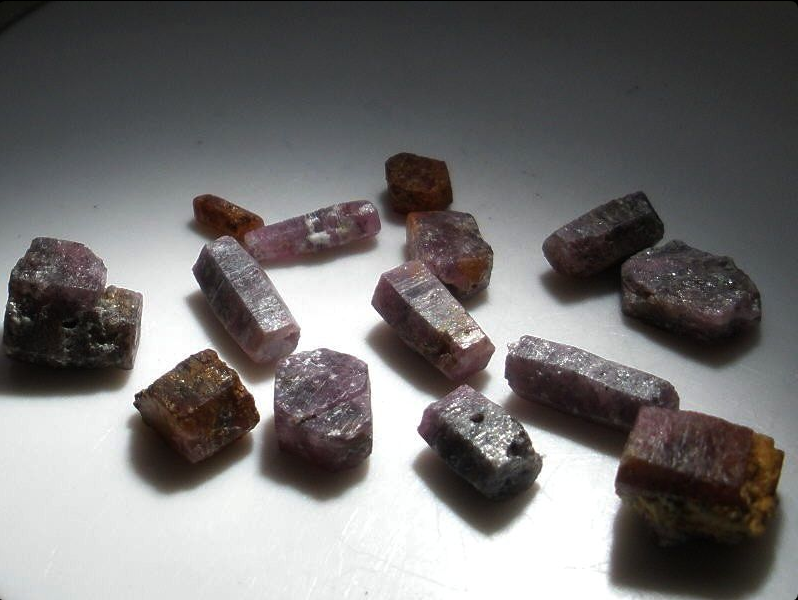
Corundum (Al2O3) is a hematite group mineral that has trigonal crystals. It is found all over the world and can be many different colors including blue, red, pink, yellow, gray, and colorless. These corundum crystals are from the Cascade Canyon in San Bernadino, California. They may not look familiar to you, but corundum has some famous relatives. A gem-quality corundum that is red (Cr-bearing) is known as ruby, and a gem-quality corundum that is blue (Fe- and Ti-bearing) is known as sapphire.

Missouri’s State Dinosaur

Hypsibema missouriense is a type of dinosaur called a Hadrosaur or “duck-billed” dinosaur. It was a herbivore with jaws that contained over 1,000 teeth. Hypsibema had evolved specialized teeth to handle the tough, fibrous vegetation of the time. This dinosaur lived in Missouri during the Late Cretaceous Period. Hypsibema was first discovered in 1942 by Dan Stewart, near the town of Glen Allen, MO, and became the state’s official dinosaur on July 9, 2004 (RsMo 10.095) A reconstruction of Missouri’s State Dinosaur can be seen at the Bollinger Museum of Natural History in Marble Hill, MO. Source: Secretary of State webpage, http://sos.mo.gov/symbols/symbols.asp?symbol=dino

Missouri’s State Fossil

The crinoid became the state’s official fossil on June 16, 1989, after a group of Lee’s Summit school students worked through the legislative process to promote it as a state symbol. The crinoid (Delocrinus missouriensis) is a mineralization of an animal which, because of its plant-like appearance, was called the “sea lily.” Related to the starfish and sand dollar, the crinoid lived in the ocean that once covered Missouri. There are about 600 species alive in the ocean today. (RSMo 10.090) Source: http://sos.mo.gov/symbols/symbols.asp?symbol=fossil Note to people who live in Kansas: Kansas does not have an official state gem, mineral, rock, or fossil. If you would like to change this, you can contact one of your representatives and get one. I suggest Niobrara Chalk, as in Rock Chalk Jayhawks.

Mineral Nail Polish

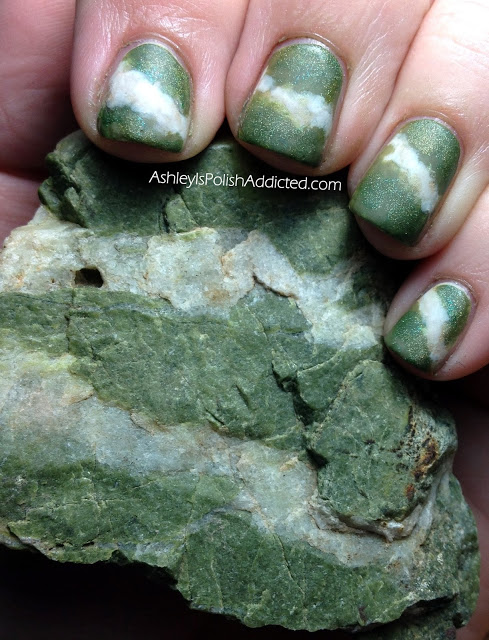
There are a lot of ways to express your love for rocks, whether you have a display case in your home, a collection of geology maps and field guides, you go to gem and mineral shows, or even bake a rock cake.  Ashley has a passion for nail polish and had a rock collection as a child, so she combined the two by painting her nails to look like this specimen of quartz and green shale. I love the way she used multiple shades of green and white to perfectly recreate the color of the shale and make the “quartz” part of her fingernails look translucent. Go to her blog post to find out the specific kinds of nail polish she used.

Emeralds

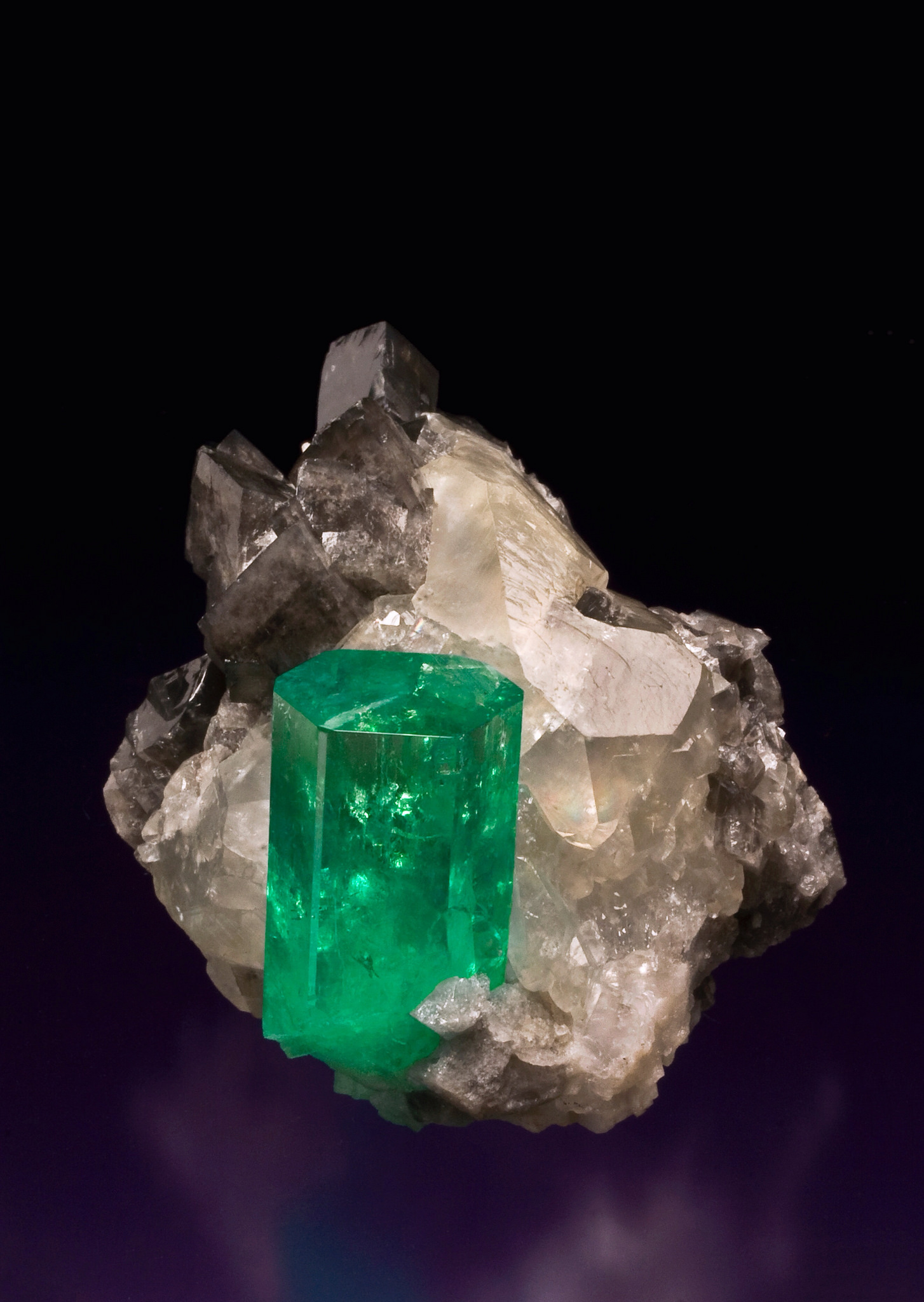
Emeralds are the most famous green gemstone. The word emerald is practically synonymous with the color green, and in fact, the name emerald comes from the Greek smaragdos which means “green gem.” Ireland’s nickname “The Emerald Isle” sadly does not refer to any emeralds found there but for the green scenery.

Emeralds are the green variety of the mineral beryl. The famed green color comes from chromium impurities. When beryl appears in other colors due to different impurities it is called aquamarine (blue), morganite (pink), bixbite/red beryl (red), or heliodor (yellow). Emerald rates 7.5-8.0 on the Mohs hardness scale, though it can be brittle. Emeralds are usually found in Colombia (South America) or Zambia (Africa) in granite pegmatites and metamorphosed mica schists. They grow in hexagonal crystals. The most valuable emeralds for gems are transparent rather than opaque, have few inclusions, and are a dark shade of green. Emeralds usually have quite a lot of inclusions, so sometimes people use oil to hide them, but looking at the inclusions can help you tell where the emerald came from. One final fun fact: There is even a faceting method called the emerald cut, which has a rectangular face with 8 sides. It is also known as the octagon cut. The emerald cut works well on emeralds but can be used on any gemstone, even diamonds.

The Blarney Stone

I don’t know about you, but I’m still in the St. Patrick’s Day spirit. This is the Blarney Stone, the most well-known rock in Ireland. The Blarney Stone is embedded 90 feet high in a tower of Blarney Castle, in the village of Blarney near Cork, Ireland. Legend has it that if you kiss the stone you will receive the skills of eloquence, persuasion, and flattery: in other words, blarney. Climb to the top of the tower, sit with your back to the stone, then have someone hold your legs down while you lean backwards to kiss the stone.

The Blarney Stone itself is carboniferous limestone, also known as bluestone. Geologists at Glasgow University analyzed a sample of the stone and determined that it is “limestone, made of the mineral calcite, and containing recrystallised and slightly deformed fragments of fossil brachiopod shells and bryozoans – all of which are unique to the region where it is based” (www.theguardian.com/world/2014/mar/16/mystery-blarney-stone-heritage-solved) Some stories suggest that the Blarney Stone was from Scotland, but this research shows that it is native to Ireland and is about 330 million years old. Erin go bragh!