Images

54th Annual Spring Gem & Mineral Show

Flyer giving information about the gem show

Less than 2 weeks until the big gem show you don’t want to miss! Sponsored by the Greater Kansas City Association of Earth Science Clubs, this is the Spring Gem, Mineral, Jewelry, and Bead Show at the KCI Expo Center. We have over 70 retail and wholesale dealers, educational exhibits from KU and other local universities, lectures, demonstrations, a dinosaur puppet show, door prizes, and scholarships. We (the Show-Me Rockhounds) are working hard on our displays and things to sell, but you’ll have to come to the show to see what we have! For more information on the event and a coupon, go to www.kcgemshow.org

Trilobite Photos

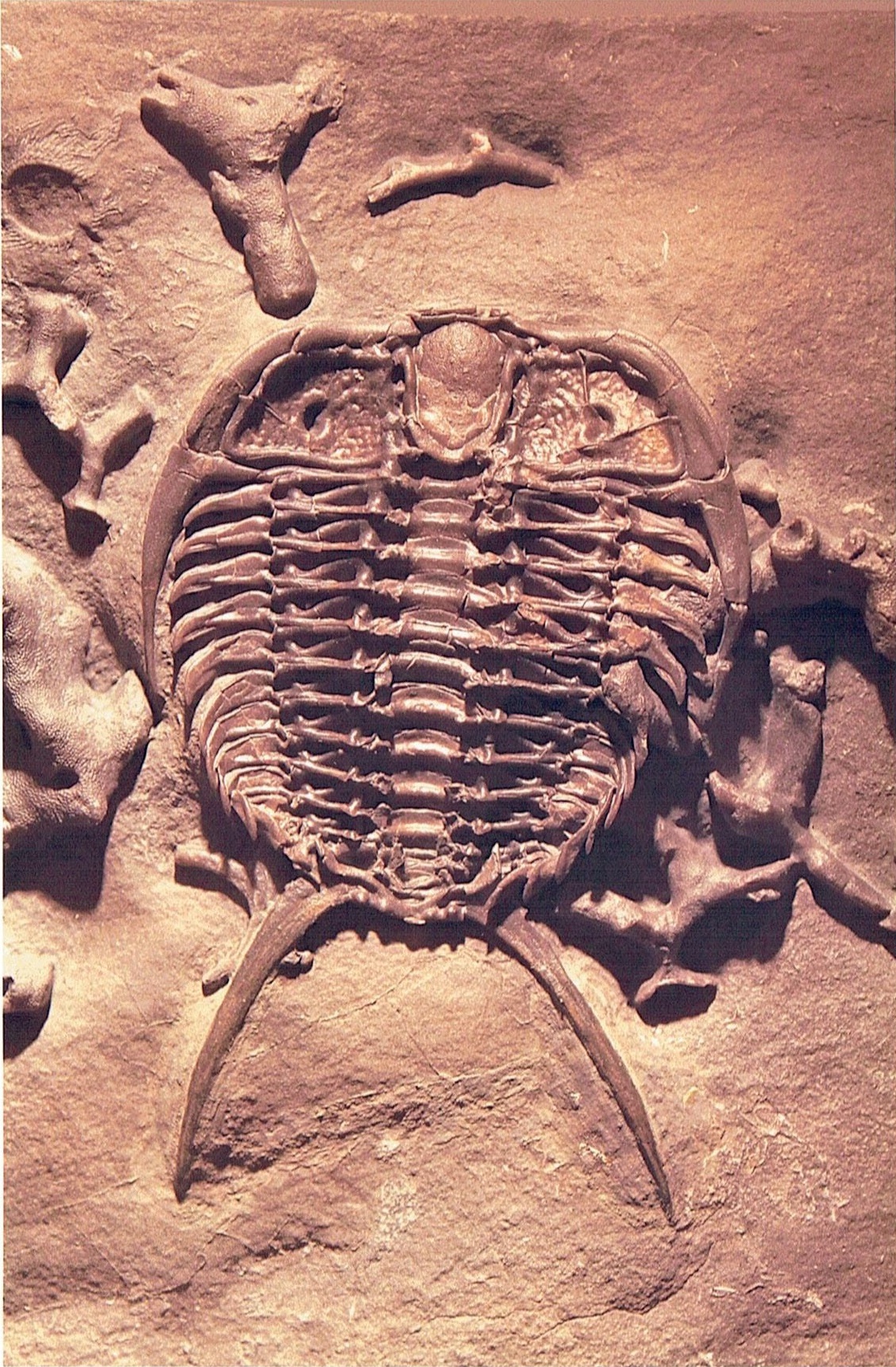
A fossil trilobite seen from above

A trilobite seen from above. Photo by Martin Mueller.

A fossil trilobite seen from below

A trilobite seen from below. Photo by Martin Mueller.

Two high-resolution photos of a trilobite fossil, including a rare view of a trilobite seen from below. Our President Martin Mueller took these photos at the Houston Museum of Natural Sciences.

Vanadinite

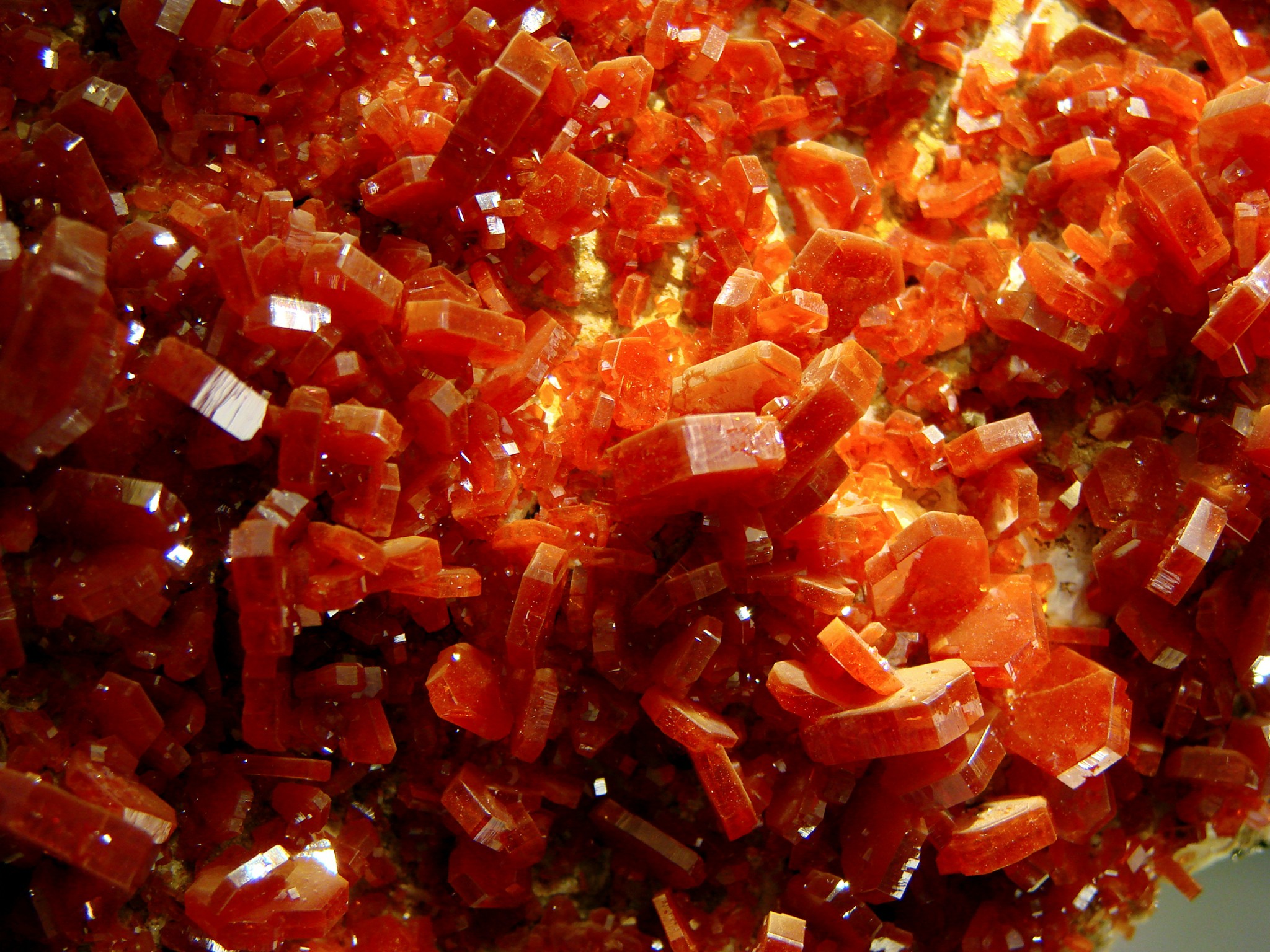
Lots of flat orange crystals with some small grains of yellow crystals in between.

Photo by Egen Wark

Reposted from our friend Mineralogy on Google+: Vanadinite is a lead chlorovanadate characterized by red to red-orange hexagonal crystals. It is a secondary mineral found in the oxidized zone of lead deposits resulting from the alteration of vanadiferous sulfides and silicates. A member of the apatite group, vanadinite forms a solid-solution series with its phosphate (pyromorphite) and arsenate (mimetite) analogues. It was first discovered in Mexico in the 19th century and is prized by collectors due to its distinctive color.

If you like the photo and writeup, check out Mineralogy’s Google+ page and follow them.

Happy January Birthdays!

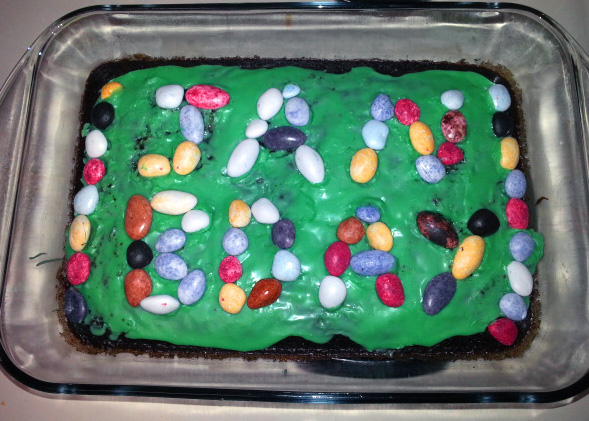
A chocolate cake with green icing and multicolored rocks spelling

Cake and photo by Stephanie Reed

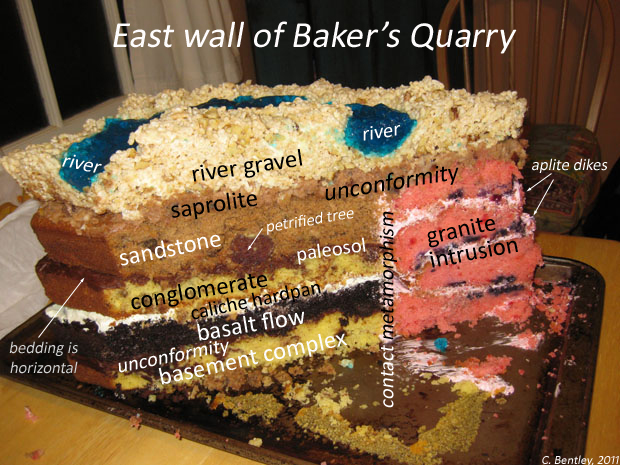
We had several Show-Me Rockhound members with birthdays in January, and I got thinking about what kind of cake a rockhound would like. I’ve seen some amazing geology-themed cakes but I’m not skilled enough at cake decorating to come close to those. Then I saw these chocolate rocks at Price Chopper and I knew exactly what to do. This is the result. Happy birthday, David, Charley, and Sharon!

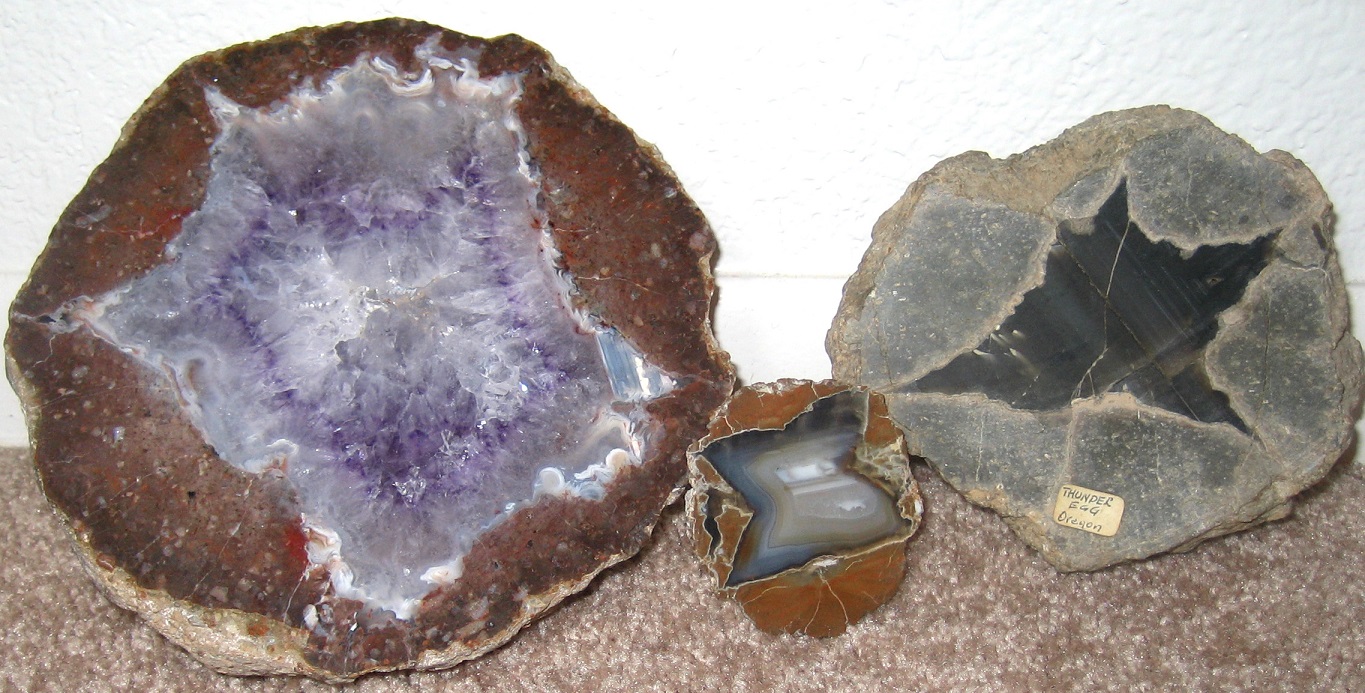
Thunder Eggs

Three round geodes in small, medium, and large. The smallest one is a flat slab with a blue inside and brown outside. The medium one is a hemisphere that's black on the inside and gray on the outside. The largest one is a hemisphere that is purple amethyst crystals on the inside and brown on the outside.

Photo by Stephanie Reed

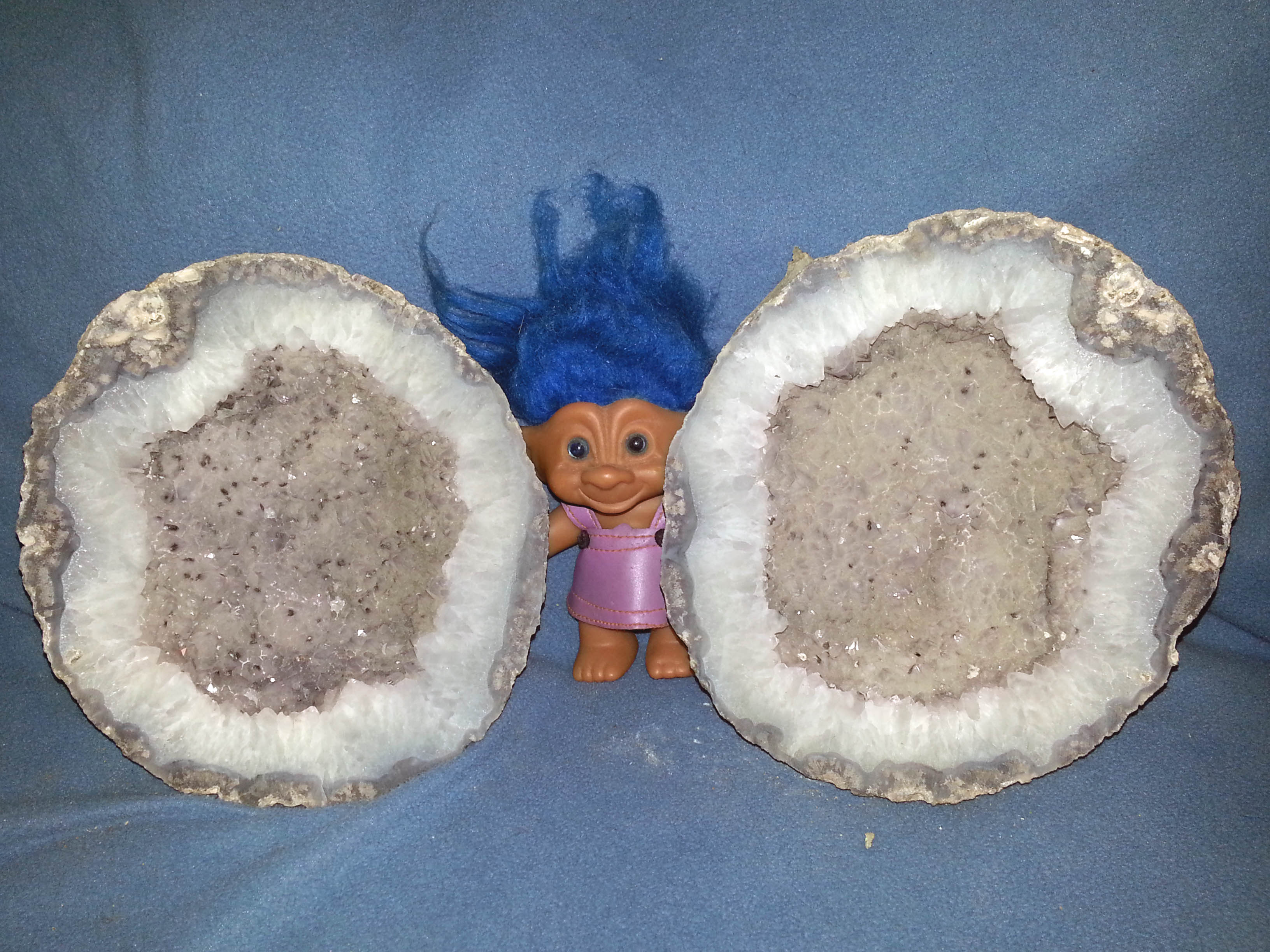
Some thunder eggs from the personal collection of David Reed. The largest one has purple amethyst crystals on the inside. It was originally from the collection of the late David White, who lovingly polished it by hand to a reflective shine. The medium one is from Oregon. The smallest one is a slab cut from a thunder egg and was from the Show-Me Rockhounds gift exchange.

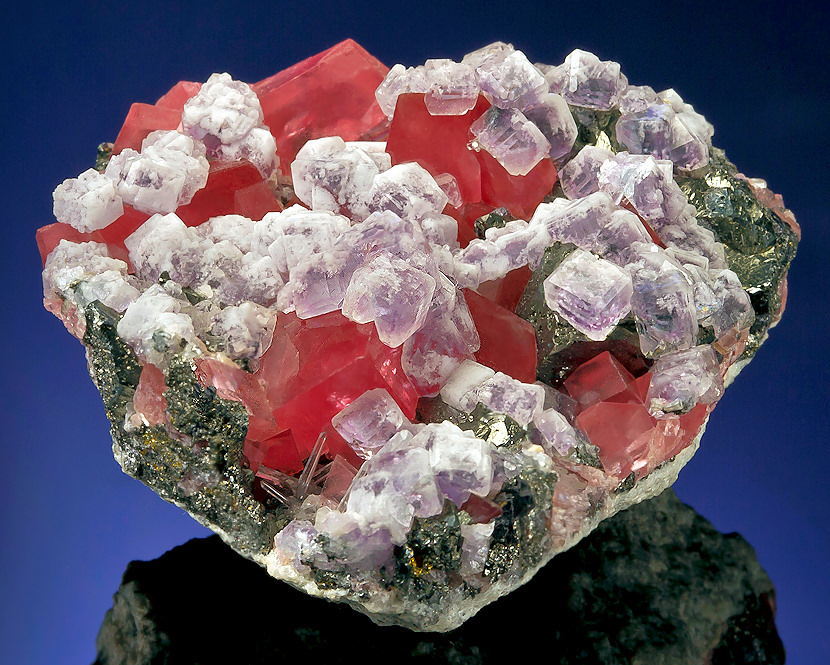
Christmas Rhodochrosite

A cluster of crystals that has square red crystals on a shiny green surface, with white and lavender puffballs scattered across the whole cluster. A nice display of Christmas colors.

Ex. J. Vorpahl Mineral Collection, http://www.themineralgallery.com/rhodoroom.htm

This gorgeous crystal specimen is perfect for Christmas! It has red rhodochrosite crystals on a green matrix (green pyrite?), with pale lavender fluorite cyrstals that look like little snowdrifts. From Steve’s Pocket, Fluorite Raise, Sweet Home Mine, Alma, Colorado.

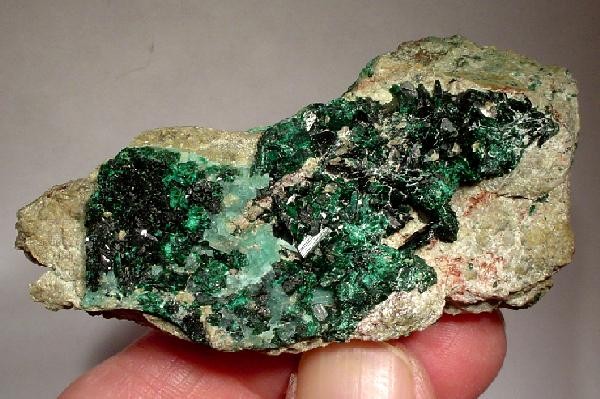
Antlerite

What is a reindeer’s favorite copper sulfate mineral? Antlerite! Antlerite is named after the Antler Mine in Arizona, but was more often found in Chuquicamata Mine in Chile. That mine has been closed, so antlerite is pretty rare now. This is a close-up of a specimen from the Chuquicamata Mine measuring 7.4 x 3.8 x 2.2 cm.

The whole plate, with fingertips included for scale.

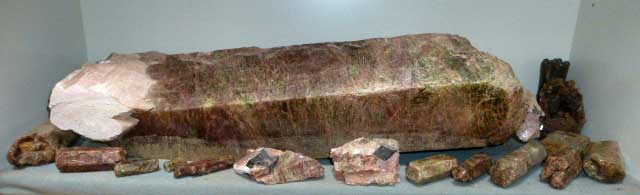
Apatite

Apatite is a general name for a group of very soft phosphate minerals that form big crystals that are fun to collect. This red and green double-terminated apatite crystal is 21 inches long! It was found on the Miller Property in Eganville, Ontario, Canada during a CCFMS (Central Canadian Federation of Mineralogical Societies) field trip in July 2002. For more photos and information, and a cute poem about collecting apatite, check out the website linked in the photo, http://www.rocksforkids.com/R&M/apatite.htm

UPDATE 2017/06/02: Rocksforkids.com reorganized their website and the apatite page is no longer there. So, here is the apatite poem.

A Poem about Rock Collecting – Digging for Apatites in Eganville, Ontario

DUST CLOUDS

The peaceful silence of the northern woods, interrupted by a wail,
A soaring screaming roar, louder than a stomped on tigers tail.
A cloud of dust obscures a man, how can he see to use that tool,
With nothing to cover his nose and ears, I think the man’s a fool.
Suddenly the screaming noise stops, I think I have gone deaf.
The dust cloud drifts on by, but I keep on holding my breath.
Out of this swirling maelstrom, staggered a large ghostly form,
Coughing and hacking, he lugged a saw that had caused this dusty storm.
I guess he had some trouble; his saw had broken down.
Behind the mask of dust, his face displayed a worried pasty frown.
I guess Nick was finished for the day; the Apatite can wait.
However, Elfi kept finding more crystals; and they were looking great
The best laid plans of mice and men sometimes go awry.
Nick had brought that saw along and he just had to give it a try.
While he cut one out for his wife, the others were finding more.
Soon Nick had a full time job, I began to hate that rock saws roar.
Crystals of Apatite, some of exceptional size, like something from a dream.
They cleared off a Calcite vein they looked like salmon going up a stream.
Now there is a quandary, do we go or do we stay,
The planned trip was interrupted, they stayed another day.

Part of us stayed to the plans, we took the scheduled trip.
More than half went back to the trenches, old Frank near had a fit.
Two more days of pounding, another broken saw,
More large crystals were being located, there ought to be a law.
Well this trip is finally over and we missed a place or two,
I cannot say it wasn’t interesting and I’m really not too blue.
Nick’s planning went out the window, next year will be better I am told,
I hope your appetite for Apatite is sated Elfi, next time pick on gold.

by Dick Stata Aug. 24th. Thinking back on the 2002 CCFMS summer trip.

Cinnabar

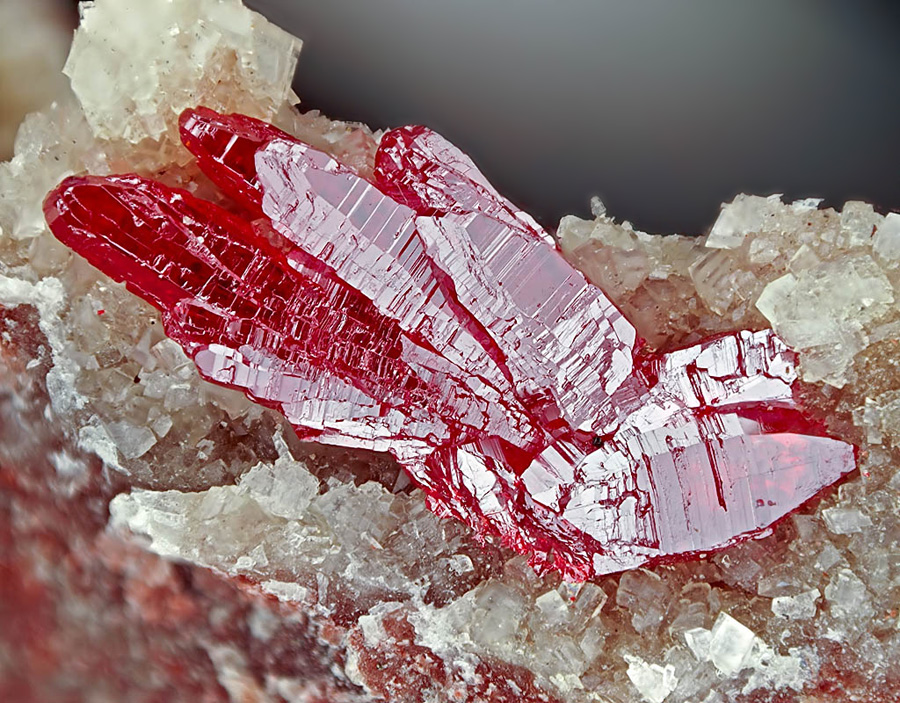
Shiny red cinnabar from Germany. Also known as HgS, mercury (II) sulfide, cinnabar used to be mined to extract the mercury (mercury is only found in ores like cinnabar, calomel, and livingstonite) or to be mixed with sulfur and used as red pigment. Due to mercury’s toxicity, it is no longer allowed in paints, pesticides, batteries, and many other products. In fact, the United States and many other countries have stopped mining mercury because of the environmental hazard and a decrease in demand.

If you own a cinnabar specimen, keep it in a glass cabinet or enclosed box, wash your hands after touching it, don’t break it and inhale the dust, and don’t let children or pets eat it.  These are good rules for your entire rock collection.