
A beautiful piece of labradorite in an equally beautiful setting by KLwiredream. I wish I could wire wrap this well.
Phonemageddon Neutralized
No need to worry about Phonemageddon because showmerockhounds.com is already compatible with mobile devices. Phonemageddon, as some people are calling it, is a change in Google’s search algorithm that will reward sites with “mobile-friendly” designs and push down those which aren’t optimized for mobile viewing.
More information here: http://gizmodo.com/are-you-ready-for-googles-mobilegeddon-phonepocalypse-t-1698947927
Test it for yourself here: https://www.google.com/webmasters/tools/mobile-friendly/?url=http%3A%2F%2Fwww.showmerockhounds.com
Field Trip

Next Saturday (April 25) we are going on a field trip to the KU Natural History Museum at Dyche Hall, 1345 Jayhawk Blvd. Lawrence, Kansas 66045. Meet us at our usual meeting spot at 11:00 am and we will carpool to the museum. Hope to see you there!
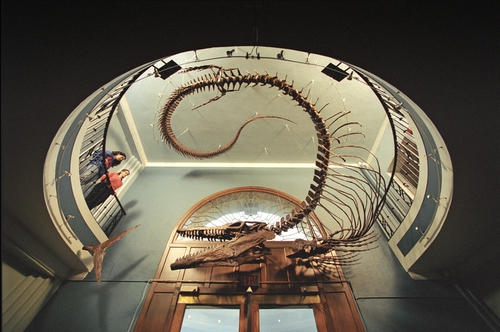
Come see the Bunker Mosasaur! Photo from: http://colleges.usnews.rankingsandreviews.com/img/college-photo_24120..jpg
Mineral Nail Polish
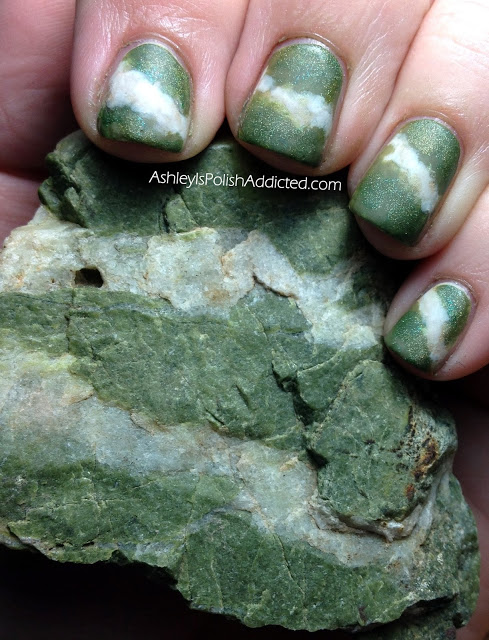
There are a lot of ways to express your love for rocks, whether you have a display case in your home, a collection of geology maps and field guides, you go to gem and mineral shows, or even bake a rock cake. Ashley has a passion for nail polish and had a rock collection as a child, so she combined the two by painting her nails to look like this specimen of quartz and green shale. I love the way she used multiple shades of green and white to perfectly recreate the color of the shale and make the “quartz” part of her fingernails look translucent. Go to her blog post to find out the specific kinds of nail polish she used.
Midwest Federation 2015 Youth Poster Contest
The deadline has passed to enter this poster contest sponsored by Summit Lapidary Club, but here are the rules for posterity.
Theme: The official state gem, mineral, rock, or fossil of the state you live in. Eligibility: Any student in 1st-8th grade. Prizes: Each grade will have a winner. Ribbons will be awarded for 1st-4th place. 1st-3rd place will also receive a prize. Contest Rules: All entries must be presented on 12”x18” paper. Include name, address, age, and school grade of participant on BACK of entry. No three-dimensional posters accepted. The title may be on the front or back. List your state and why you chose the gem, mineral, rock, or fossil. All entries become the property of the MWF and Summit Lapidary Club Scale of Points: Originality and Art Work: 30 points Design: 25 points Title: 25 points Listing of state gem, mineral, rock, or fossil and reason for your choice: 20 points Artwork: Artwork on posters can be pen, ink, crayons, magic marker, paint, or any other artist’s medium. Deadline: Entries must be postmarked by May 1, 2015 Send your entries to: [address removed because contest is over] Questions? Contact Poster Judge Jennifer Fike at [email address removed]. Hint: Missouri’s state rock is Mozarkite, state mineral is galena, and state fossil is the crinoid.
Photos from the Gem Show
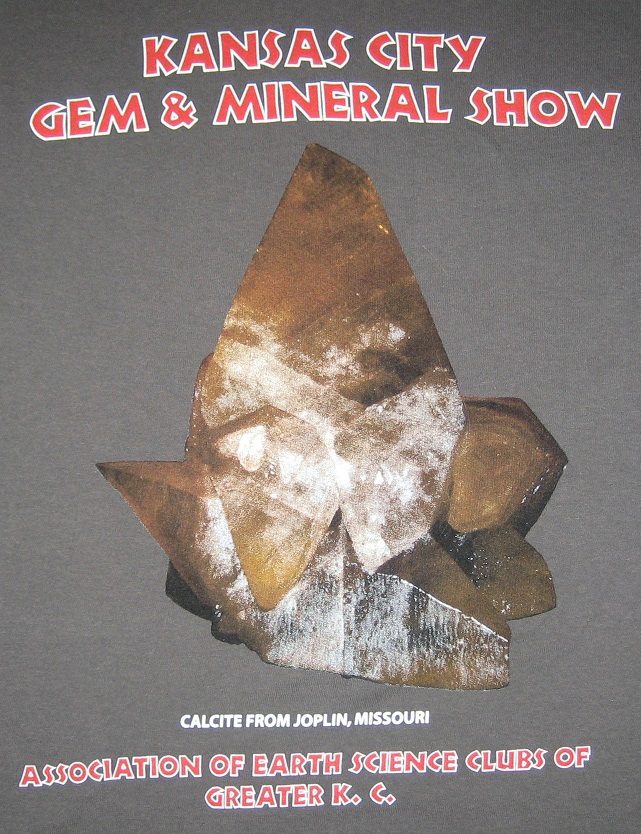
New T-shirt celebrating the show and featuring a calcite crystal.
Shirts are only $10 and we have plenty left if you want one.
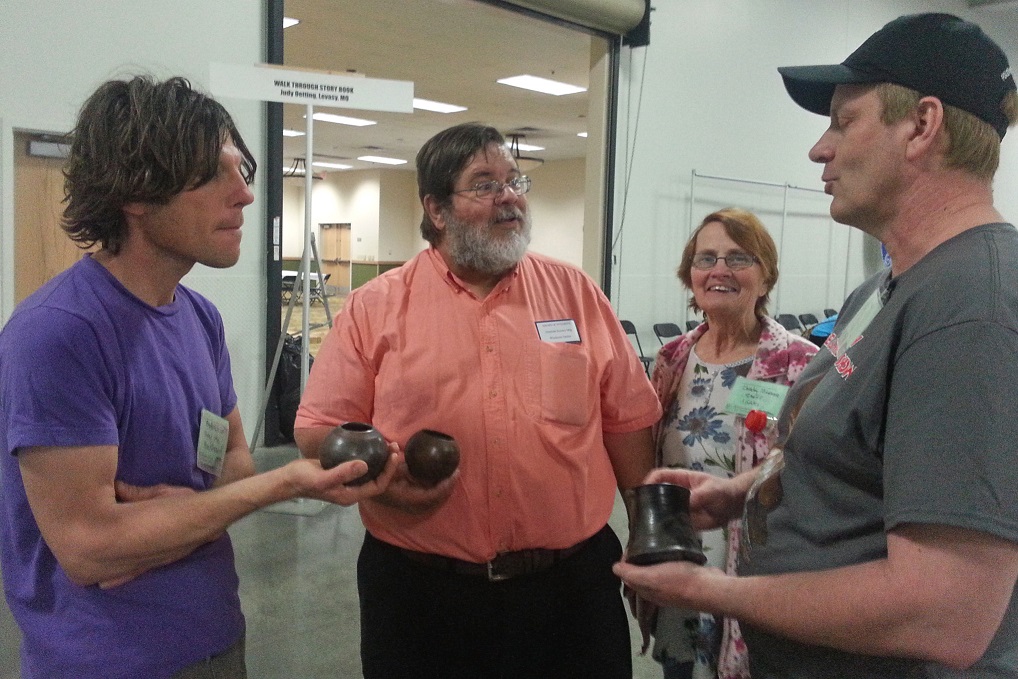
Show-Me Rockhounds members discussing pottery.

Show-Me Rockhounds members loading supplies into the storage container.
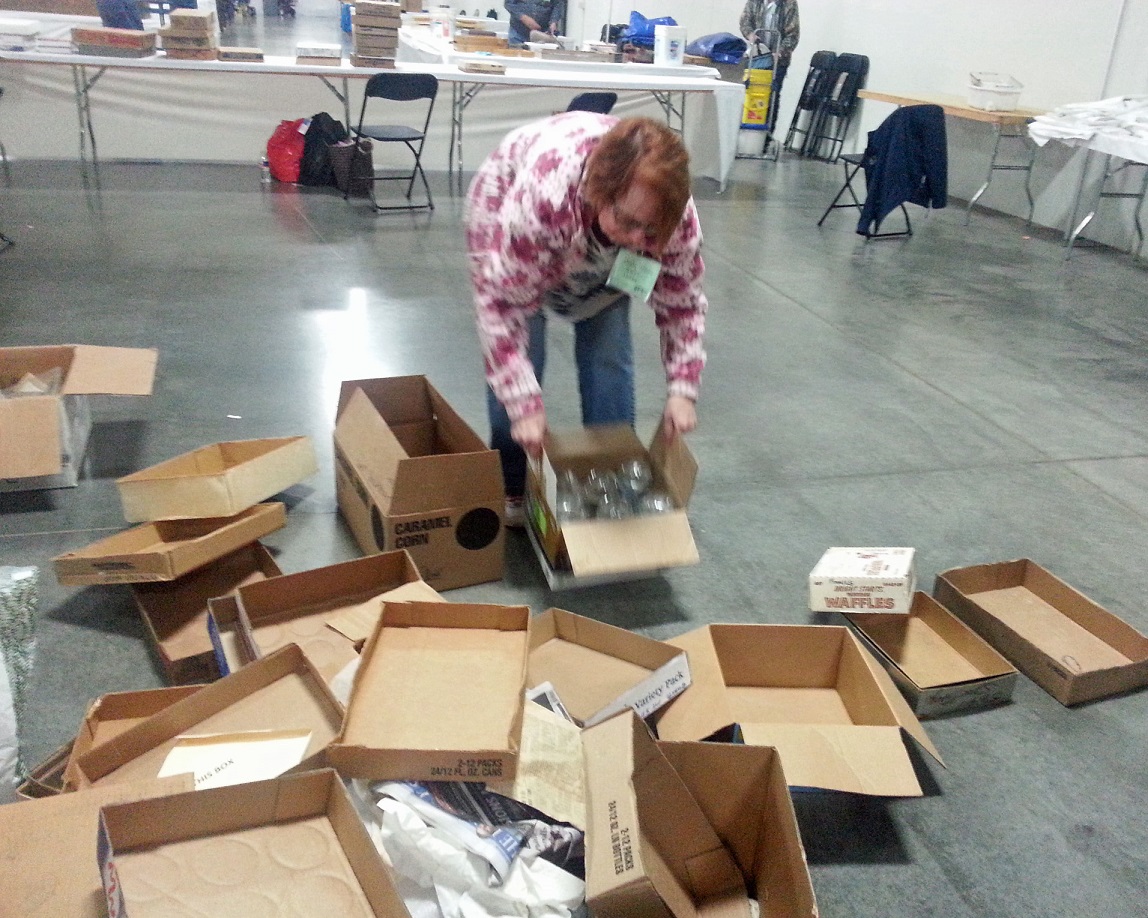
Rockhounds hard at work.
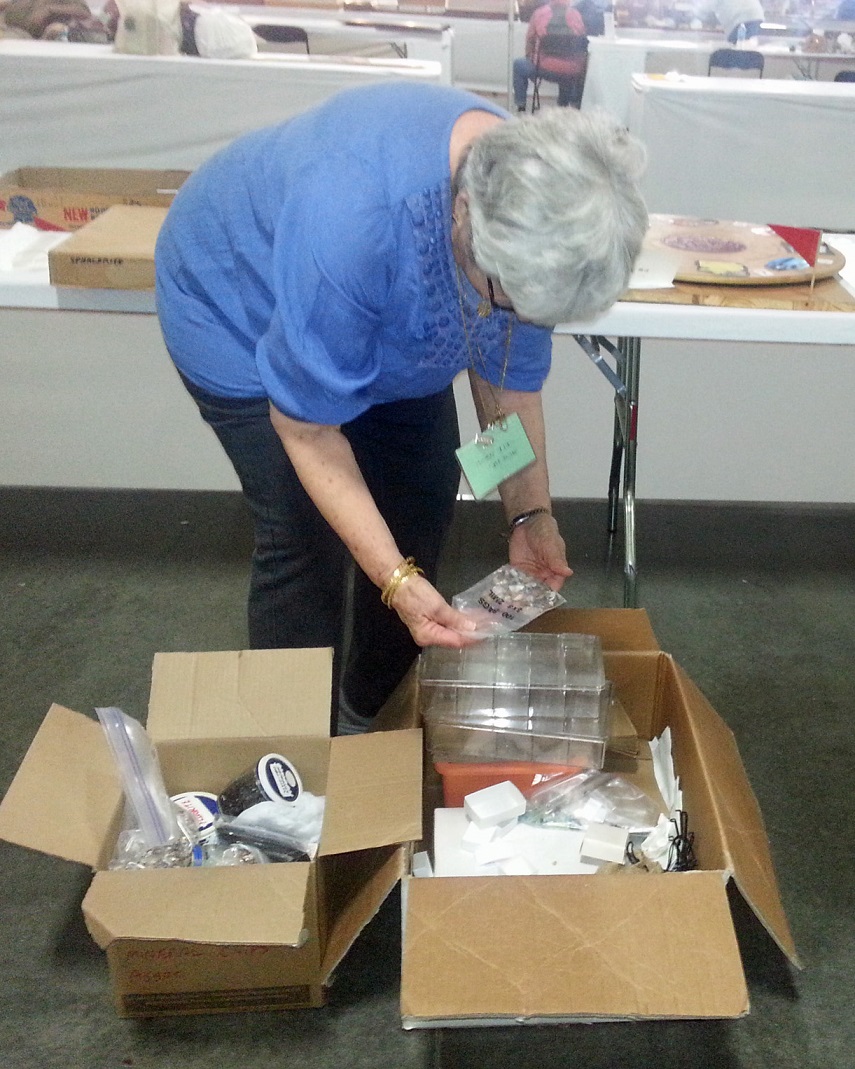
Unpacking boxes.
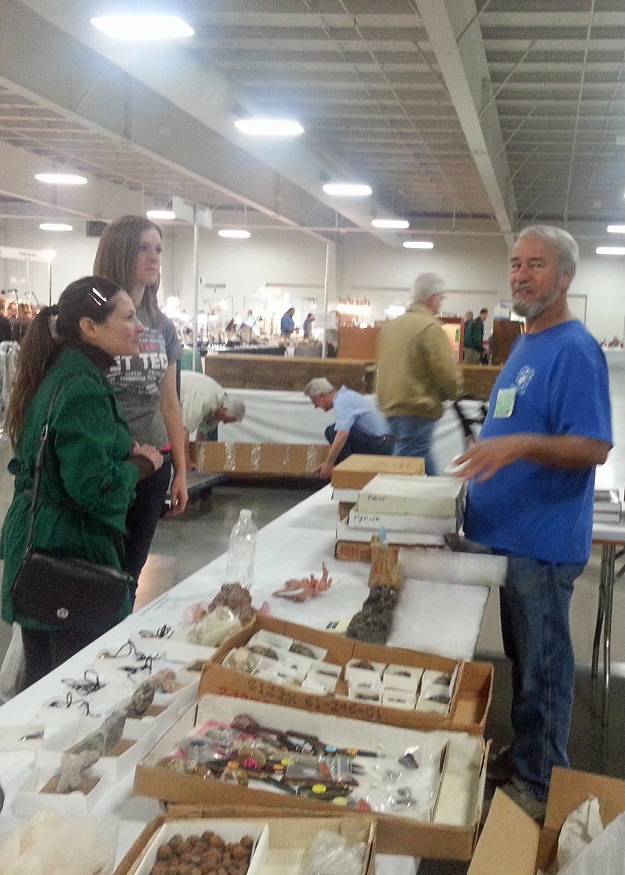
Bob selling minerals to some happy customers. Bob is a great salesman.
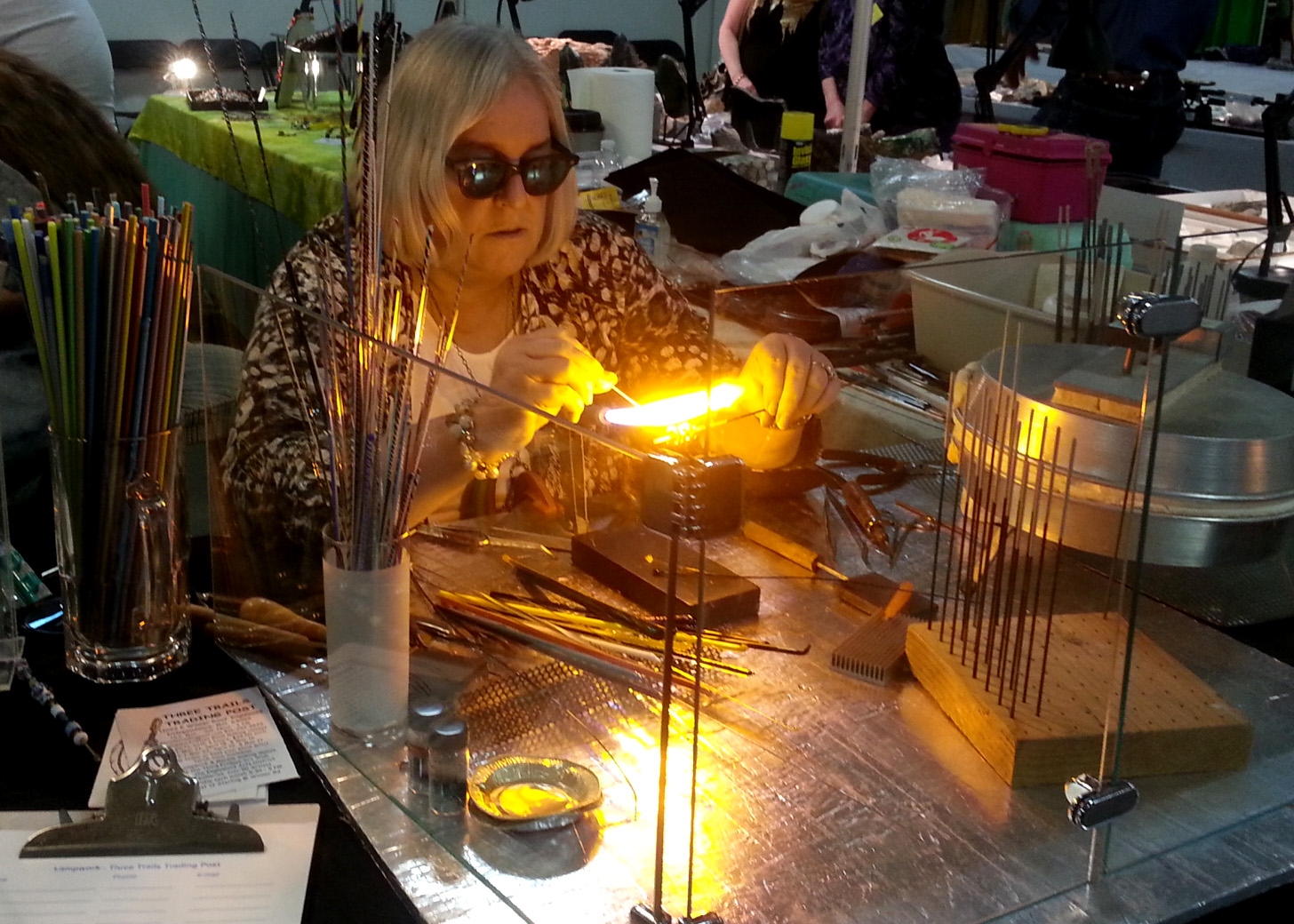
Making glass beads (lampwork) at the Three Trails Trading Post.
I took a lampwork class at the Three Trails Trading Post once and it was really fun. I highly recommend it.
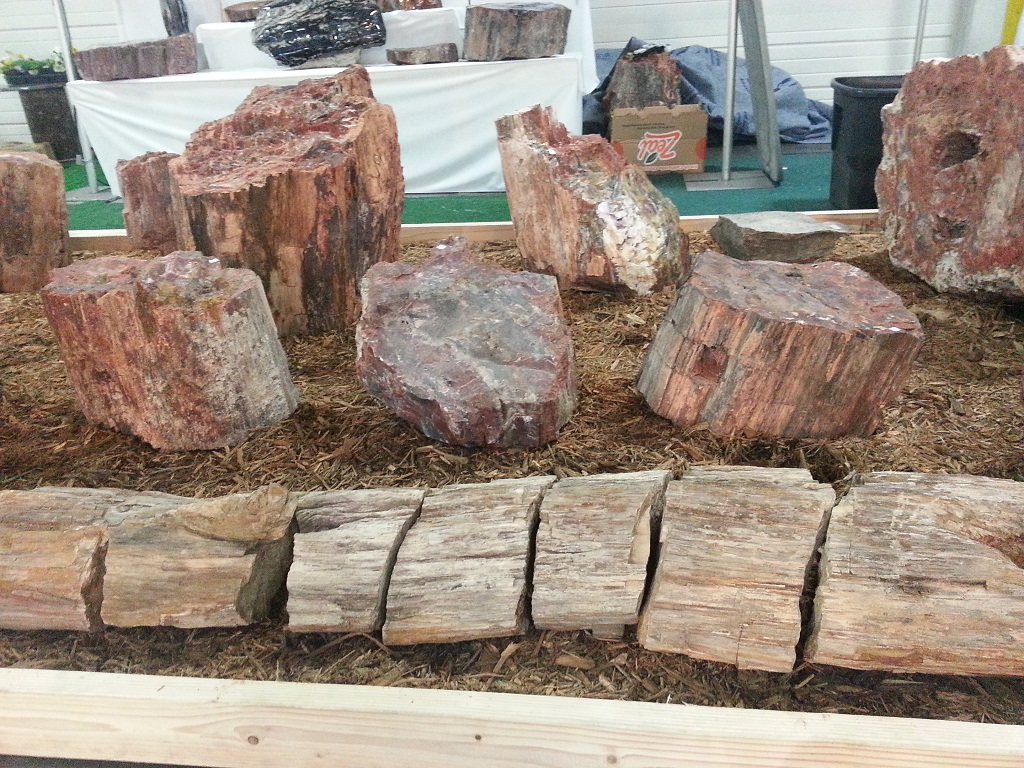
Huge pieces of petrified wood from Lincoln Curios.
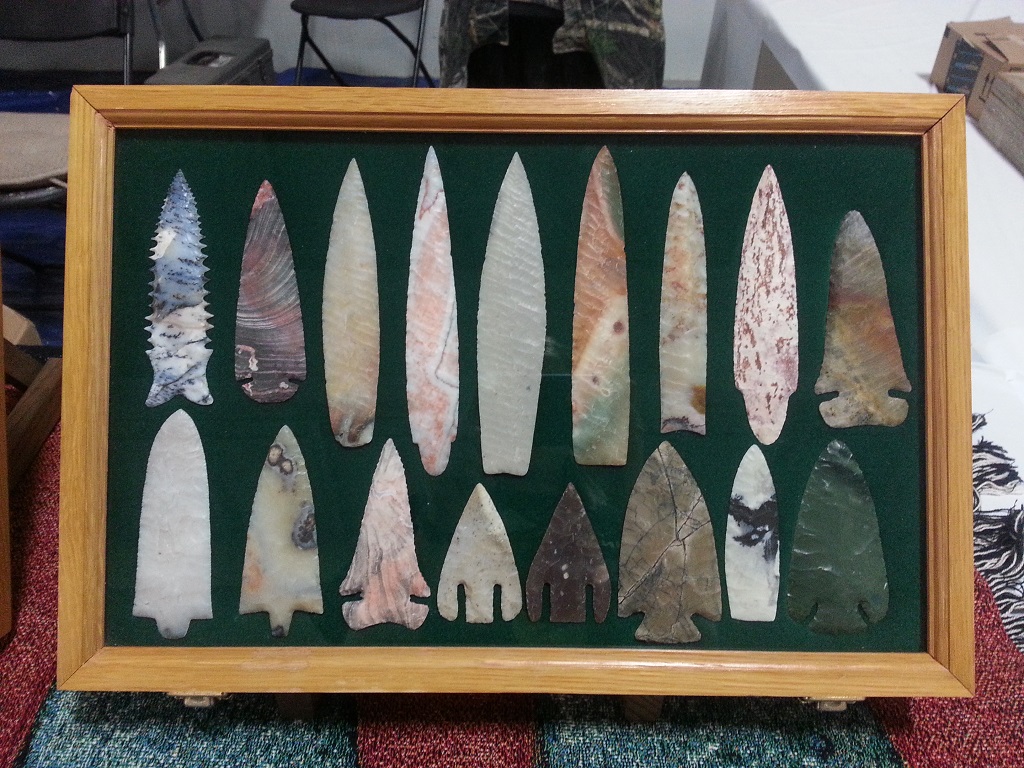
Arrowheads made by the Flint Knappers.
The Flint Knappers were next to our booth and they were making arrowheads and going tap, tap, tap the whole time.
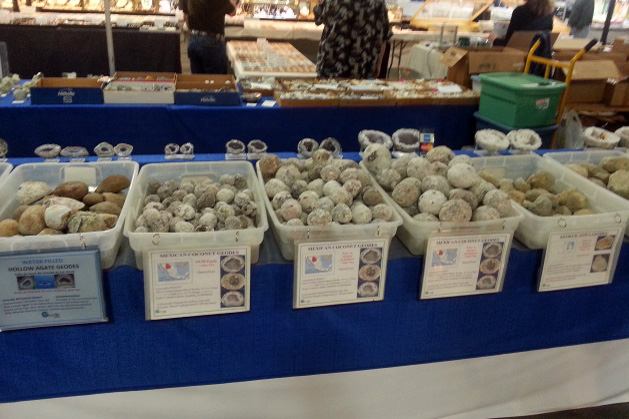
The Geode Gallery lets you pick out a geode and have it opened onsite.
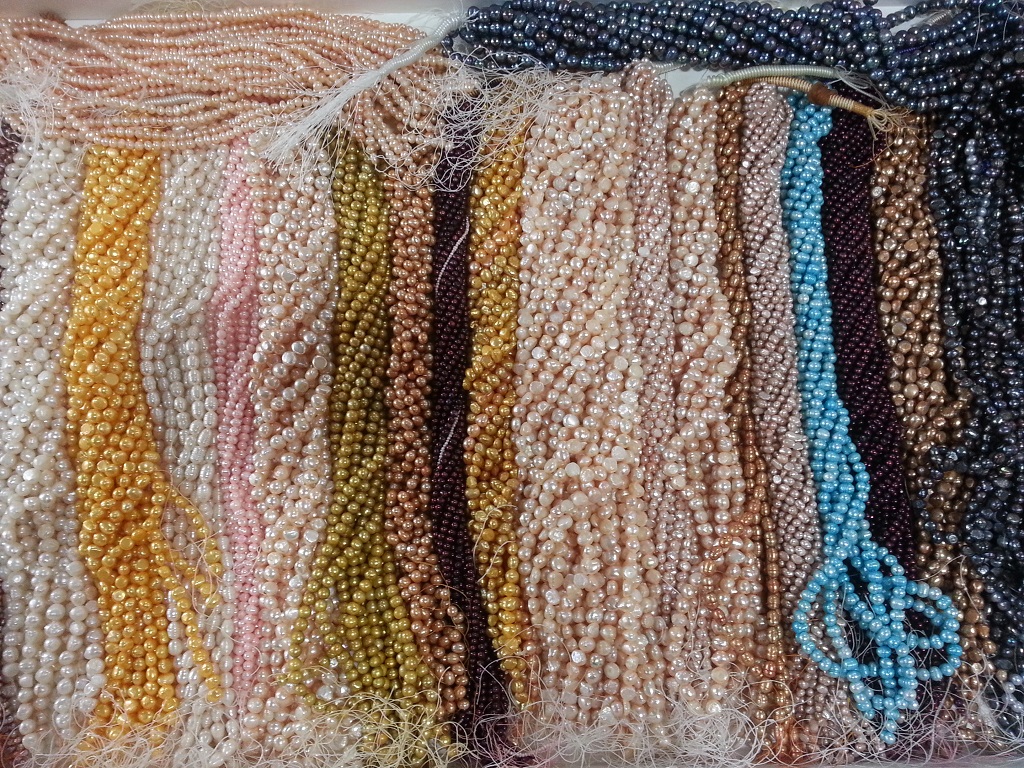
Pearls from Hartman Enterprises. There are miles of beads for sale at shows like this.
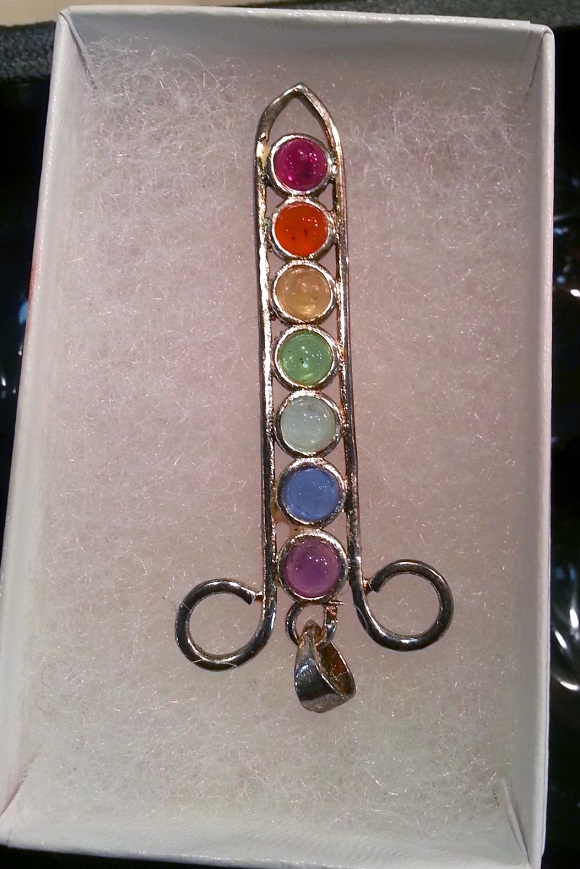
A rainbow crystal pendant for your chakras.
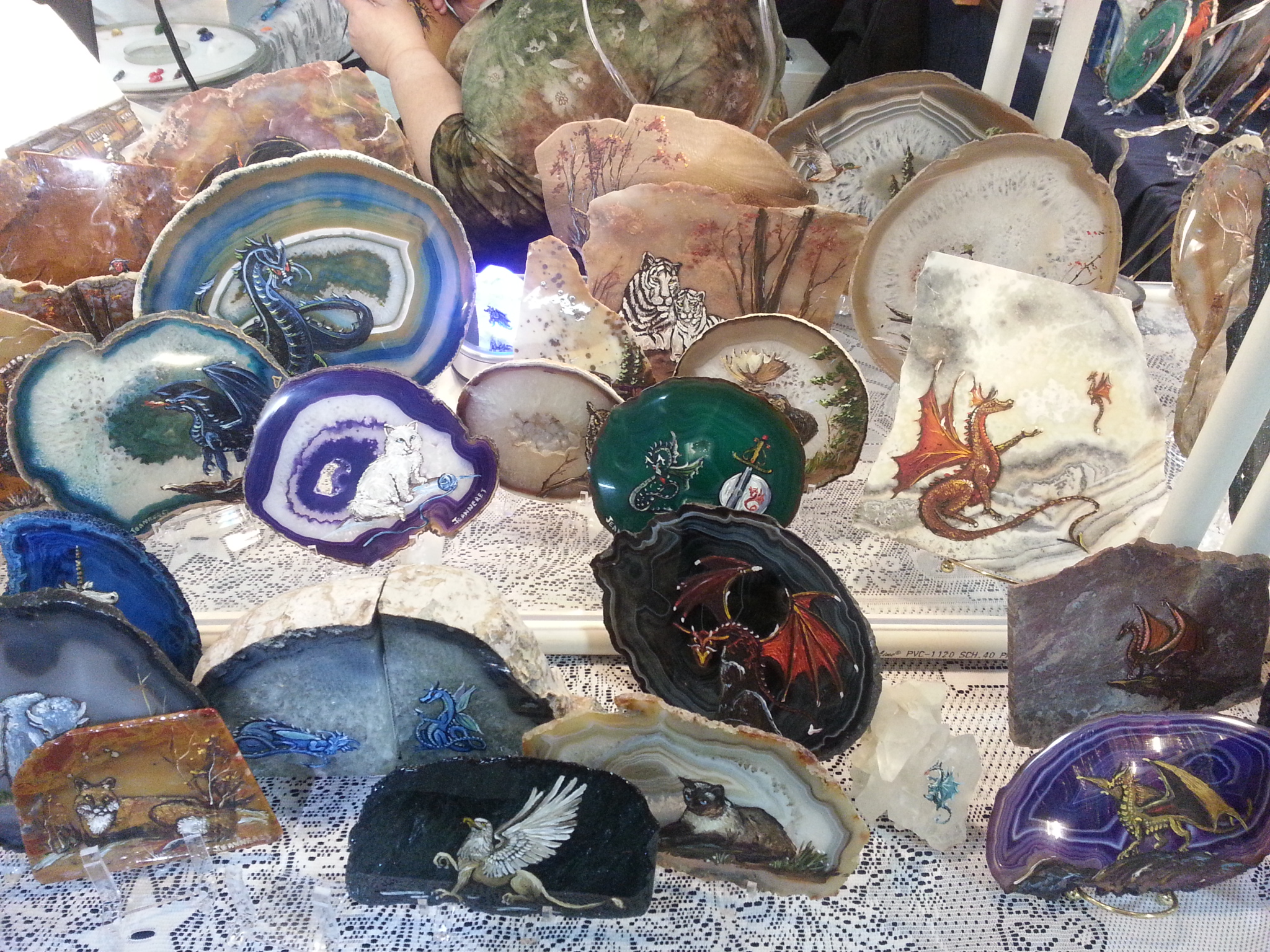
Painted agate slabs from Aerie Artwork
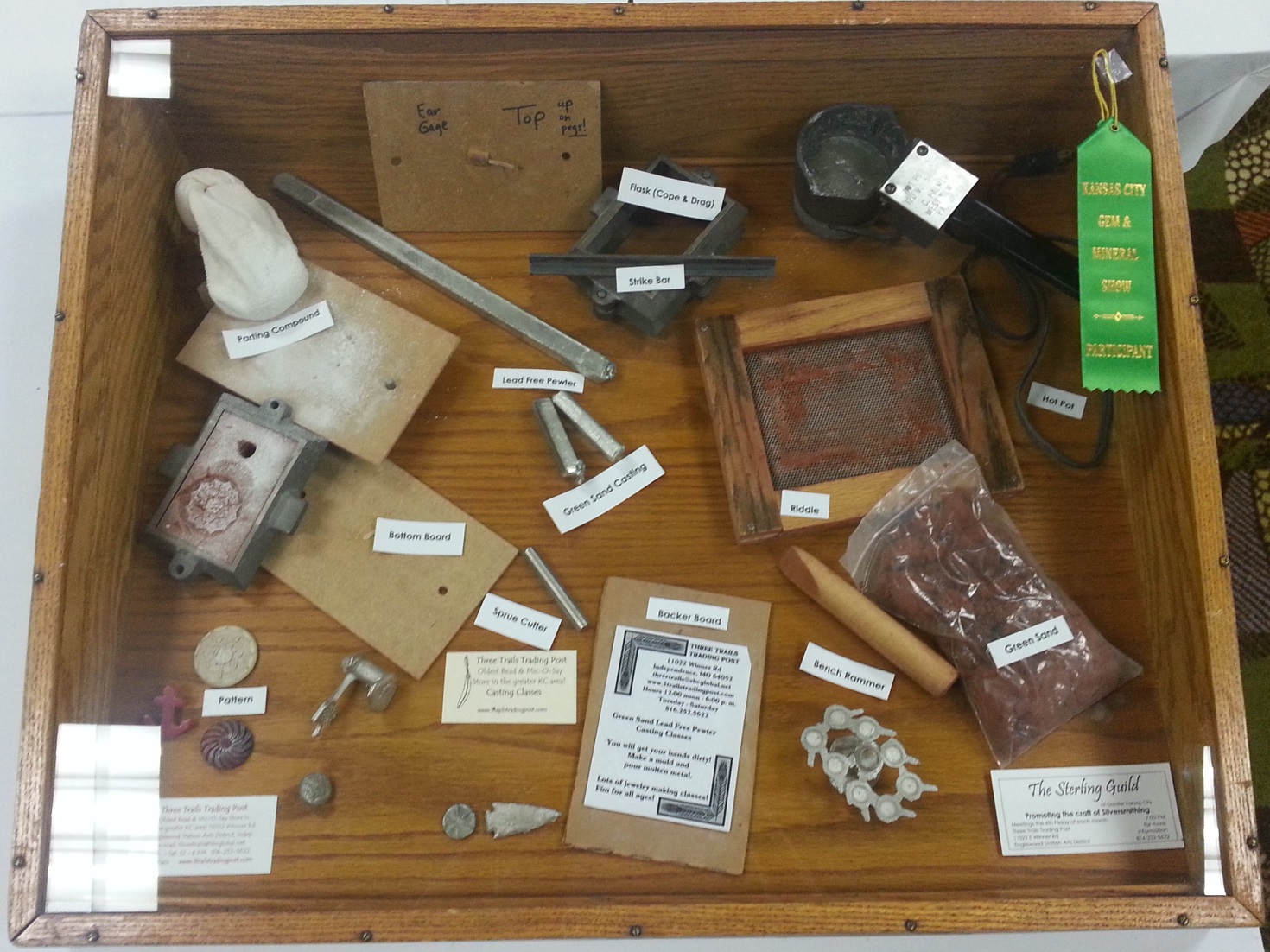
A display of metalworking tools made by the Sterling Guild.
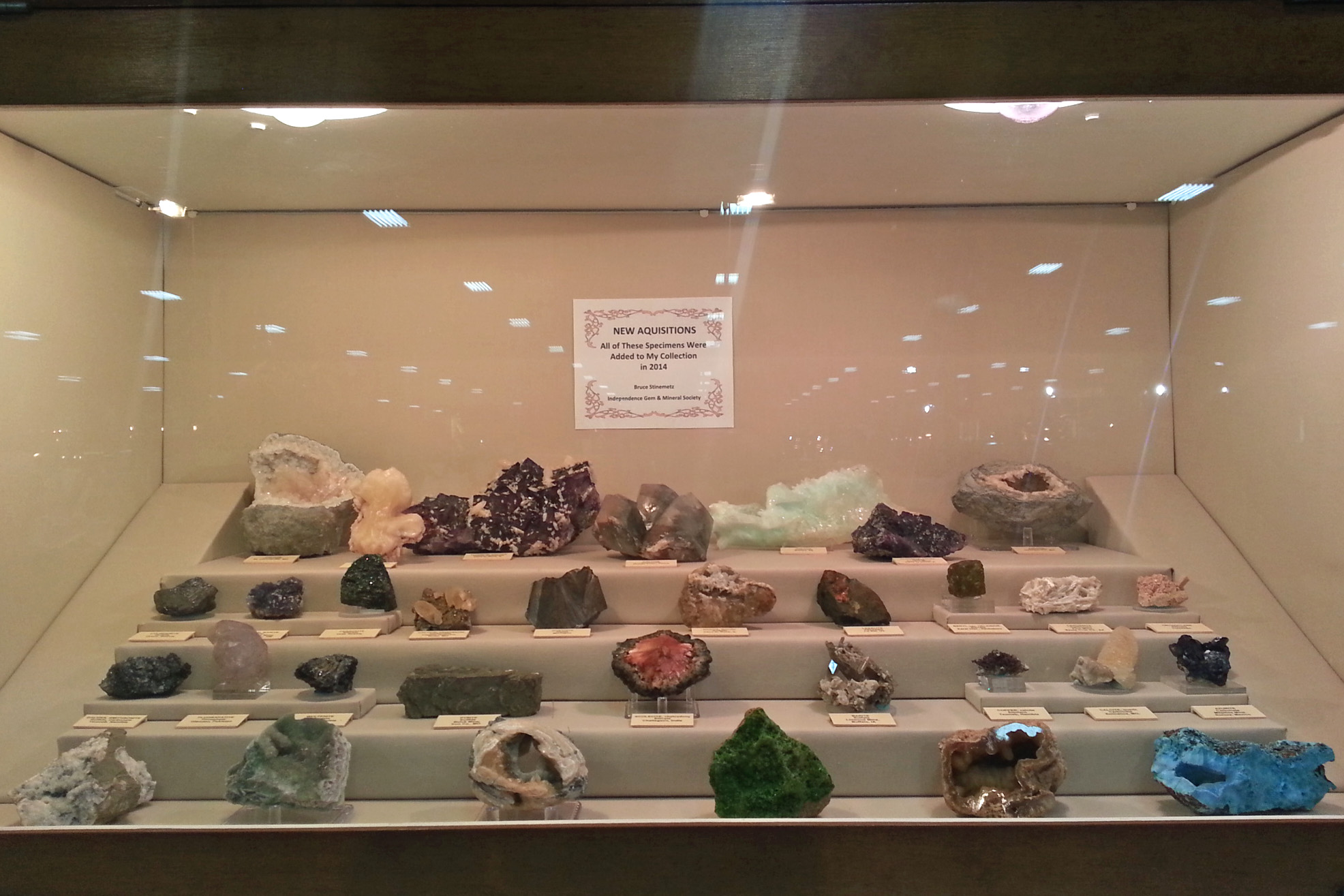
A display made by Bruce from IGAMS showing his new acquisitions from 2014. Bruce made several displays and made the rest of us look like slackers.

Somebody decided that tiger’s eye looks like bacon slices when cut into slabs.
Emeralds
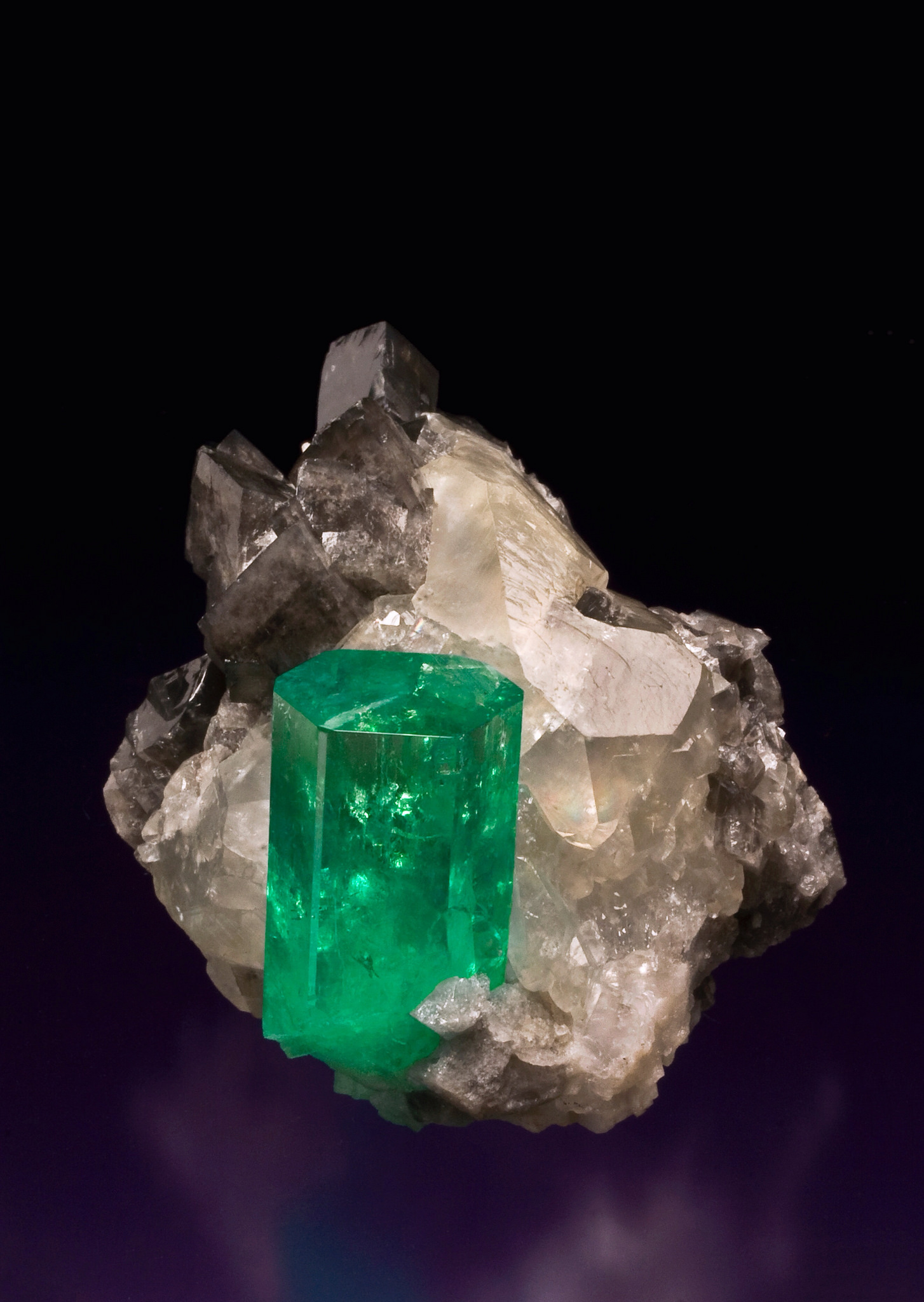
Photo by Thomas Spann from https://www.flickr.com/photos/120391619@N03/13156452494
Emeralds are the most famous green gemstone. The word emerald is practically synonymous with the color green, and in fact, the name emerald comes from the Greek smaragdos which means “green gem.” Ireland’s nickname “The Emerald Isle” sadly does not refer to any emeralds found there but for the green scenery.
Emeralds are the green variety of the mineral beryl. The famed green color comes from chromium impurities. When beryl appears in other colors due to different impurities it is called aquamarine (blue), morganite (pink), bixbite/red beryl (red), or heliodor (yellow). Emerald rates 7.5-8.0 on the Mohs hardness scale, though it can be brittle. Emeralds are usually found in Colombia (South America) or Zambia (Africa) in granite pegmatites and metamorphosed mica schists. They grow in hexagonal crystals. The most valuable emeralds for gems are transparent rather than opaque, have few inclusions, and are a dark shade of green. Emeralds usually have quite a lot of inclusions, so sometimes people use oil to hide them, but looking at the inclusions can help you tell where the emerald came from. One final fun fact: There is even a faceting method called the emerald cut, which has a rectangular face with 8 sides. It is also known as the octagon cut. The emerald cut works well on emeralds but can be used on any gemstone, even diamonds.


An emerald cut emerald. Photo from http://www.starruby.in/store/info/cutting-of-emeralds
The Blarney Stone

I don’t know about you, but I’m still in the St. Patrick’s Day spirit. This is the Blarney Stone, the most well-known rock in Ireland. The Blarney Stone is embedded 90 feet high in a tower of Blarney Castle, in the village of Blarney near Cork, Ireland. Legend has it that if you kiss the stone you will receive the skills of eloquence, persuasion, and flattery: in other words, blarney. Climb to the top of the tower, sit with your back to the stone, then have someone hold your legs down while you lean backwards to kiss the stone.
The Blarney Stone itself is carboniferous limestone, also known as bluestone. Geologists at Glasgow University analyzed a sample of the stone and determined that it is “limestone, made of the mineral calcite, and containing recrystallised and slightly deformed fragments of fossil brachiopod shells and bryozoans – all of which are unique to the region where it is based” (www.theguardian.com/world/2014/mar/16/mystery-blarney-stone-heritage-solved) Some stories suggest that the Blarney Stone was from Scotland, but this research shows that it is native to Ireland and is about 330 million years old. Erin go bragh!

Gem Show Update
We had a great turnout at the gem show and made over $3000! Thank you to everyone who volunteered. Pictures will be up next week. Also, don’t forget IGAMS is meeting this Thursday the 19th and we are meeting this Saturday the 21st.
What time is it? Time to get a rock clock!
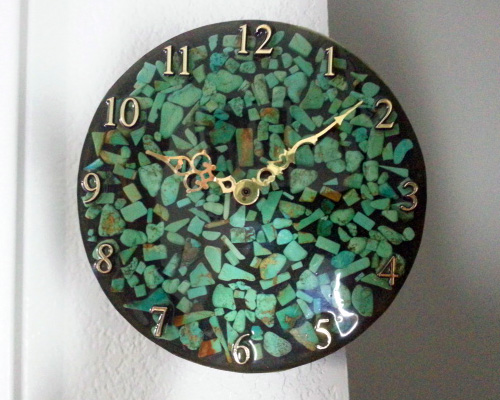
Photo by Stephanie Reed
This clock was made with turquoise chips in resin and a craft store clock kit. It belongs to Show-Me Rockhounds member David Reed.
Don’t forget to set your clocks forward 1 hour tonight for Daylight Savings Time!
 Show-Me Rockhounds Kansas City