Thanksgiving Rock Dinner

Happy Thanksgiving! To whet your appetite for dinner, here are some pictures of rocks and minerals that look like food. This is a traveling exhibit, so maybe it will be at a rock show near you.

This looks like a fruit salad containing strawberries, blueberries, mandarin oranges, kiwis, slivered almonds, and whipped cream. It is actually rocks.

Bill and Lois Pattillo: http://rockfoodtable.com/index.html

Start off with a tasty fruit salad.

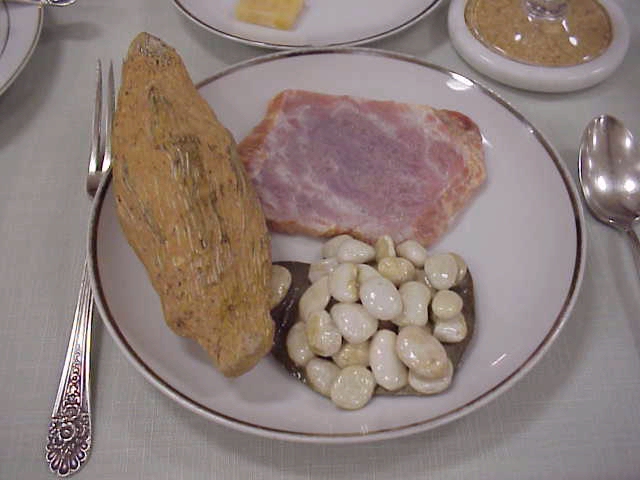
This looks like a slice of ham (needs gravy, though), a yam with the skin on, and a side of shiny lima beans, but it is actually rocks.

Bill and Lois Pattillo: http://rockfoodtable.com/index.html

The main course: ham, a yam, and lima beans.

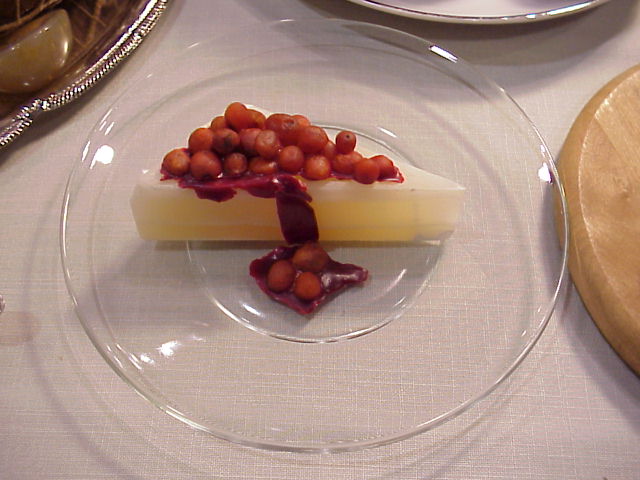
This looks like a slightly translucent slice of pale yellow cheesecake with small red cherries on top. It is actually a slice of rock with rocks on top.

Bill and Lois Pattillo: http://rockfoodtable.com/index.html

Cherry cheesecake for dessert.

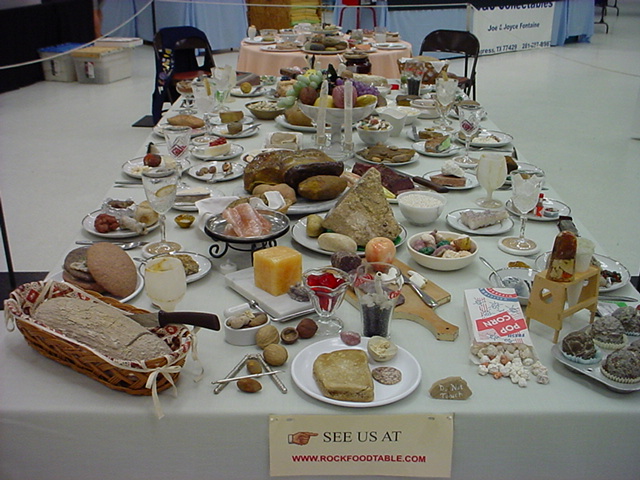
This looks like a huge spread of all sorts of food: bread baskets, muffins, popcorn, nuts, cheese, smoked salmon, fresh fruit, and more. It is actually all rocks.

Bill and Lois Pattillo: http://rockfoodtable.com/index.html

The whole spread.

Gold Sheen Obsidian

A dull gold oval-shaped stone resting comfortably in a person's palm.  It is highly polished and reflects the overhead lights, and appears to have depth.

As viewed at the November 2014 meeting.

This is a gold sheen obsidian from the personal collection of our members M. Mueller and C. Maazouz. Obsidian is an igneous rock, which means it is formed from lava as it cools and solidifies. Obsidian is usually black. However, some types of obsidian have gas bubbles that create a gold or silver sheen like this.

Petrified Palm

You’ve heard of petrified wood, but have you heard of petrified palm? It’s made from trees of the extinct genus Palmoxylon, which were very similar to palm trees. The process is the same: when the palms died, sometimes they would be covered by water or dirt before they rotted. Then, as groundwater flowed across the ground it carried dissolved silica which would fill the xylem and phloem inside the palm. The result is solid silica in the same shape as the plant. They usually turn out much smoother and more uniform than other types of petrified wood, and petrified palm can be cut, polished, and used as a semiprecious gemstone. It’s mostly found in the Catahoula Formation, Texas, and Louisiana (where it’s the state fossil).

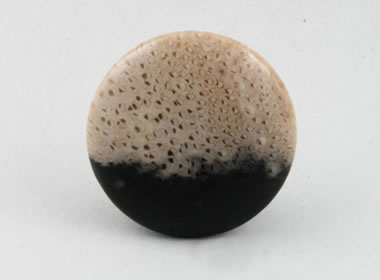
A group of four honey-yellow cabochons shaped like a circle, oval, triangle, and square. They have brown dots and stripes in different patterns, similar to the other petrified palmwood.

Amy O’Connell’s Petrified Palmwood sold at http://lapidaryart.com/amy.html

As you can see, petrified palm’s distinctive round spots make great cabochons.

Fall Gem and Mineral Show in KC

Two men holding rocks and standing in front of a table covered in boxes of colorful crystals. Behind them is a sign that reads,

Photo by Stephanie Reed

We had a great time selling rocks at the 36th Annual Shows of Integrity Fall Gem & Mineral Show in Kansas City!  If you missed it, mark your calendar now for the spring show on March 13-15, 2015 (same location, the KCI Expo Center).  It will be even bigger!

A smiling young woman sitting behind a large wooden spinner with eight sections. She is wearing an ammonite necklace and a shirt proclaiming that the Kansas City Gem and Mineral Show

Photo by D. Reed

When you spin our wheel, every spin is guaranteed to win a prize. This year, the prizes included turquoise, shark teeth, and Apache tears.

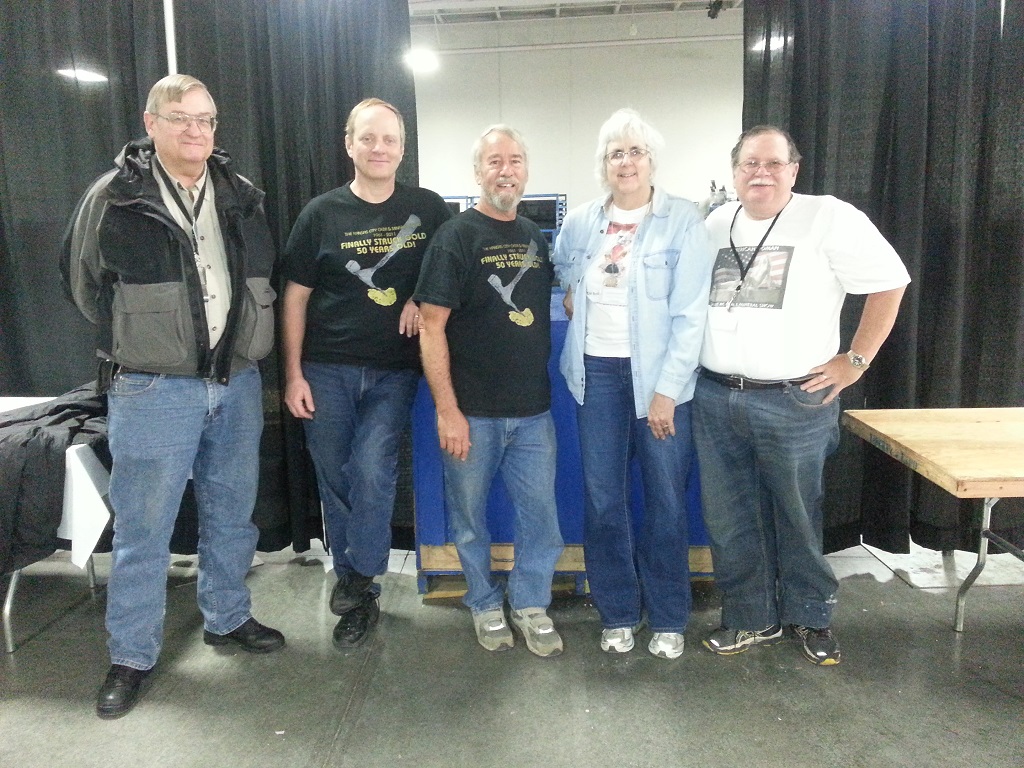
A group of 5 rock collectors who just finished packing up the show materials and cleaning up after the event ended.

Photo by Stephanie Reed

Some of the rockhounds who helped set up and run the booth.

Happy Agate

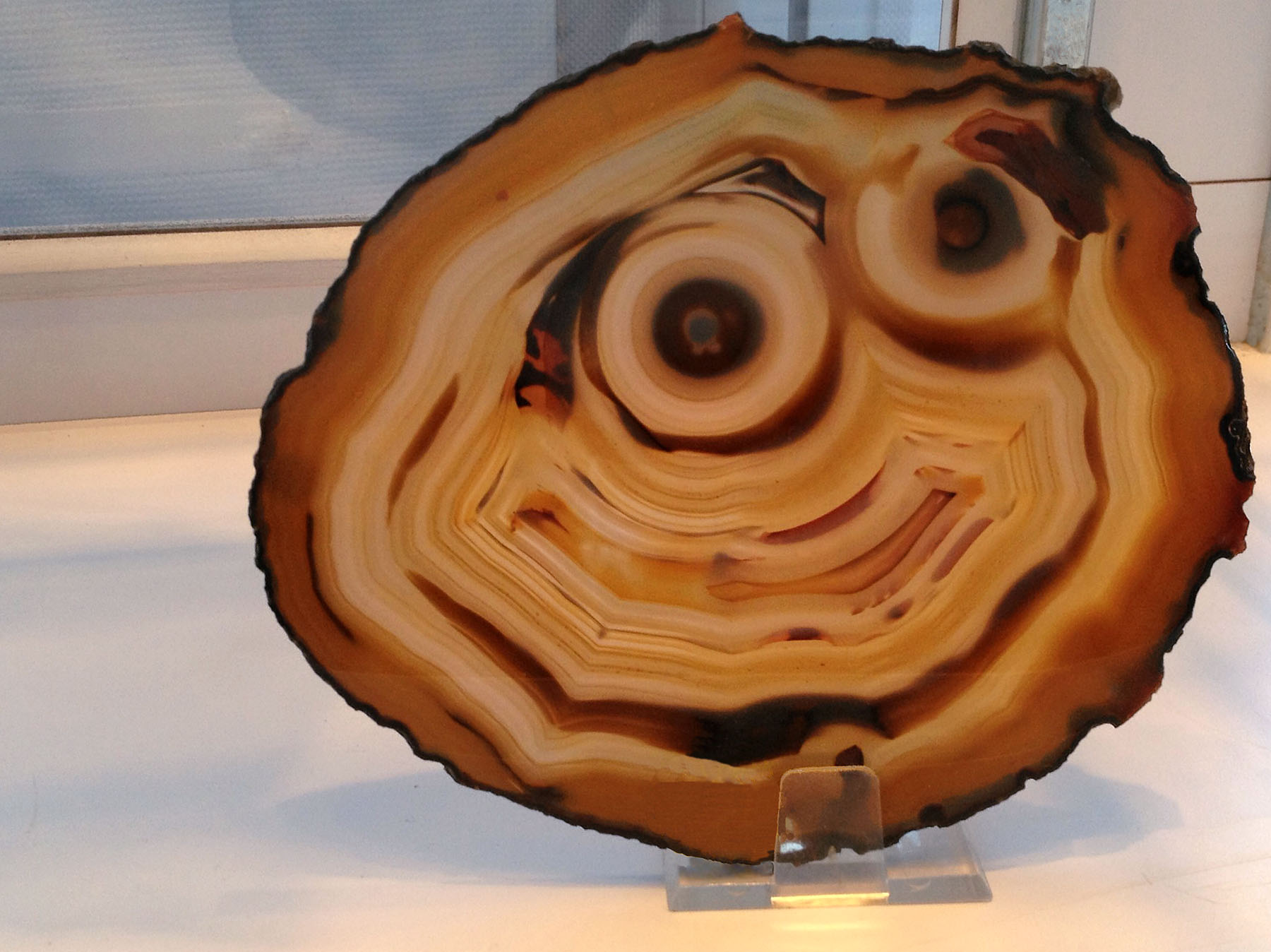
An agate slab with a happy smiley face in its brown bands.

Smiley face agate photo by Cobalt123 from https://flic.kr/p/dVdpEA

An agate dressed up for Halloween, hanging out at the Tucson Rock and Gem Show 2013.  Thanks for following us all the way through Agate Month and learning all about these beautiful minerals!
If you’d like to see a list of even more types of agates, go here: http://stoneplus.cst.cmich.edu/agate.htm

Flame and Frost Agates

These aren’t technically types of agate according to Mindat, but sometimes they will be described this way in rock shops or on rockhound websites.  And these pictures are so great I couldn’t possibly pass them up.  An agate with red, orange, or yellow plumes in just the right arangement can be called a flame agate, because it looks like fire.

Red, orange, and yellow plumes shooting up from a white and transparent agate matrix, looking like flames.

Photo by Vítězslav Snášel from http://www.mindat.org/photo-114774.html

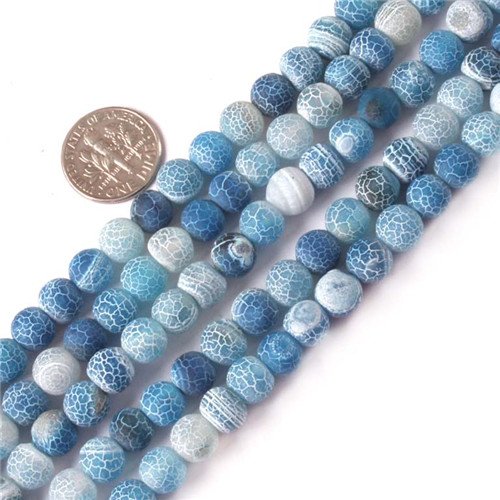
Frost agate describes the cracked finish on these beads (again, it’s not a mineralogical term).  They can also be called cracked agate.  The frost effect is heightened when they are blue. Whatever they are, I would totally wear earrings made with these beads.

Cloud Agates

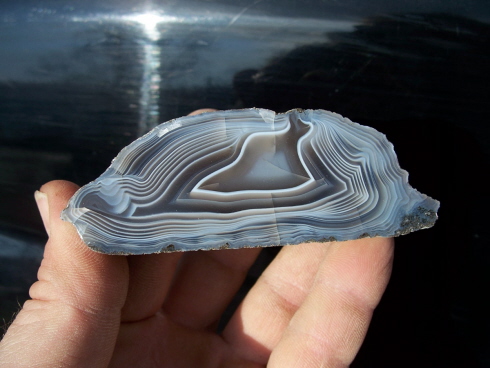
Cloud agates look like they contain clouds. They can have a gray or transparent matrix and the inclusions are usually white and foggy to look like clouds.  The one on the left has a bit of a drusy effect which makes it look like a puffy cumulus cloud.  The cloud agate on the right has a blue “cloud” inside.  The North Lincoln Agate Society has given its friend some googly eyes.