Franklinite, Calcite and Willemite photographed under shortwave UV Light.
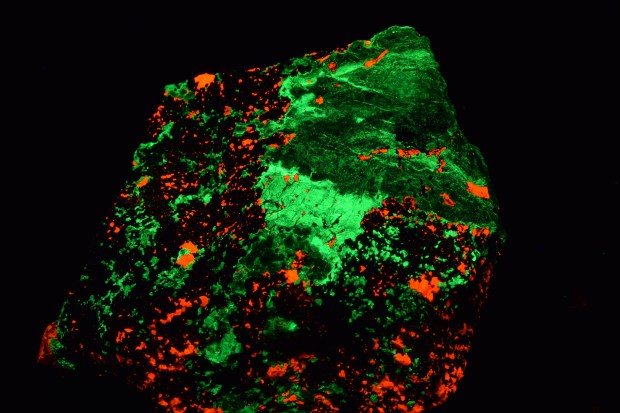
Photo by Dan Snow
This will be on display at the 59th gem and Mineral Show, KCI Expo Center, 2020
Franklinite, Calcite and Willemite photographed under shortwave UV Light.
Photo by Dan Snow
This will be on display at the 59th gem and Mineral Show, KCI Expo Center, 2020
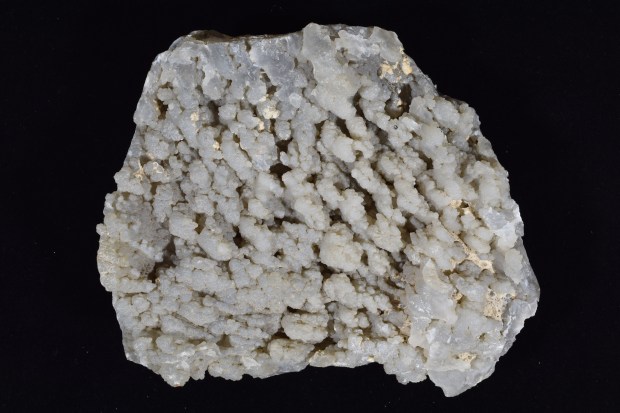
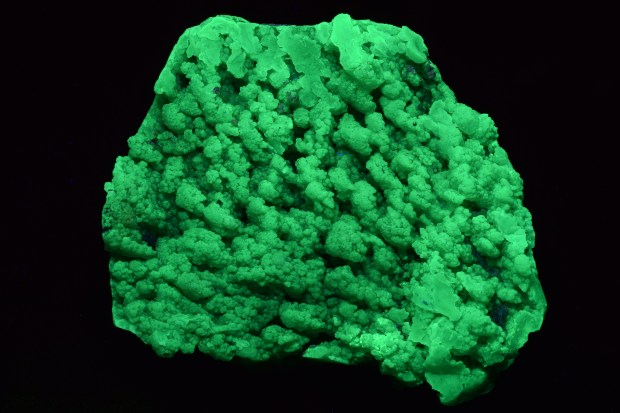
Chalcedony photographed under white light, then under shortwave UV light.
Photos by Dan Snow
Will be on display at the 59th Gem and Mineral Show, KCI Expo Center, 2020
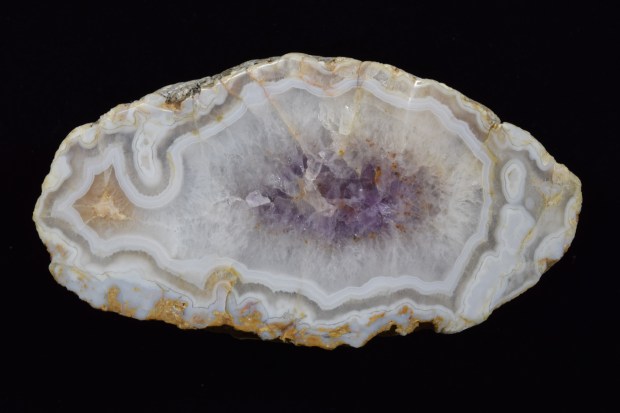
Fairburn Agate from South Dakota, photographed under white light, then under longwave UV light.
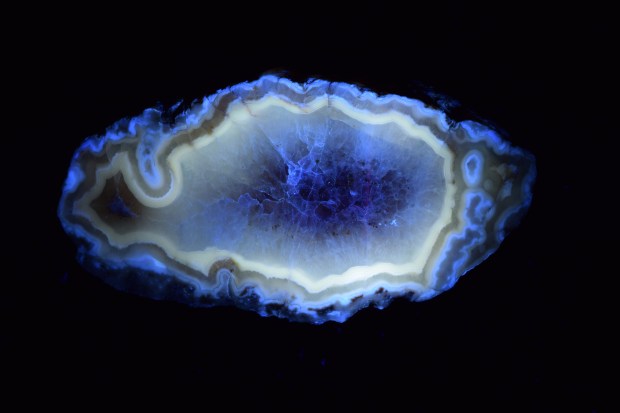
Photos by Dan Snow
This will be on display at the 59th Gem & Mineral Show at the KCI Expo Center, 2020
Franklinite Cabochons under white light, then under shortwave UV light.
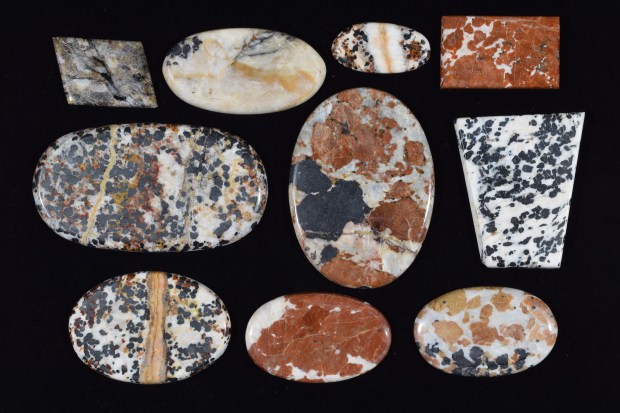
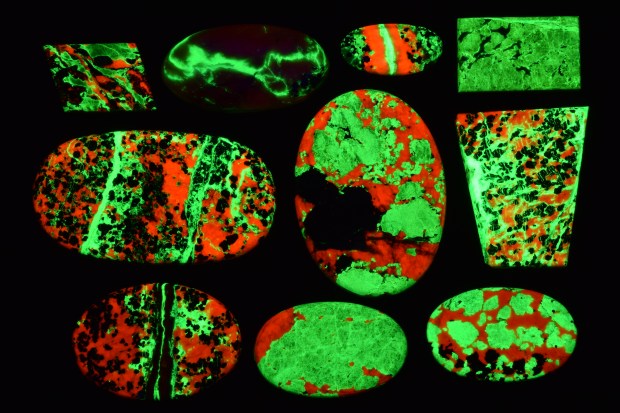
Photos by Dan Snow
This will be on display at the 59th Gem & Mineral Show, KCI Expo Center, 2020
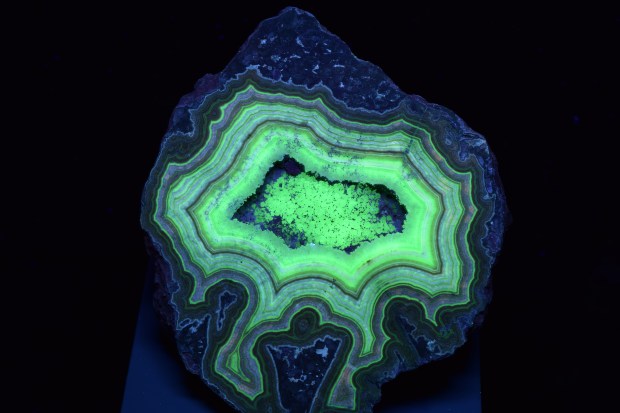
Dryhead agate under white light and then under shortwave UV light.
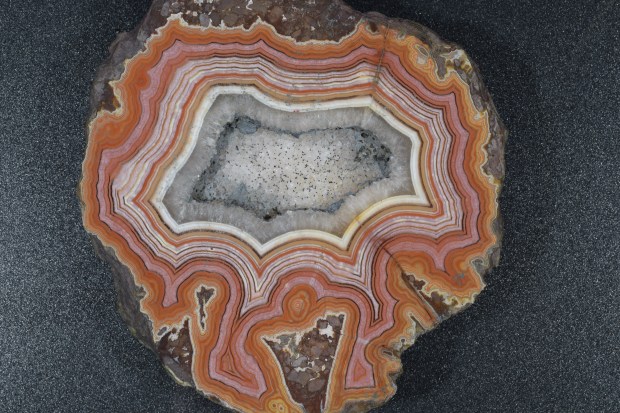
Photos by Dan Snow
Will be on display at the 59th Gem & Mineral Show at KCI Expo Center, 2020
A cut and polished septarian nodule. First photographed under white light, then short wave ultraviolet light. It will be in the fluorescent mineral display at the 59th Gem & Mineral Show at the KCI Expo Center March 13th, 14th and 15th, 2020.
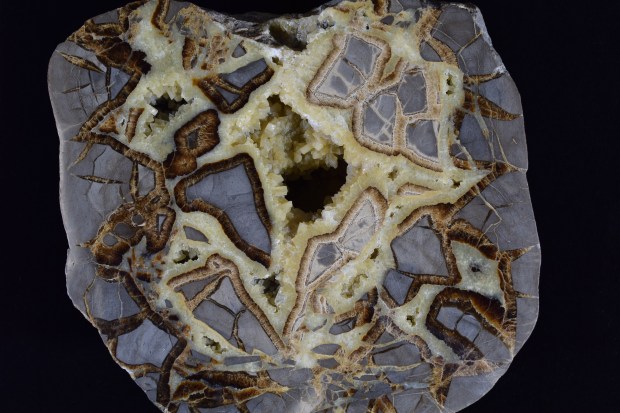
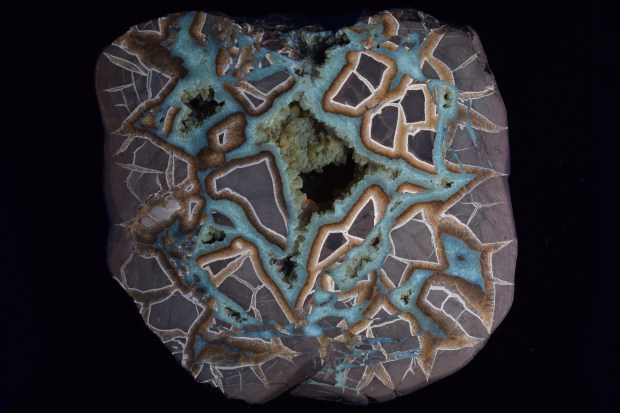
Photographed by Dan Snow

The American Chemical Society is hosting a live webinar called “Chemistry Rocks! – Exploring the Chemistry of Rocks and Minerals” on Tue, Oct 24, 2017 from 6:00 PM – 7:00 PM CDT. We are surrounded by rocks and minerals everywhere…in the ground we walk on, the places we work and live, and even in the food we eat. How are chemists experimenting with these fundamental materials to help the world and make our lives better? Ask questions live to the experts regarding the amazing work that is being done in rock and mineral science.
To see the webinar, sign up at GoToWebinar and fill out the form. They will send you an email to confirm. Then, on Tuesday at 6PM Central Time, follow the link in the email, make sure you have your computer’s sound turned on, and enjoy!
During Earth Science WeekTM, we went to a lecture by Dr. Innocent Pumure from UCM called “Sonochemical Extraction of Arsenic and Selenium from Pulverized Rocks Associated with Mountaintop Removal Valley Fill (MTR/VF) Method of Coal Mining”.
You may be wondering, what is Mountaintop Removal Valley Fill Mining? First, the excavation company blows up (or strips) the top part of the mountain to remove vegetation and expose the coal seams. The coal seams are then mined through the open cast/strip method, and the extra rock and soil is dumped in nearby valleys called valley fills. It is cheaper and easier to do than regular mining, where they dig a vertical shaft down and do everything through the tunnel, but it blasts the mountain apart and looks ugly. Since 30% of electricity in the USA comes from coal, valley fill mining is still pretty popular.
In 2002, the EPA found too much selenium downstream of a certain mine in West Virginia (we’re not going to say which one). It was over 5 ng/mL, which was the limit back then.[*] 7 years later, there was still an active mine there and the water still had too much selenium. Even worse, the surrounding sediment had 10.7 mg/kg selenium. This could cause problems for the environment later. Due to bioaccumulation, you could say once it’s in there, it’s really in there.
So now we get to the topic of Dr. Pumure’s talk, in which he and his colleagues discovered a way to quickly find out how much selenium and arsenic were in the ground around this mine in West Virginia. When you do a chemical analysis, you usually have to break down the samples in order to measure what is in them. One method to do this would be to take some core samples and do an acid extraction, but that takes a long time and uses a lot of reagents. Sonochemical extraction uses ultrasound energy to accelerate the leaching process that would naturally happen as rocks become weathered. Since it is ultrasound, it does not directly touch the sample, is minimally invasive, and does not need any reagents except water.
Next, he explained the methodology, which means a description of exactly how they did it in the lab: the size of the extraction cells, how much water and power were used (200W/cm3), how long the samples were sonicated, and all the other pertinent information for chemists. Pumure actually spent quite a lot of time finding out the optimal sonicating time to get the best extraction. It turned out the best times for his sample sizes were 20 minutes for Se and 25 minutes for As. That’s really fast![**] Then, he did a comparison to a chemical sequential extraction to make sure that the sonochemical extraction method was getting everything. To summarize, yes it was. Finally, he did a principal component analysis of core samples from different places all over the mountain using this same technique. They found some really interesting trends and correlations, for example, it appears that there is more arsenic in illite clay than other types of clay.
This research has many useful applications. If you were running a mine, you could take samples more frequently to see if your mine is polluting the surrounding environment, and then you could do something about it before the EPA finds out. The method could probably be used for other analytes, too. For other research needs, you could now quickly analyze large batches of mineral samples to get lots of data that would otherwise be too expensive or time consuming to obtain.
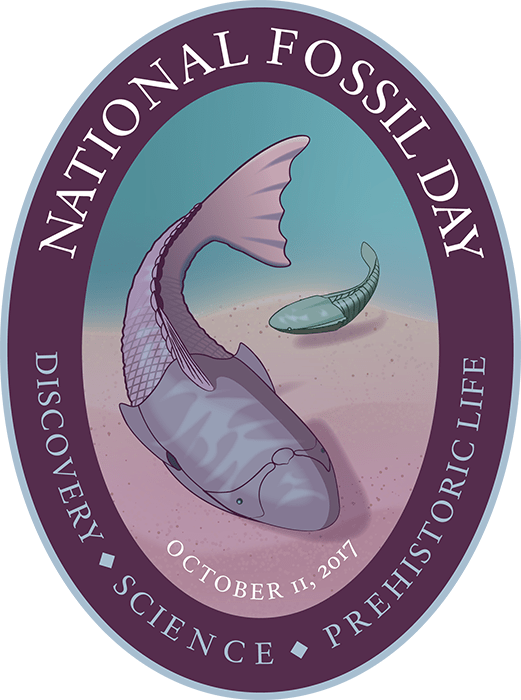
October 11, 2017 is National Fossil DayTM. This year, the logo features heterostracans (Greek for “different shields”), which are a group of extinct fish who lived between the early Silurian and late Devonian period (358 million years ago). According to their website,
The heterostracans were characterized by an external covering of bony armor plates and by having only one common gill opening on each side of the head region. These early fish lacked any paired or mid-line fins and in many cases developed extensions of the armor plates that were not flexible but helped provide control in the water. Heterostracans lived in shallow marine environments around an ancient continent known as the Old Red Sandstone (ORS) Continent, which was composed of present day North America, the Canadian Arctic, and Western Europe….
The heterostracan species illustrated in the logo are Panamintaspis snowii in the foreground and Phyllonaspis taphensis in the background. Panamintaspis is named after the Panamint Mountains in Death Valley, which is where the original fossils were found and the species name recognizes the individual who helped to discover the specimen. Phyllonaspis taphensis means “leaf shield from the tomb” referring to the fact that the specimen comes from Death Valley. Phyllonaspis is particularly interesting as it is a member of a group that is otherwise only known from the Canadian Arctic, suggesting dispersal of these organisms from the arctic and around the margins of the Old Red Sandstone Continent.
Go to the NFD website to read more about heterostracans and David Elliott, a paleontologist who studies them and even found some in Death Valley National Park. There are also several activities you can do to celebrate the day.
To further celebrate National Fossil Day, Paleoaerie has a great article about the fossils that can be found in Arkansas.
We have discussed fossils found in Kansas City many times at showmerockhounds.com. They include ammonites, bivalves, crinoids, composita, and much more. For the full list, there’s a book for that.

Gem Stickers on a window on an overcast day. Photo from Rainbowsymphonystore.com
Would you like to have rainbows in your home? These window clings look like clear plastic stickers in the shapes of cut gems, but they also contain diffraction gratings so that they will turn light from the Sun into shiny beautiful rainbows.

What your home will look like after installation of the rainbow gem window clings. Results may vary. Photo from Rainbowsymphonystore.com
If you are interested, buy them from the Rainbow Symphony store. I am not affiliated with Rainbow Symphony and I won’t make any money if you buy these. I saw these when I was purchasing ISO compliant eclipse glasses and thought of the club.

 Show-Me Rockhounds Kansas City